

If you were hurt in a motorcycle crash in Miami, almost everything you assume about Florida injury claims from driving a car is turned around. Florida’s no-fault system, the PIP coverage that pays your first medical bills after a car accident no matter who caused it, does not apply to motorcycles. There is no PIP payment of any size waiting for you. The tradeoff runs in your favor too, and this is the part most riders are never told: because a motorcycle is outside no-fault, you are not boxed in by the serious-injury threshold that limits what a car occupant can recover, so you can pursue the full value of your injuries from the first dollar. Knowing which rules apply, and which do not, decides these cases.
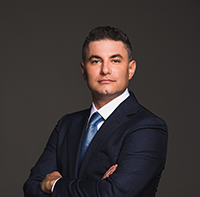
I am Prosper Shaked, the attorney behind Prosper Injury Attorneys. My office is in North Miami Beach, and I represent injured motorcyclists throughout Florida. A motorcycle case is not a car case on two wheels. The insurance math is different, the coverage you can reach is different, and the way an adjuster and a jury look at a rider is different. The sooner you call, the more I can do to protect your claim before the evidence is gone.
When you call my office at (305) 694-2676, you talk to a real attorney, not a screener, and most of the time that attorney is me, either on that first call or later the same day. I will walk through what happened, how it happened, what your injuries are, and what insurance might actually be available to you. Usually I can tell you on that one call whether you have a claim worth pursuing.
The consultation is free, and I do not charge a fee unless I recover money for you. Motorcycle cases turn on evidence that does not wait, the dashcam video that caught the crash, the other vehicle’s onboard crash data, and the witnesses who stopped at the scene, so the sooner I know about your case, the sooner I can send the letters that preserve it.
Why Hire a Miami Motorcycle Accident Lawyer
Most riders who call me have already lost time they did not know they were losing. Liability in a motorcycle case is disputed far more often than in a car case, because the driver who turned across your path will usually say they never saw you, and the physical evidence that proves otherwise starts disappearing the day of the crash. What a motorcycle lawyer does in the first two weeks is different from an ordinary car claim, and it decides more cases than anything that happens later.
When I take a motorcycle case, the first moves are these. I send letters of representation and preservation demands to lock down any dashcam or surveillance video that may have captured the crash, because in a disputed-liability case that footage is often the whole ballgame. Given how severe motorcycle crashes tend to be, I also move to preserve and download the crash data from the vehicle that hit you, the electronic record of its speed, braking, and steering in the seconds before impact. And I dig into every insurance policy connected to you, because riders sometimes carry medical payments coverage or other first-party benefits they do not realize they have, even on a motorcycle policy, and finding that coverage can change what your recovery looks like. Once you hire my office, the other driver’s insurer deals with me, not with you.
No PIP on a Motorcycle, and No Injury Threshold Either
Call us today at (305) 694-2676 or
contact us online for a free case evaluation.
Hablamos español.
Here is the fact that catches most riders off guard in the emergency room. Florida’s no-fault law only covers a “motor vehicle,” which the statute defines as a vehicle with four or more wheels (Fla. Stat. § 627.732(3)). A motorcycle has two. That means the PIP benefits that pay a car occupant’s first bills regardless of fault, up to $10,000 when a qualified provider determines there was an emergency medical condition, simply do not exist for you. Your own health insurance, if you have it, usually becomes the first line for the medical bills.
The same rule cuts the other way, and this is the half nobody explains. Because you are outside no-fault, you are also outside the serious-injury threshold that a car occupant has to clear before recovering for pain and suffering. As a motorcyclist you can pursue the full value of your claim, including pain and suffering, from the at-fault driver without that hurdle. The catch is that recovering it depends largely on what insurance is actually reachable, and that is where a motorcycle case is really won or lost.

On a motorcycle nothing pays automatically. Your first bills fall to the health insurance or MedPay you already had, and your recovery depends on the at-fault driver’s bodily injury coverage, which Florida does not require drivers to carry.
Finding Every Layer of Coverage
Because there is no PIP and Florida does not require drivers to carry bodily injury coverage (Fla. Stat. § 324.022 requires only property damage liability), it is common for an injured rider to be hit by a driver with little or nothing to collect from. Chasing down every layer of coverage is the case. That means the at-fault driver’s bodily injury policy if they have one, any commercial or employer policy if they were working, uninsured or underinsured motorist coverage on your own policy if you carried it, and the first-party benefits I mentioned earlier, the ones riders often do not know they have. Uninsured motorist coverage is the quiet hero when it is there, though in my experience relatively few riders carry it. If you take one thing from this page, let it be this: add uninsured motorist coverage to your policy before you ever need it. For a deeper look, we have written about motorcycle insurance in Florida and about who pays your medical bills after a motorcycle crash.
Motorcycle Accident Deadlines and Numbers to Know
These are the numbers that decide motorcycle cases in Florida. Several of them are the opposite of what a car driver would expect.
| Number | What it means |
|---|---|
| $0 | On a motorcycle you have $0 in PIP benefits, because Florida’s no-fault law covers only vehicles with four or more wheels (Fla. Stat. § 627.732(3)), so nothing automatically pays your first bills |
| 2 years | In Florida you generally have two years to file a lawsuit for a motorcycle injury caused by negligence (Fla. Stat. § 95.11); miss that deadline and the claim is gone, no matter how strong |
| Over 50% | In Florida, a rider found more than 50 percent at fault for the crash recovers nothing (Fla. Stat. § 768.81), and below that line the recovery is reduced by the rider’s share of fault |
| $10,000 | A Florida rider over 21 must carry at least $10,000 in medical-benefits coverage to ride legally without a helmet (Fla. Stat. § 316.211) |
| No BI required | Florida requires drivers to carry only $10,000 in property-damage liability, not bodily-injury coverage (Fla. Stat. § 324.022), which is why so many at-fault drivers have nothing to pay an injury claim |
How Fault Works, and the Bias Riders Face
Florida uses modified comparative negligence. Your recovery is reduced by your percentage of fault, and if you are found more than 50 percent at fault, you recover nothing at all (Fla. Stat. § 768.81). That 2023 change makes the fight over fault percentages the difference between a full recovery and no recovery, and it matters more for riders than for anyone else, because riders start behind.
The bias is real. Adjusters and juries walk in assuming the motorcyclist was speeding, weaving, or riding recklessly, whether or not there is any evidence of it. I counter it the only way it can be countered: by building the liability case hard from the start and proving what the other driver actually did. A great deal of that proof comes from witnesses, and motorcycle crashes have a feature that works in your favor here: when a rider goes down, people stop. They stop to see if you are alive, and they saw what happened. Getting to those witnesses early, before they scatter and their memories fade, is one of the most important things done in the first weeks of a case.
Do I Need a Helmet, and Can I Still Sue If I Was Not Wearing One?
Get started with your complimentary case evaluation today;
call us at (305) 694-2676 or reach us online using our
secure contact form.
Florida’s helmet rule is more specific than most riders think, and getting it right matters. By default, the law requires both protective headgear that meets the federal safety standard and eye protection (Fla. Stat. § 316.211). The exception is that a rider over the age of 21 may ride without a helmet if they carry an insurance policy providing at least $10,000 in medical benefits. A rider under 21 must always wear one. So for many adult riders, going without a helmet is perfectly legal.
Yes, you can still bring a claim if you were not wearing a helmet, and we take these cases. Riding without a helmet, when the law allows it, does not bar your claim. What the other side will sometimes try to do is argue that the lack of a helmet made a head injury worse, and use that to chip away at the damages. Whether that argument gets any traction depends on the facts, on your injuries, and on whether a helmet would have made any difference to the specific harm you suffered. It is a fact-by-fact fight, not an automatic defense, and it is one we know how to take on. For the background on how this law came to be, we have written about the history of Florida’s helmet law.
Common Motorcycle Crashes We Handle
In Florida, most motorcycle crashes come down to the same root cause: a driver who never looked for the rider, whether at an intersection, in a blind spot, or from behind. That is what I see in the cases that come through my office:
- Left-turn crashes, where an oncoming driver turns across your path at an intersection and later says they never saw you. These are the classic motorcycle case.
- Unsafe lane changes and blind-spot crashes, where a driver merges into a rider they did not check for.
- Rear-end crashes, where a distracted driver hits a rider who is stopped or slowing.
- Dooring and parked-vehicle crashes in traffic.
- Road hazards and defects, potholes, debris, and poorly maintained pavement that are far more dangerous on two wheels than four, where the claim can run against the government agency responsible for maintaining the road.
- Hit-and-run and uninsured-driver crashes, where the coverage hunt described above becomes everything.
Injuries on a motorcycle tend to be more serious than in a car, and road rash, fractures, and traumatic brain injuries are common even at moderate speeds. We also handle claims for scooter and moped riders and for ATV and four-wheeler crashes, which carry their own rules. If what happened to you is not on this list, call and ask, because the pattern of the crash matters far less than who was at fault for it.
What Is a Motorcycle Accident Case Worth?
There is no honest way to put a dollar figure on a motorcycle case without knowing the facts: how serious and permanent the injuries are, how clear the other driver’s fault is, and, above all, what insurance is actually reachable. A catastrophic injury caused by a driver with a minimum policy and no other coverage is a very different case from the same injury caused by a commercial driver with a large policy behind them. What I can tell you is that the cases that resolve well are the ones where the evidence and the coverage were locked down early, before the video was overwritten and before the witnesses disappeared.
A motorcycle claim can include your medical bills, the cost of future care, your lost income and lost earning capacity, and compensation for pain, suffering, scarring, and permanent injury, which are often significant given how motorcycle injuries happen. We have recovered millions of dollars for injured clients. The way to protect the value of your own claim is to get the investigation started before anything is lost.
What to Do After a Motorcycle Accident
If you are reading this soon after a crash, here is what protects your case:
- Call the police and make sure a crash report is created. Get the report number and the name of the officer. If you are too hurt, have someone do it for you.
- Photograph everything you can: both vehicles, your injuries, the road and any hazard, skid marks, and the surrounding area. Photos taken at the scene are evidence you cannot recreate.
- Get the names and contact information of every witness. On a bad motorcycle crash, people stop, and those bystanders are often the difference in a disputed-liability case.
- Do not let your motorcycle or your gear be repaired, scrapped, or thrown away. The bike, the helmet, and the damage on the other vehicle are physical evidence.
- Get medical treatment and follow through with it, both for your health and because the record documents your injuries.
- Do not give the other driver’s insurance company a recorded statement before you talk to a lawyer. Note your deadline: you generally have two years to sue.
- Call before you deal with the insurer: (305) 694-2676. A short call will tell you where you stand and what needs to be preserved right now.
Common Mistakes That Cost Motorcycle Riders
In Florida, the mistakes that quietly sink a motorcycle claim almost all come down to the same thing: treating it like a car case and moving too slowly while the evidence disappears. The cases that turn out worse than they should have usually share a few of these:
- Assuming your PIP or the driver’s no-fault coverage will handle it. On a motorcycle there is no PIP, and waiting to sort out coverage costs you time you do not have.
- Assuming that not wearing a helmet ends the case. For most adult riders it is legal and it does not bar a claim.
- Giving the insurance company a recorded statement before talking to a lawyer. The adjuster does this every day; you do not.
- Letting the bike or the damaged gear be repaired or hauled off before it is documented. Once that evidence is gone, the defense will use its absence against you.
- Waiting. Video gets overwritten, witnesses scatter, and the two-year deadline is closer than it feels.
Frequently Asked Questions
Does PIP cover a motorcycle accident in Florida?
No. Florida’s no-fault PIP coverage only applies to vehicles with four or more wheels, so it does not cover motorcycles. A car occupant may get limited PIP benefits after a crash; a rider gets none. Your own health insurance or medical payments coverage usually becomes the first line for your bills, and the rest of your recovery comes from the at-fault driver and any other coverage we can reach.
Can I sue if I was not wearing a helmet?
Yes. In Florida a rider over 21 can legally ride without a helmet if they carry at least $10,000 in medical benefits coverage, and riding without one does not bar your claim. The other side may argue that the lack of a helmet made a head injury worse and try to reduce your damages, but that is a fact-specific argument, not an automatic defense, and it depends on your injuries. We take no-helmet cases.
How long do I have to file a motorcycle accident lawsuit?
Generally two years from the date of the crash for a claim based on negligence, under a 2023 change to Florida law. It can work differently when a government entity is involved: if a poorly maintained road caused your crash, the claim usually runs against a city, county, or state agency, which follows a separate track: you generally must present a written claim to the government within three years and wait for it to be denied before you can sue. Because the timing rules are unforgiving and the evidence disappears long before any deadline, the safe move is to call as soon as you can.
What if the driver who hit me had no insurance?
It happens often, because Florida does not require drivers to carry bodily injury coverage. When the at-fault driver has little or nothing, your recovery depends on other layers: uninsured or underinsured motorist coverage on your own policy if you carried it, any commercial policy if the driver was working, and first-party benefits you may have without realizing it. Finding every available layer of coverage is one of the first things we do.
Is lane splitting legal in Florida?
No. Riding between lanes of traffic is not legal in Florida, and being cited for it can become part of the fault fight in your case. That does not automatically end your claim, because the other driver’s negligence still matters, but it is one more reason the fault analysis needs to be handled carefully. We have written more about lane splitting in Florida.
Can my passenger make a claim?
Yes. A passenger injured on your motorcycle can bring a claim, and depending on the facts that claim may be against the at-fault driver, against your own coverage, or both. Passenger cases can get complicated quickly because of the overlapping policies involved, which is exactly why they should be looked at early.
What is my motorcycle accident case worth?
Be wary of anyone who quotes you a number before they know the facts. On a motorcycle the value of a case is driven as much by how much insurance can actually be reached as by how badly you were hurt, and the coverage question is often the harder one to answer. The most useful thing I can do early is give you an honest read on what your case realistically looks like once we know what happened and what coverage is there to reach.
What does it cost to hire a motorcycle accident lawyer?
Nothing up front. We work on a contingency fee, which means the fee is a percentage of what we recover, and if there is no recovery there is no fee. The consultation is free, and when you call you speak with an attorney who can give you a straight answer about your case.
Call a Miami Motorcycle Accident Lawyer
If you were hurt in a motorcycle crash, the worst thing you can do is wait, because the video is already being overwritten and the witnesses are already scattering. Call me at (305) 694-2676. You will talk to an attorney, usually me, on that first call or later the same day, and you will get a straight answer about whether you have a case and what needs to be preserved right now. My office, Prosper Injury Attorneys, is in North Miami Beach, and I represent injured motorcyclists throughout Florida. We have recovered millions of dollars for injured clients. The consultation is free, and I do not charge a fee unless I recover money for you.