When a child requires ongoing medication to manage the effects of a birth injury, families often face both emotional and financial challenges that extend for years or even a lifetime. Filing a lawsuit in Florida for a baby who needs medication for birth injuries requires understanding both the medical conditions involved and the legal framework that governs these claims. Florida law imposes specific procedural requirements and evidentiary standards that families must meet before pursuing compensation for their child’s injuries and treatment needs.
Birth injuries requiring medication management often result from preventable complications during labor and delivery. Conditions such as hypoxic-ischemic encephalopathy, cerebral palsy, brachial plexus injuries, and neonatal seizure disorders frequently require anticonvulsants, muscle relaxants, and other medications that may continue throughout a child’s life. Pursuing a medical malpractice claim allows families to recover the costs of these medications alongside other damages when negligent medical care caused or contributed to the injury.
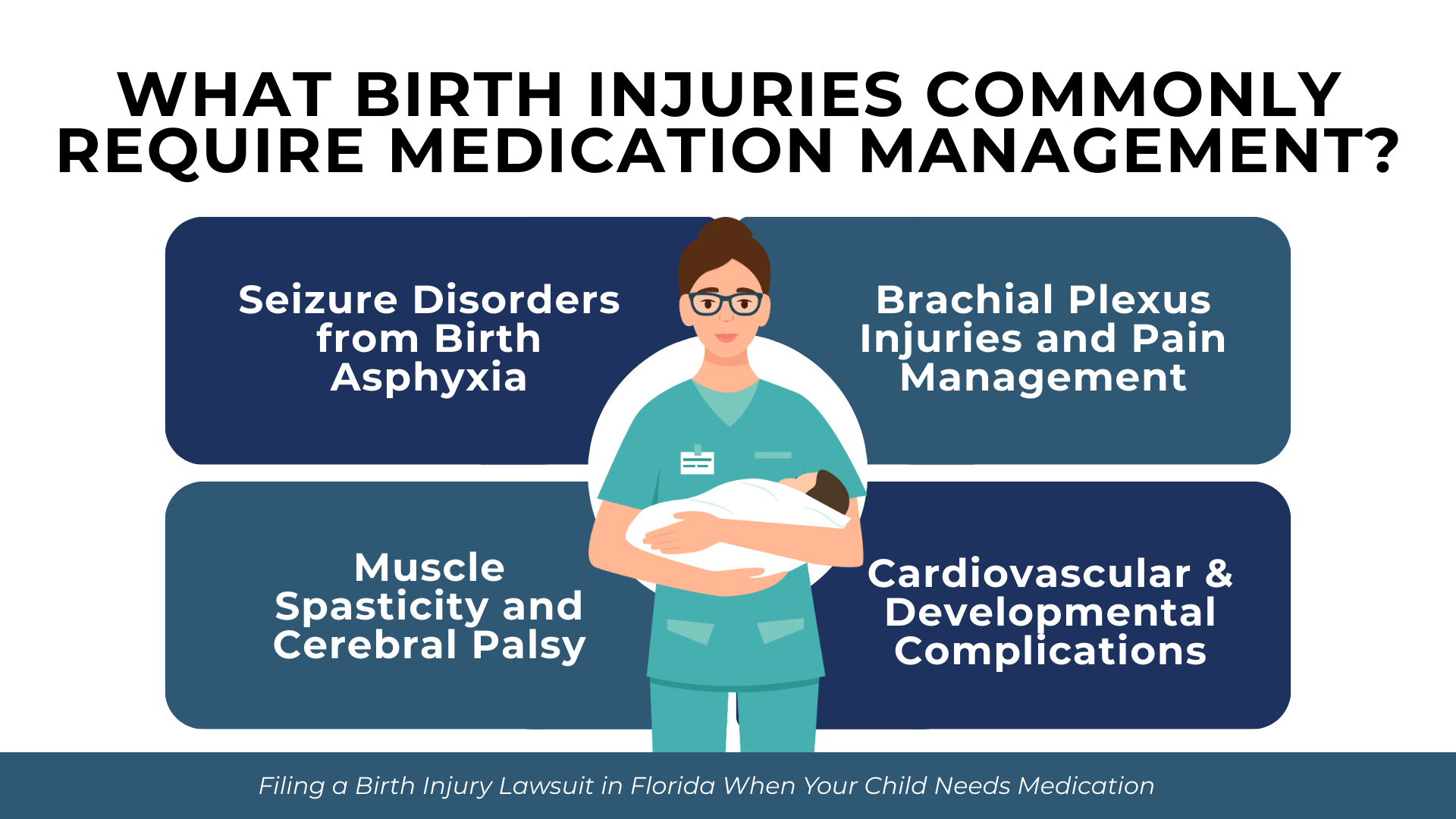
What Birth Injuries Commonly Require Medication Management?
Birth injuries vary significantly in severity, but several conditions frequently require ongoing pharmaceutical intervention. Understanding which injuries typically necessitate medication helps families recognize when their child’s treatment needs may stem from preventable medical errors.
Seizure Disorders from Birth Asphyxia
Hypoxic-ischemic encephalopathy occurs when a newborn’s brain is deprived of adequate oxygen during labor and delivery. According to Medscape’s clinical overview (2023-2024), HIE affects approximately 1-3 cases per 1,000 live births in developed countries, with United States incidence around 2.4 per 1,000 births.
Infants who survive HIE frequently develop seizure disorders requiring anticonvulsant medications. These medications suppress abnormal brain activity to reduce seizure frequency and severity. Common anticonvulsants prescribed for birth injury-related seizures include:
- Phenobarbital, which is frequently the first-line treatment for neonatal seizures
- Gabapentin for managing various seizure types
- Topiramate for seizure control in infants and children
- Zonisamide as an adjunct therapy
- Oxcarbazepine for partial seizures
- Lamotrigine for long-term seizure management
These medications require precise dosing and ongoing monitoring to balance seizure control against side effects such as sedation and tolerance development.
Muscle Spasticity and Cerebral Palsy
Cerebral palsy represents one of the most common outcomes of birth-related brain injuries. According to the CDC’s Autism and Developmental Disabilities Monitoring Network (2022), approximately 1 in 345 children in the United States have been identified with cerebral palsy.
Children with cerebral palsy often experience muscle spasticity and stiffness that requires ongoing medication management. Antispastic medications work to ease muscle tension and reduce involuntary spasms. Baclofen, administered either orally or through an implanted pump for severe cases, is commonly prescribed alongside other muscle relaxants such as diazepam, tizanidine, and dantrolene. Many treatment plans also incorporate Botox injections to provide targeted relief for specific muscle groups.
Anticholinergic medications like glycopyrrolate and trihexyphenidyl address additional symptoms including tremors and excessive drooling that frequently accompany cerebral palsy.
Brachial Plexus Injuries and Pain Management
Brachial plexus birth injuries occur when the network of nerves controlling the arm and hand is damaged during delivery. According to a 2024 study published in the Journal of Pediatric Orthopaedics, these injuries occur at a rate of 0.9 to 1.1 per 1,000 live births in the United States.
Children with brachial plexus injuries may require pain medications to manage discomfort from nerve damage. Mild cases may respond to over-the-counter medications like acetaminophen or ibuprofen, while more severe injuries may necessitate stronger NSAIDs, steroids, or corticosteroids to address inflammation and chronic pain.
According to the Canadian Paediatric Society’s position statement (2021), 20-30% of infants with neonatal brachial plexus palsy do not recover fully, with nearly 80% of children with global injuries experiencing persistent deficits at 18 months. These children may require ongoing pain management throughout their lives.
Cardiovascular and Developmental Complications
Newborns who experienced birth asphyxia may require cardiovascular medications to support organ function during the critical period following delivery. Medications such as dopamine, dobutamine, and milrinone help maintain adequate blood pressure in asphyxiated neonates whose cardiovascular systems were compromised during delivery.
As these children grow, they may develop additional complications requiring pharmaceutical intervention. Diuretics like furosemide may be prescribed to manage brain swelling associated with hydrocephalus. Some children develop anxiety or depression related to their physical limitations, which may be treated with medications such as sertraline or fluoxetine under careful medical supervision.
When Does a Birth Injury Justify a Medical Malpractice Claim in Florida?
Call us today at (305) 694-2676 or
contact us online for a free case evaluation.
Hablamos español.


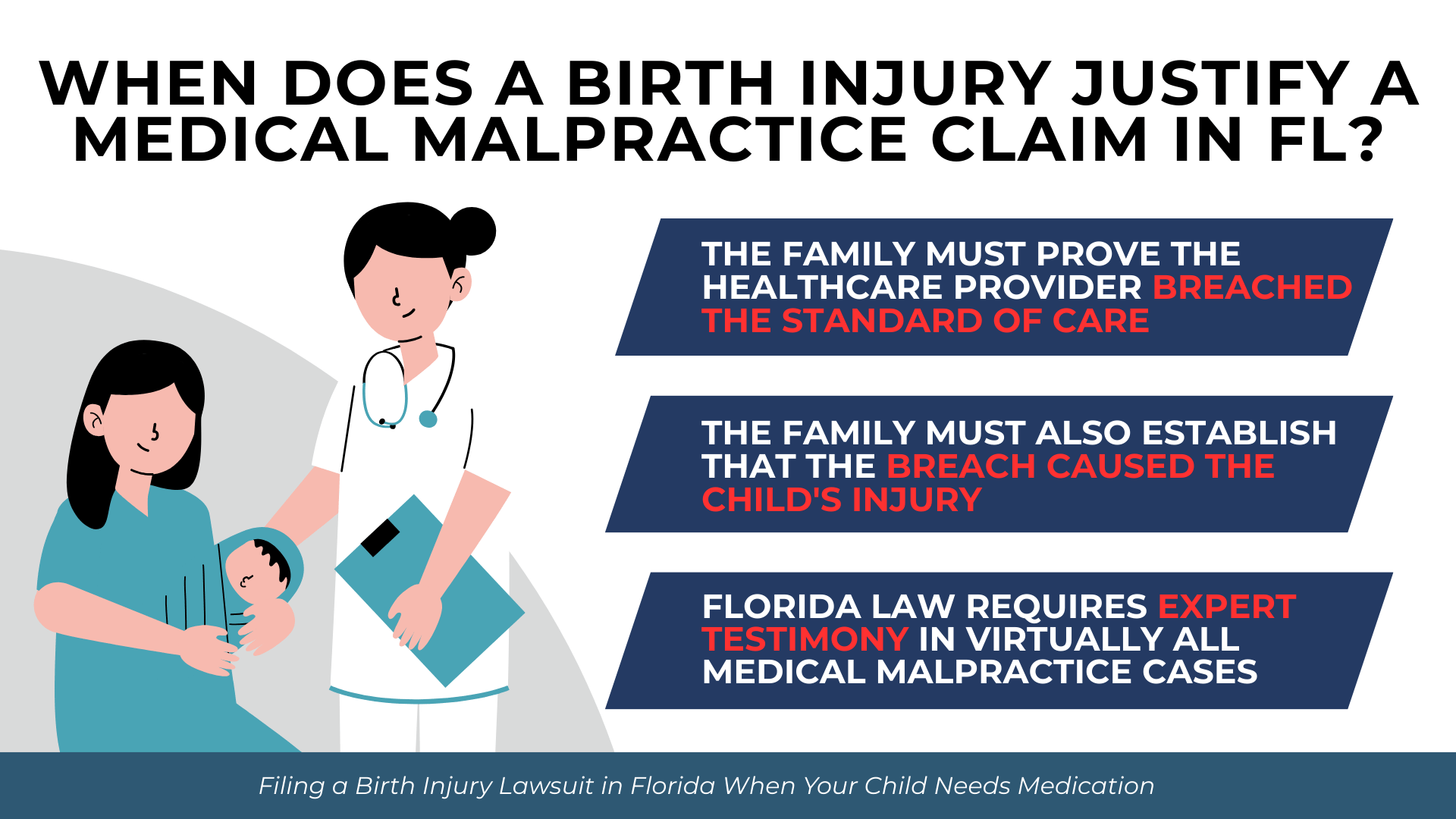
Not every birth injury results from medical negligence. However, when a healthcare provider’s actions fall below accepted medical standards and cause harm, Florida law provides families with a path to pursue compensation. Understanding the elements required to establish a medical malpractice claim helps families evaluate whether their child’s injury may warrant legal action.
Proving the Medical Provider Fell Below the Standard of Care
Under Fla. Stat. § 766.102, the standard of care in Florida medical malpractice cases is defined as “that level of care, skill, and treatment which, in light of all relevant surrounding circumstances, is recognized as acceptable and appropriate by reasonably prudent similar health care providers.” The family pursuing a birth injury claim bears the burden of proving that the defendant healthcare provider breached this standard.
Florida holds specialists to a specialist standard when they practice within their specialty. An obstetrician, for example, is held to the standard of care expected of a reasonably prudent obstetrician, not a general practitioner. Florida has largely abandoned the traditional locality rule in favor of a national professional standard for clinical care, meaning the standard is not limited to what providers in a particular geographic area would do.
Common breaches in birth injury cases include failure to properly monitor fetal heart rate patterns, delayed response to signs of fetal distress, improper use of delivery instruments such as forceps or vacuum extractors, and failure to perform a timely cesarean section when indicated.
Establishing Causation Under Florida’s “More Likely Than Not” Standard
Proving that a healthcare provider breached the standard of care is not sufficient on its own. The family must also establish that the breach caused the child’s injury. Under Florida law, as established in Gooding v. University Hospital Building, Inc., 445 So. 2d 1015 (Fla. 1984), plaintiffs must prove causation under the “more likely than not” standard, meaning there must be greater than 50% probability that the defendant’s negligence caused the injury.
The Ruiz v. Tenet Hialeah Healthsystem, Inc., 260 So. 3d 977 (Fla. 2018) decision clarified that the defendant’s negligence need not be the primary cause of injury. The plaintiff must only establish that the negligence was a “substantial factor” in bringing about the harm.
The Role of Expert Medical Testimony
Florida law requires expert testimony in virtually all medical malpractice cases. Under Fla. Stat. § 766.102(5), an expert witness must be a licensed healthcare provider who has conducted a complete review of the pertinent medical records. For claims against specialists, the expert must specialize in the same specialty as the defendant and have devoted professional time during the three years preceding the incident to active clinical practice, instruction, or research in that specialty.
Expert testimony serves two critical functions in birth injury cases. First, the expert must establish what the standard of care required in the specific circumstances. Second, the expert must provide an opinion that the defendant’s breach of that standard more likely than not caused the child’s injuries.
How Does Florida Law Handle Birth Injury Lawsuit Procedures?
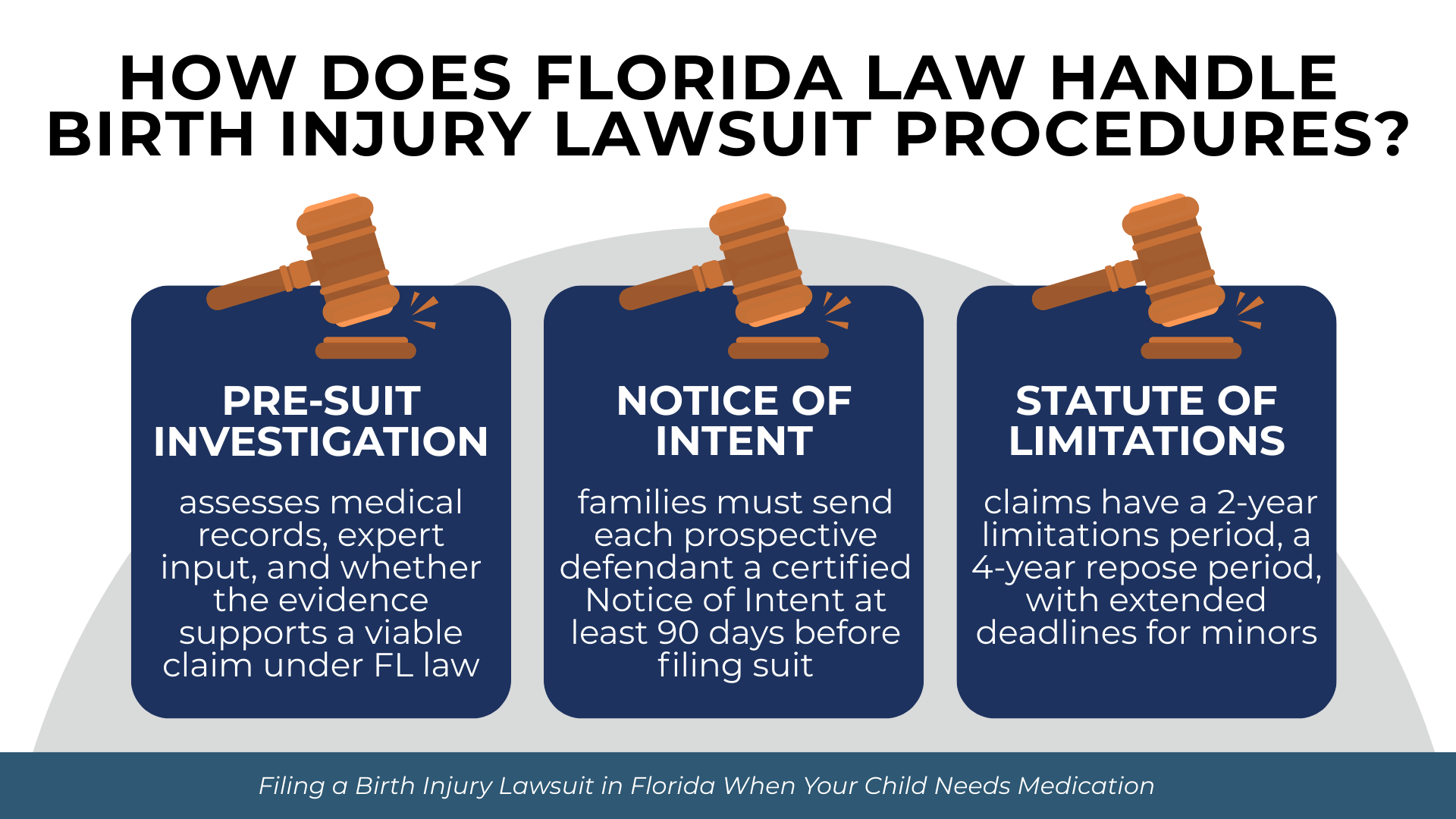
Florida imposes mandatory pre-suit requirements that families must complete before filing a medical malpractice lawsuit. These procedural requirements exist to encourage early resolution of claims and ensure that only meritorious cases proceed to litigation.
Mandatory Pre-Suit Investigation Requirements
Before filing a birth injury lawsuit, Fla. Stat. § 766.203 requires the claimant to complete a pre-suit investigation to determine whether reasonable grounds exist to believe the healthcare provider was negligent and that such negligence caused the injury. This investigation must be completed before sending a notice of intent to the defendant.
The pre-suit investigation typically involves obtaining and reviewing all relevant medical records, consulting with medical experts in the appropriate specialty, and evaluating whether the evidence supports a viable claim. The investigation helps families and their attorneys determine whether pursuing the case is worthwhile given Florida’s stringent requirements.
The Notice of Intent Process
Under Fla. Stat. § 766.106, families must serve a written Notice of Intent to initiate litigation on each prospective defendant at least 90 days before filing suit. This notice must be sent by certified mail and must include specific information.
The Notice of Intent must contain:
- A list of all known healthcare providers who treated the child for injuries subsequent to the alleged negligence
- All known providers who treated the child during the two years before the alleged act
- Copies of all medical records relied upon by the expert in signing the corroborating affidavit
- An executed HIPAA authorization form per Fla. Stat. § 766.1065
Additionally, families must obtain a verified written medical expert opinion corroborating reasonable grounds to support the claim. This opinion must be submitted at the time the Notice of Intent is mailed.
Understanding Florida’s Statute of Limitations for Minor Children
Florida’s statute of limitations for medical malpractice claims is generally two years from the time the incident occurred or was discovered, with a four-year statute of repose as an absolute outer limit. However, Fla. Stat. § 95.11(5)(c) provides an important exception for minor children: the four-year statute of repose does not bar an action filed on behalf of a minor on or before the child’s eighth birthday.
This exception gives families additional time to recognize and act upon birth injuries that may not become apparent until the child reaches developmental milestones. The Tanner v. Hartog, 618 So. 2d 177 (Fla. 1993) decision established that the statute of limitations begins when the claimant has knowledge of the injury and a reasonable possibility that the injury was caused by medical malpractice.
The 90-day pre-suit investigation period tolls the statute of limitations, meaning families receive the full benefit of their original statutory time plus the 90-day pause while the pre-suit process is completed.
What Damages Can Families Recover for Birth Injury Medication Costs?
When a birth injury claim succeeds, Florida law allows families to recover both economic and non-economic damages. Understanding the categories of available damages helps families and their attorneys properly document and present the full extent of the child’s losses.
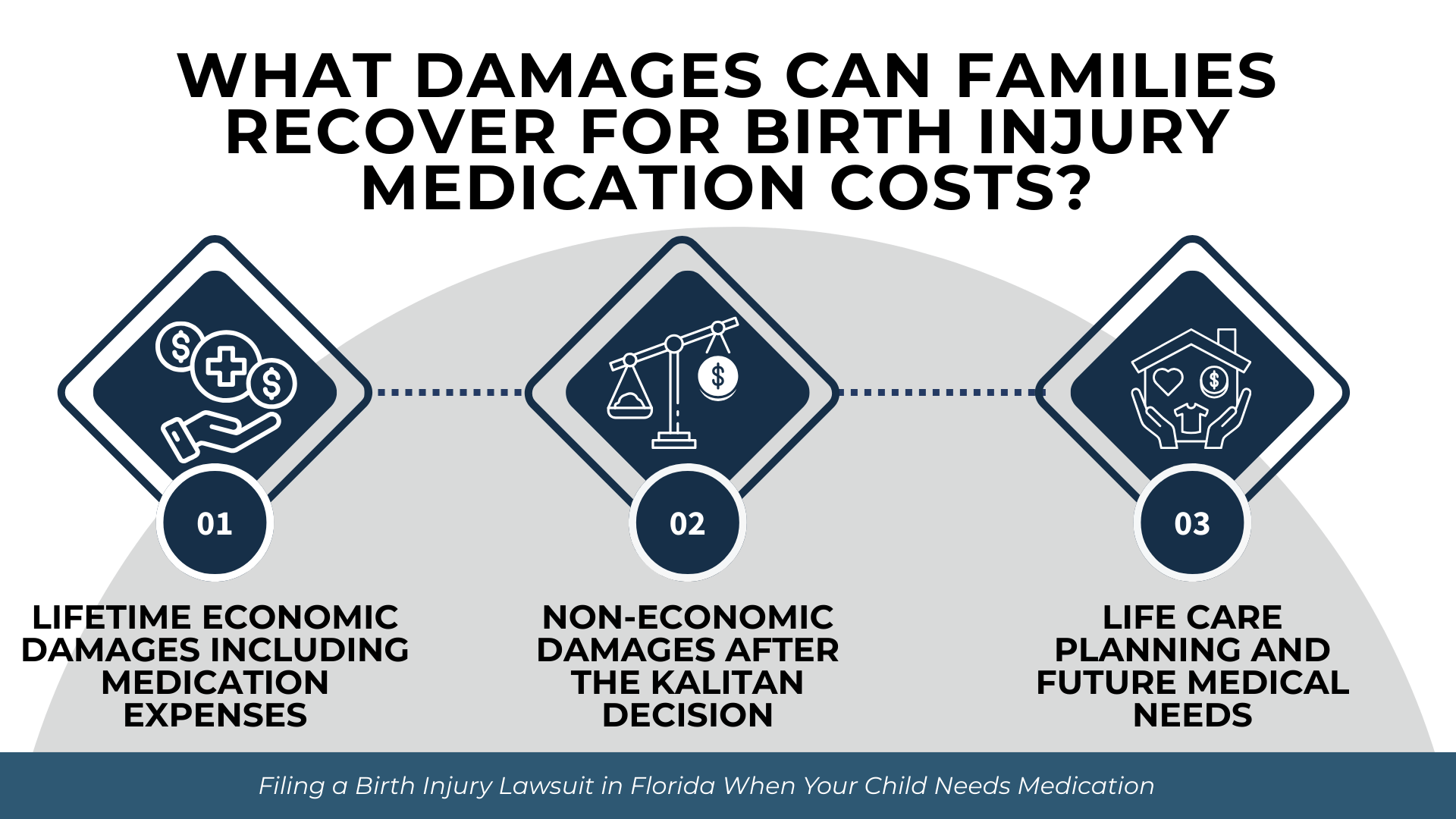
Lifetime Economic Damages Including Medication Expenses
Economic damages compensate for quantifiable financial losses resulting from the birth injury. For children requiring ongoing medication management, these damages can be substantial and must account for the child’s entire expected lifespan.
Economic damages recoverable in birth injury cases include:
- Past and future medication costs, including anticipated price increases over time
- Past and future medical expenses beyond medications, such as physician visits, hospitalizations, and procedures
- Costs of medical equipment and assistive devices
- Physical therapy, occupational therapy, and speech therapy expenses
- Special education and tutoring costs
- Lost future earning capacity if the injury affects the child’s ability to work as an adult
- Home modifications and accessibility improvements
Calculating lifetime medication costs requires careful analysis by medical and economic experts who can project the child’s future treatment needs and account for factors such as medication price inflation and changes in treatment protocols.
Non-Economic Damages After the Kalitan Decision
Non-economic damages compensate for losses that cannot be easily quantified in monetary terms, including physical pain and suffering, mental anguish, disfigurement, and loss of enjoyment of life.
Following North Broward Hospital District v. Kalitan, 219 So. 3d 49 (Fla. 2017), Florida has no enforceable caps on non-economic damages in medical malpractice personal injury cases. The Florida Supreme Court struck down the statutory caps in Fla. Stat. § 766.118 as violating the Equal Protection Clause of the Florida Constitution. This decision, building on Estate of McCall v. United States, 134 So. 3d 894 (Fla. 2014), means families can pursue full compensation for their child’s pain and suffering without arbitrary legislative limits.
Florida courts permit per diem arguments for calculating non-economic damages, allowing attorneys to suggest a daily rate multiplied by the days of suffering the child has experienced and will experience.
Life Care Planning and Future Medical Needs
Complex birth injury cases often require a life care plan prepared by a qualified expert. This comprehensive document projects all of the child’s future medical, therapeutic, and support needs over their expected lifespan. The life care plan provides the foundation for calculating future economic damages and ensures that all anticipated costs are included in the claim.
A thorough life care plan addresses medication needs at each stage of the child’s development, accounting for changes in dosing as the child grows, potential medication changes as new treatments become available, and the possibility of additional conditions developing as the child ages.
What Makes Birth Injury Causation Particularly Challenging?
Get started with your complimentary case evaluation today;
call us at (305) 694-2676 or reach us online using our
secure contact form.
Causation is often the most contested element in birth injury litigation. Defendants frequently argue that the child’s condition resulted from factors unrelated to labor and delivery. Understanding these challenges helps families prepare for the evidence that may be presented against their claims.
Florida’s Rejection of the Loss of Chance Doctrine
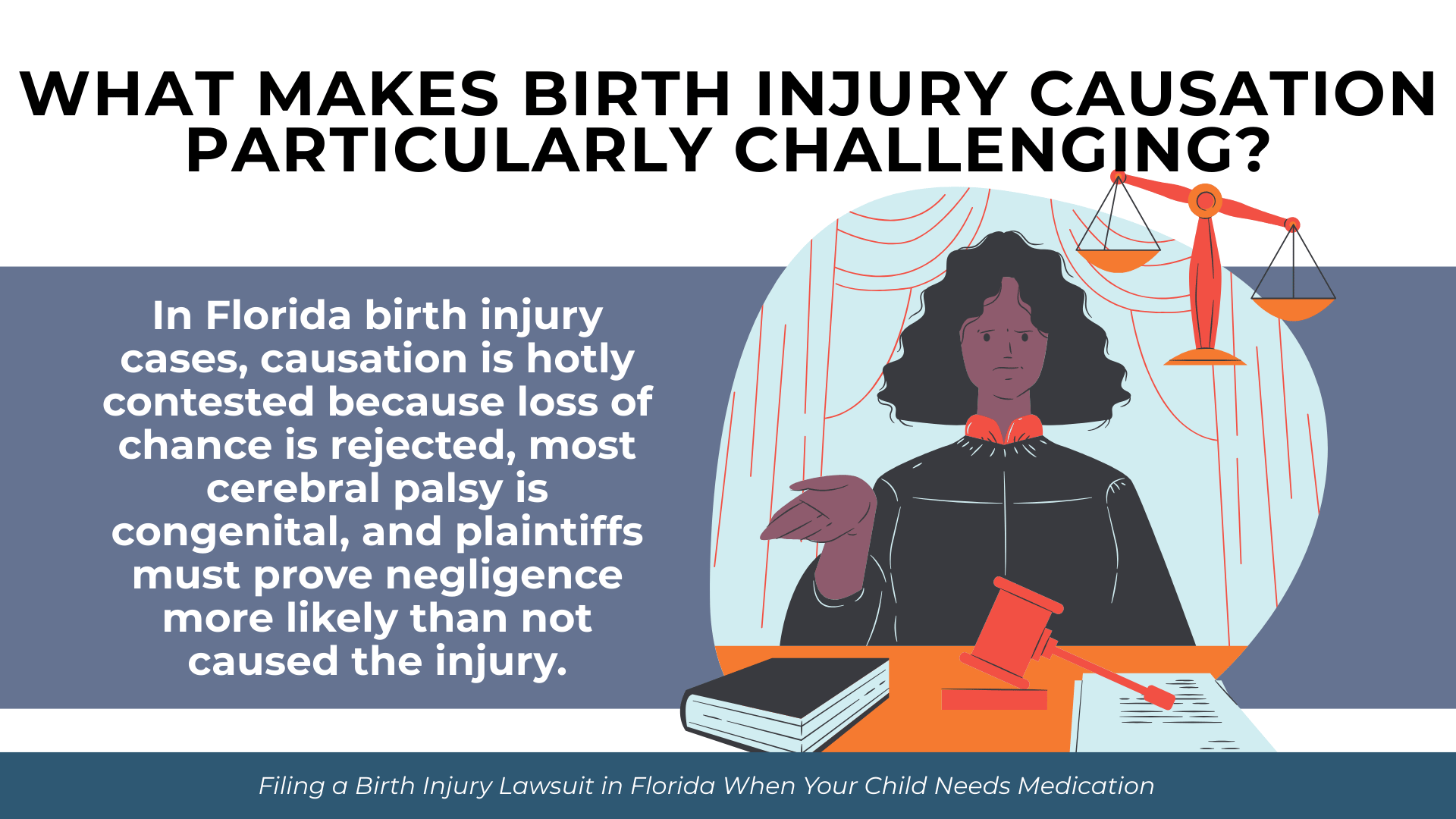
Florida remains among the states that have rejected the loss of chance doctrine. In Gooding v. University Hospital Building, Inc., 445 So. 2d 1015 (Fla. 1984), the Florida Supreme Court answered “in the negative” whether recovery for loss of a chance to survive based on alleged medical malpractice is actionable in Florida.
This means that if a child’s pre-existing condition gave them less than a 50% chance of avoiding injury even with proper care, the family cannot recover damages even if negligent care further reduced that chance. The plaintiff must prove that it is more likely than not — greater than 50% probability — that the defendant’s negligence caused the injury.
Why Most Cerebral Palsy Cases Do Not Link to Labor Events
One of the most significant challenges in birth injury cases involving cerebral palsy is establishing that the condition resulted from events during labor and delivery. According to data from the American Journal of Obstetrics and Gynecology (2008) and the CDC’s risk factors guidance (2025), only 14.5% of cerebral palsy cases are associated with intrapartum asphyxia. The vast majority — 85-90% — of cerebral palsy cases are congenital, meaning the condition was present at birth due to factors other than labor and delivery events.
This statistic is critical for establishing causation. Defendants in birth injury cases frequently present expert testimony arguing that the child’s cerebral palsy resulted from prenatal factors rather than any negligence during delivery. Plaintiffs must present strong medical evidence connecting the child’s specific condition to events during labor and delivery.
Building a Strong Causation Case
Successfully proving causation in a birth injury case typically requires detailed analysis of fetal monitoring strips, delivery records, and the infant’s condition immediately after birth. Evidence of fetal distress, such as abnormal heart rate patterns, followed by prompt signs of injury supports causation arguments.
The timing of therapeutic interventions can also support causation. According to the Cochrane Database of Systematic Reviews (2013), therapeutic hypothermia produces a 25% reduction in combined mortality or major neurodevelopmental disability when administered to infants with HIE. If cooling therapy was delayed or not provided, and the child suffered preventable harm as a result, this failure may itself constitute evidence of negligence.
Frequently Asked Questions About Birth Injury Medication Lawsuits
How long do I have to file a birth injury lawsuit in Florida for my child?
Florida’s general statute of limitations for medical malpractice is two years from discovery, with a four-year statute of repose. However, for minor children, the four-year repose period does not bar claims filed on or before the child’s eighth birthday. This exception provides additional time for families to recognize injuries that may not become apparent until the child misses developmental milestones.
Can I recover the cost of my child’s medications in a birth injury lawsuit?
Yes, medication costs are recoverable as economic damages in a successful birth injury claim. This includes both past medication expenses and projected future costs over the child’s expected lifespan. Expert testimony from life care planners and economists typically supports these calculations.
What if my child’s birth injury was only partially caused by medical negligence?
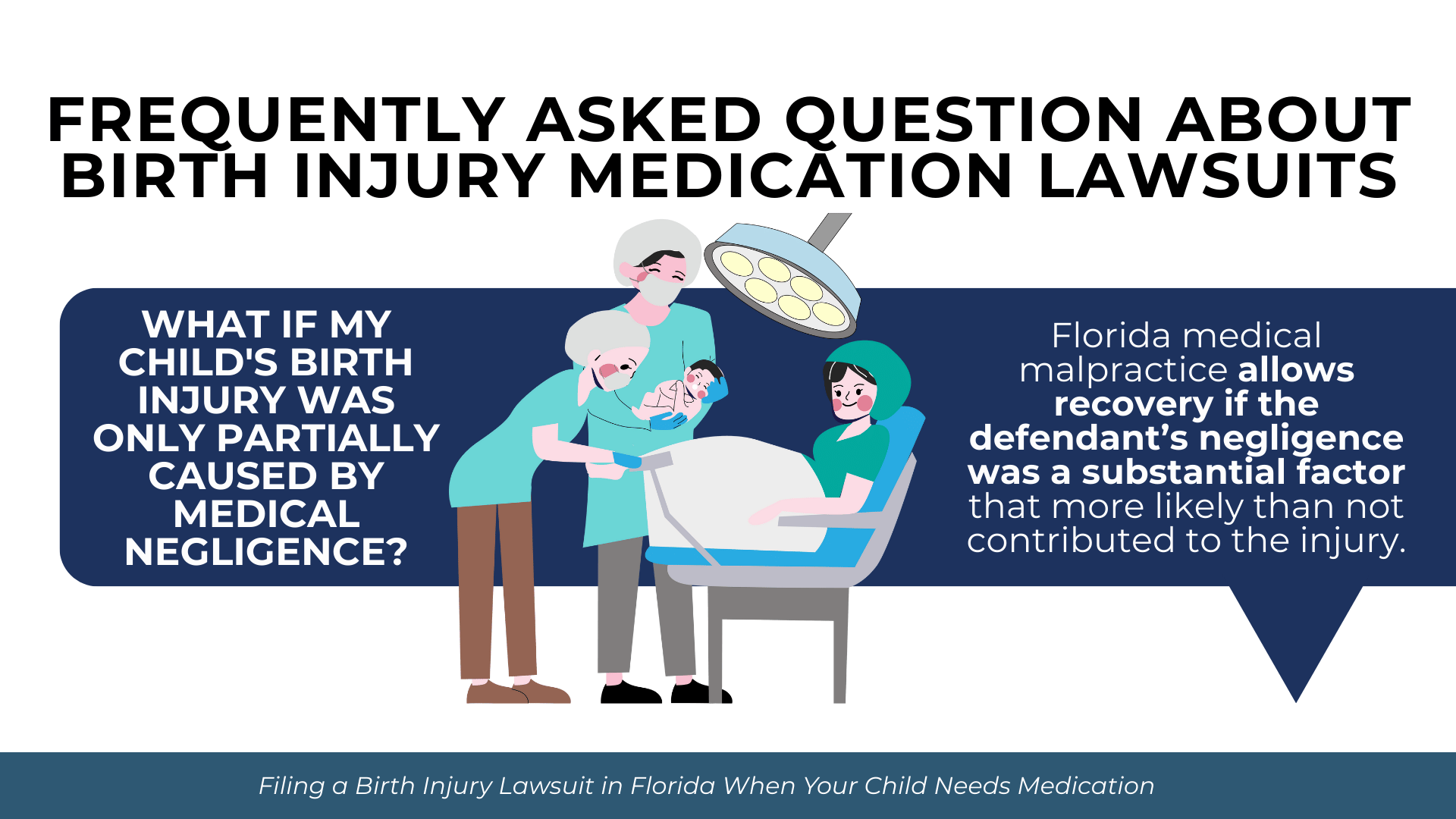
Florida medical malpractice claims operate under pure comparative negligence, meaning a plaintiff can recover even if other factors contributed to the injury. Under Ruiz v. Tenet Hialeah Healthsystem, Inc., the defendant’s negligence need not be the primary cause of injury — it must only be a substantial factor. However, the plaintiff must still prove that negligence more likely than not contributed to the harm.
Do I need an expert witness to file a birth injury medication claim?
Yes, Florida law requires expert testimony in medical malpractice cases. Under Fla. Stat. § 766.102, the expert must hold a valid license, conduct a complete review of the medical records, and meet specialty-matching requirements. A verified expert opinion must accompany the Notice of Intent before filing suit.
What happens if my child needs medication for their entire life?
If your child requires lifelong medication management, a successful claim can recover projected medication costs for the child’s entire expected lifespan. Life care planners work with medical experts to project future needs, and economists calculate the present value of these future expenses to include in the damages claim.
Taking Legal Action for Your Child’s Birth Injury
Families whose children require ongoing medication for birth injuries face significant challenges, but Florida law provides a framework for pursuing compensation when negligent medical care caused the harm. The costs of anticonvulsants, muscle relaxants, pain medications, and other treatments can accumulate to substantial amounts over a child’s lifetime, and families have the right to seek recovery of these expenses along with compensation for their child’s pain and suffering.
Success in these cases requires meeting Florida’s procedural requirements, including the mandatory pre-suit investigation and expert affidavit. The statute of limitations exception for minors provides additional time for families to pursue claims, but acting promptly helps preserve evidence and allows for thorough case preparation.
If you have questions about pursuing a birth injury claim when your child requires ongoing medication, contact Prosper Injury Attorneys to discuss your situation.