Cruise ships carry thousands of passengers through environments filled with wet decks, steep stairs, moving floors, and high-energy activities. When injuries happen at sea, passengers often face questions they never anticipated: Is this injury serious? Will I need ongoing treatment? Does the cruise line bear any responsibility?
Common cruise ship injuries range from minor sprains to severe head trauma. Understanding what injuries passengers typically sustain—and what your legal rights are afterward—can help you make informed decisions about medical care and potential claims. This guide breaks down the injury types you should know about and the critical steps for protecting yourself after an accident.
What Are the Most Common Cruise Ship Injuries?
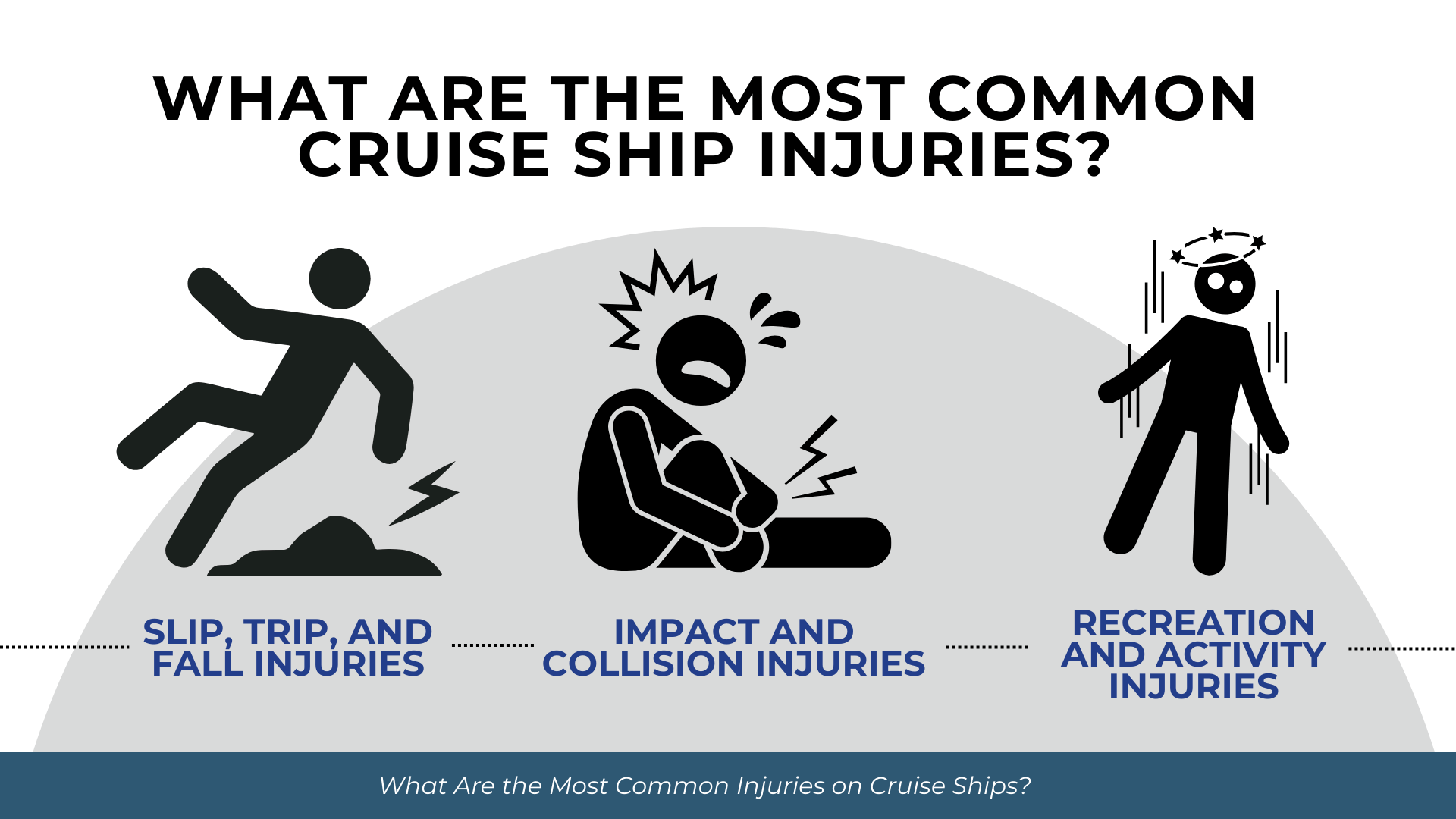
Research into cruise ship incidents reveals consistent patterns in how passengers get hurt. About 45% of cruise injuries involve slips, trips, or falls, making them the dominant category. But the specific injuries passengers sustain vary based on the circumstances of each accident.
Slip, trip, and fall injuries
Falls on cruise ships typically produce injuries to the extremities and back. Passengers who slip on wet pool decks or trip over cabin thresholds often suffer wrist fractures from bracing their fall, ankle sprains from twisting, or knee injuries from sudden impacts. Back injuries, including herniated discs and muscle strains, occur when passengers fall on stairs or land awkwardly. Gangway and ramp accidents produce similar injury patterns, often with added severity due to the height and angle involved.
The ship’s constant motion amplifies fall risk. Even gentle rolling can alter balance, and passengers unfamiliar with walking on moving surfaces face heightened danger on wet outdoor decks and steep interior stairways.
Impact and collision injuries
Cruise ship environments contain hard surfaces and heavy fixtures. Passengers sustain bruising, lacerations, and joint trauma from collisions with furniture that shifts during rough seas, doors that swing unexpectedly, and equipment in recreation areas. Ship motion can push passengers into walls, railings, or other passengers in crowded spaces. These conditions often trace back to operational and mechanical factors that create shipwide hazards.
Cabin bathrooms present particular collision risks. Compact layouts with hard tile surfaces leave little room for error. A fall in a ship bathroom often means striking the toilet, sink, or shower enclosure on the way down.
Recreation and activity injuries
Modern cruise ships feature high-energy amenities that produce predictable injury patterns. Surf simulators, rock-climbing walls, basketball courts, and water slides all carry inherent physical risk.
Recreation-related injuries on cruise ships commonly include:
- Surf simulator falls. These attractions produce fractures and joint injuries when passengers lose their footing on the high-pressure water surface.
- Rock wall and rope course incidents. Climbers sustain scrapes, sprains, and awkward landings when they lose grip or misjudge distances.
- Basketball and sports court injuries. Rolled ankles and collisions happen frequently on shipboard courts where space is limited.
- Water slide abrasions. Passengers who ignore spacing rules collide with others or strike slide surfaces at high speed.
- Pool incidents. Ships often lack lifeguards during certain hours, and non-fatal drownings and underwater incidents occur, particularly involving children.
- Hot tub medical events. Overheating and fainting in hot tubs become more dangerous when ship movement makes it difficult to exit safely.
Head and Brain Injuries on Cruise Ships

Head injuries represent some of the most serious outcomes of cruise ship accidents. While less common than fractures or sprains, traumatic brain injuries can have lasting consequences that affect every aspect of a passenger’s life.
How head injuries occur at sea
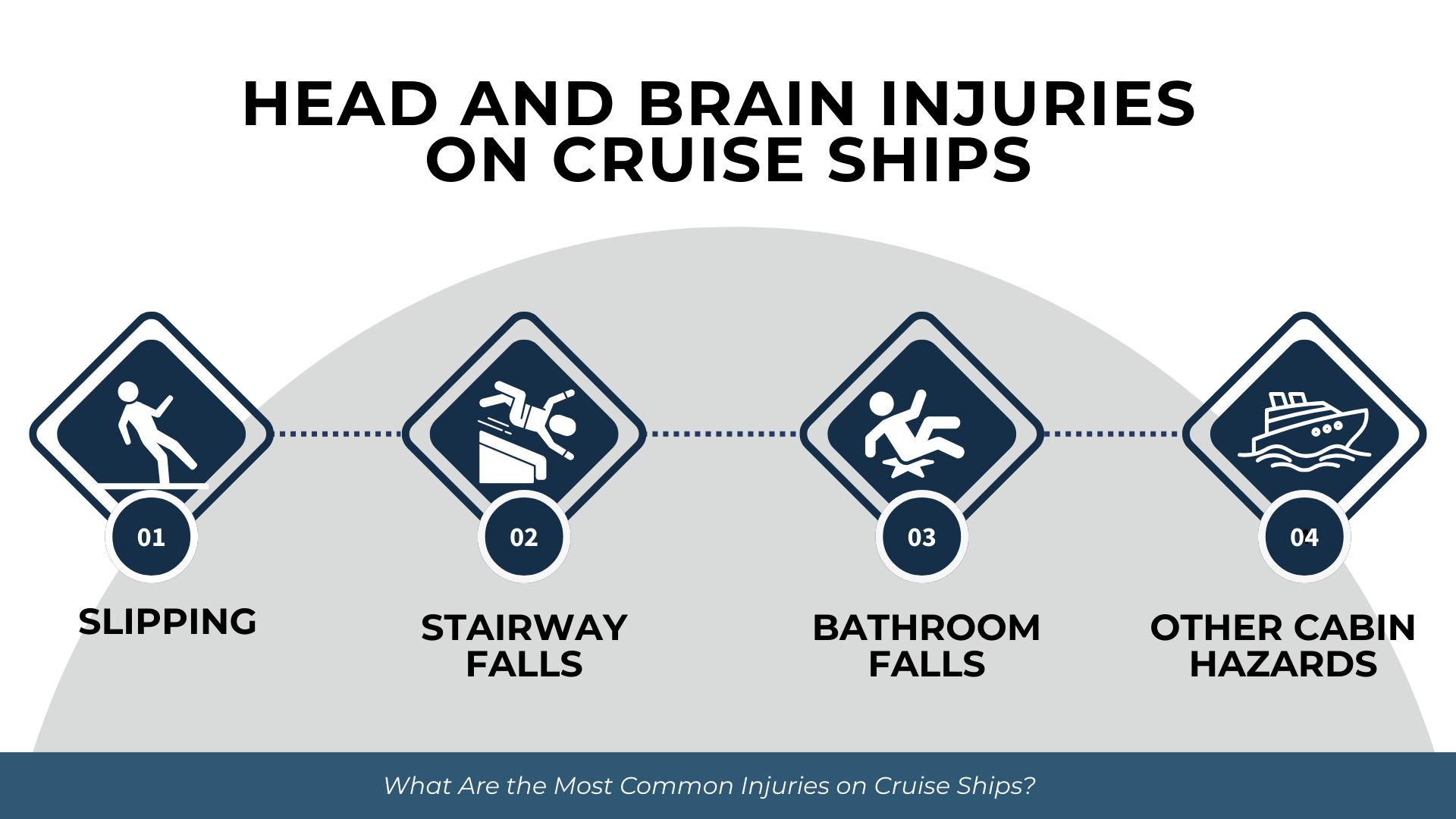
Passengers sustain head injuries primarily through falls—down stairs, on wet decks, or in cabin bathrooms. Stairway falls are particularly dangerous because multi-deck ship design means passengers use stairs frequently, and ship motion can cause missteps even on carpeted treads.
Cabin environments contribute to head injury risk as well. Bathroom falls on hard tile can result in skull strikes against fixtures. Heavy balcony doors can catch passengers off guard, and furniture shifting during rough seas can strike seated or sleeping passengers.
Why these injuries require immediate attention
Cruise ship medical centers are staffed by licensed physicians and nurses trained in emergency care. They can stabilize patients with head trauma, perform initial assessments, and monitor for deterioration. However, shipboard facilities have significant limitations.
For serious head injuries—including those with potential brain bleeding, skull fractures, or prolonged unconsciousness—the ship may need to coordinate a medical evacuation or divert to a closer port. These decisions involve weighing the ship’s location against the passenger’s deteriorating condition. Delayed access to advanced imaging like CT scans can mean a head injury worsens before proper treatment becomes available.
Fractures, Sprains, and Orthopedic Injuries
Orthopedic injuries represent the bread and butter of cruise ship medical centers. Fractures and soft tissue injuries occur across nearly every area of the ship, from pool decks to gangways.
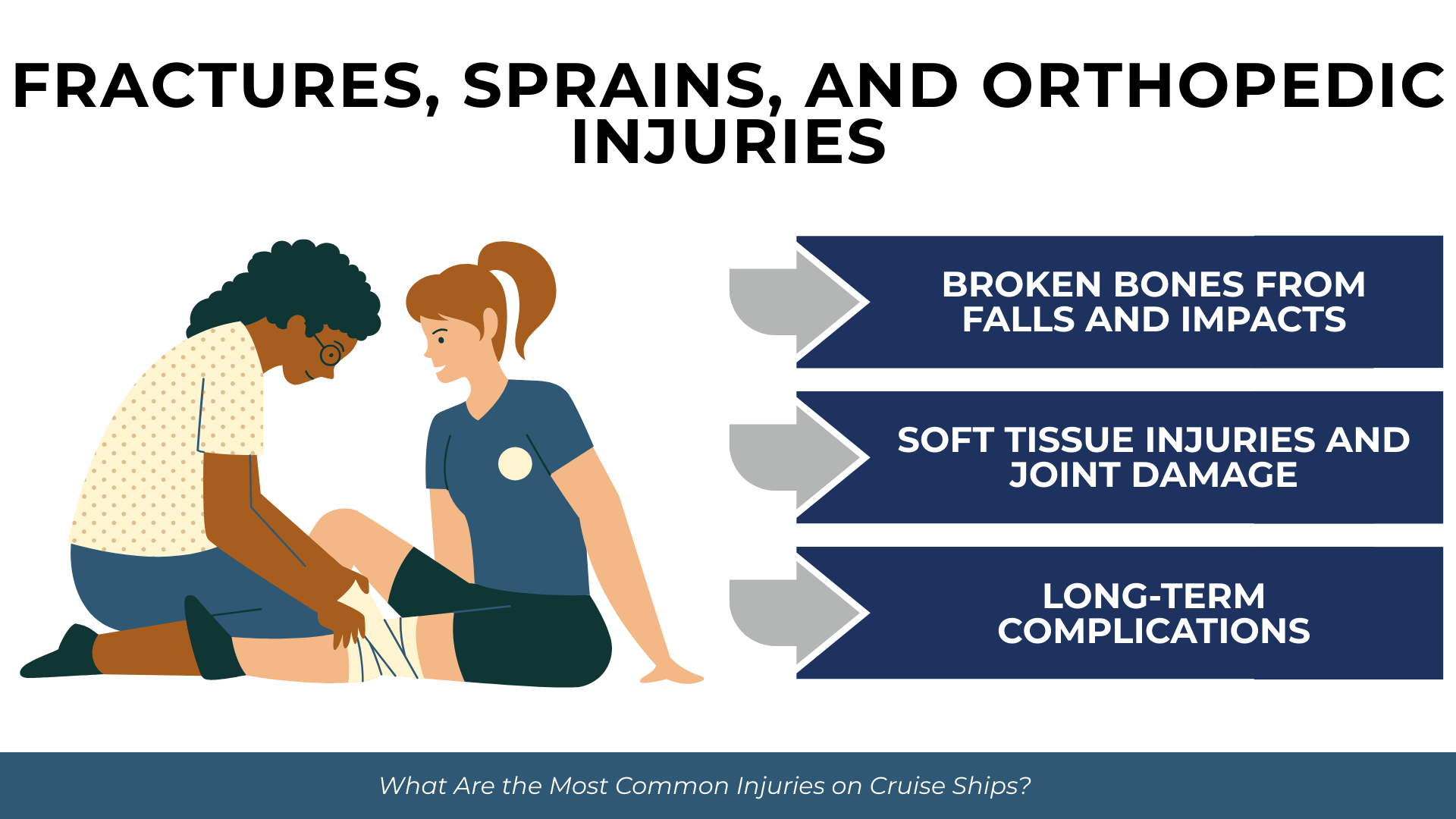
Broken bones from falls and impacts
Fractures on cruise ships most commonly affect the wrists, ankles, and hips. Wrist fractures happen when passengers instinctively extend their arms to break a fall. Ankle fractures result from twisting motions on stairs or uneven surfaces. Hip fractures, while less common overall, occur disproportionately among older passengers and can have severe long-term consequences.
Surf simulators generate specific fracture patterns. Passengers falling on the high-pressure water surface often land on outstretched arms, resulting in wrist and forearm breaks. The sudden, high-impact nature of these falls can produce more severe fractures than typical slip-and-fall accidents.
Soft tissue injuries and joint damage
Not all orthopedic injuries involve broken bones. Sprains, strains, and ligament tears occur frequently on cruise ships. Basketball courts produce rolled ankles when players change direction on limited playing surfaces. Rock-climbing walls and rope courses cause shoulder strains and knee injuries from unexpected movements.
Soft tissue injuries can be deceptive. A sprain that seems minor at first may involve partial ligament tears that require months of recovery. Passengers often underestimate these injuries, delaying treatment until they return home and find the damage worse than expected.
Long-term complications
Shipboard medical centers can set simple fractures, provide immobilization, and manage pain. But they lack the diagnostic equipment available in hospitals. Limited X-ray capabilities and no access to MRI machines mean some injuries may be incompletely assessed.
Passengers with fractures or significant soft tissue injuries often need follow-up care upon returning home. Delayed diagnosis of hairline fractures, torn ligaments, or internal joint damage can complicate recovery and affect treatment outcomes.
Injuries From Shore Excursions
A substantial portion of serious cruise-related injuries occur not on the ship but during shore excursions. Local conditions, unfamiliar terrain, and varying operator safety standards create risks passengers may not anticipate.
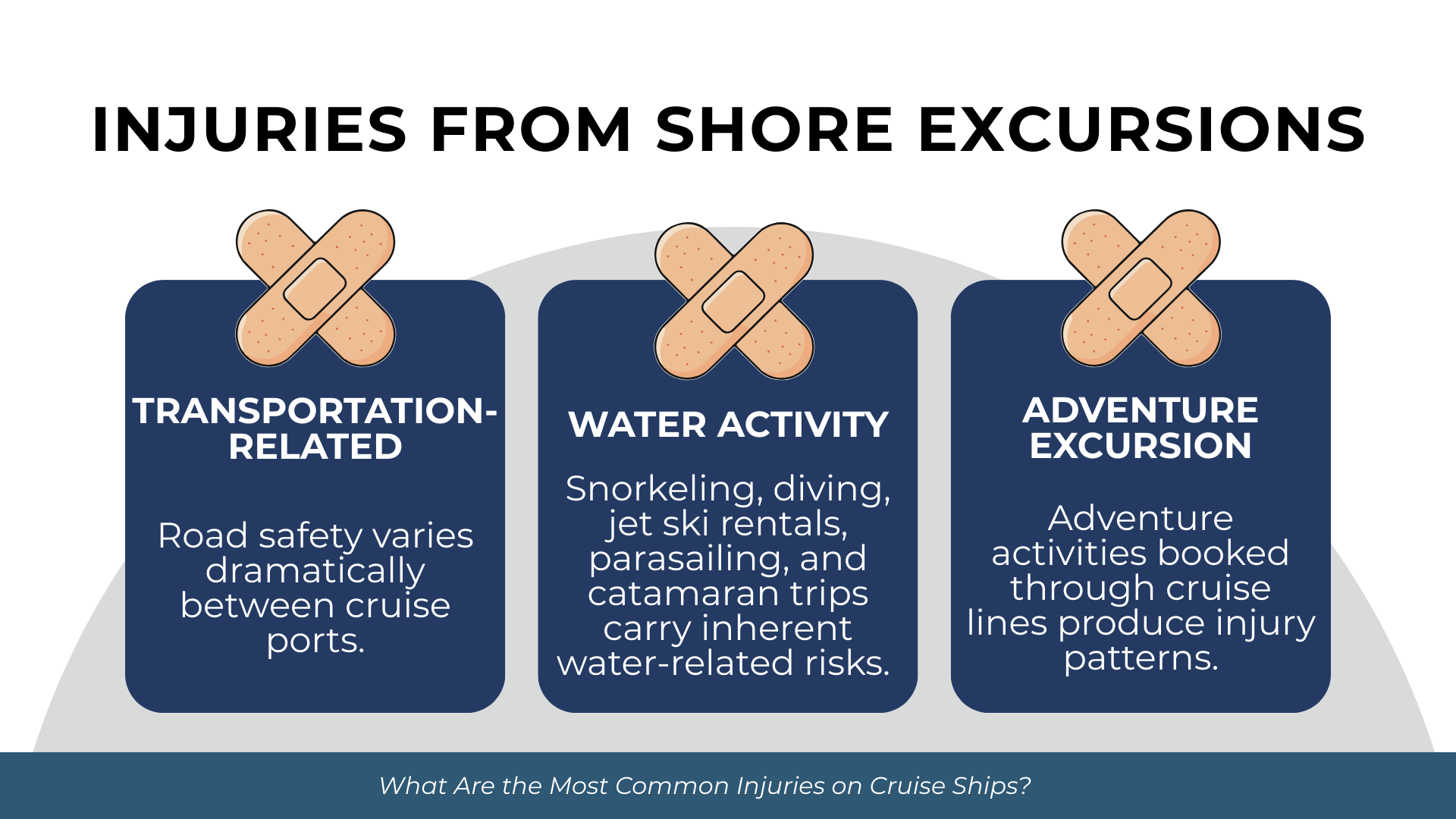
Transportation-related injuries
Road safety varies dramatically between cruise ports. Bus crashes, van collisions, and accidents on poorly maintained roads have caused serious passenger injuries in multiple destinations. Seatbelts may not be standard in excursion vehicles. Drivers may operate on roads that lack guardrails, clear signage, or adequate maintenance.
When a vehicle accident occurs during an excursion, passengers face the challenge of receiving care in an unfamiliar medical system while dealing with injuries that may require immediate intervention.
Water activity injuries
Snorkeling, diving, jet ski rentals, parasailing, and catamaran trips carry inherent water-related risks. Currents in unfamiliar waters can overwhelm even experienced swimmers. Equipment failures—from faulty diving gear to parasailing towline breaks—have produced serious injuries and drowning deaths.
Jet ski collisions occur when operators unfamiliar with the equipment or local water conditions lose control. Snorkeling drownings happen when passengers overestimate their abilities or underestimate current strength. These incidents often occur far from immediate medical assistance.
Adventure excursion injuries
Adventure activities booked through cruise lines produce injury patterns tied to terrain, equipment, and operator practices. These injuries occur across destinations with varying safety oversight.
Common adventure excursion injury scenarios include:
- ATV and UTV rollovers. Passengers unfamiliar with off-road vehicles flip them on uneven terrain or steep grades.
- Zipline incidents. Equipment malfunctions, hard landings, and mid-line collisions cause fractures and impact injuries.
- Cave-tubing accidents. Slippery rocks at entry and exit points produce falls, and submerged obstacles can cause injuries.
- Hiking falls. Unfamiliar footing on jungle trails, ancient ruins, and cobblestone streets leads to ankle injuries and falls.
- Wildlife encounter injuries. Horseback riding falls and animal bites produce unpredictable injuries, often far from medical facilities.
Environmental factors compound these risks. Heat exhaustion, dehydration, and disorientation from unfamiliar surroundings contribute to accidents that might not happen in more familiar conditions.
How Cruise Lines Can Be Held Responsible for Passenger Injuries
When passengers sustain injuries on cruise ships, federal maritime law governs their legal rights. Understanding the standards cruise lines must meet—and what injured passengers must prove—is essential for evaluating potential claims.
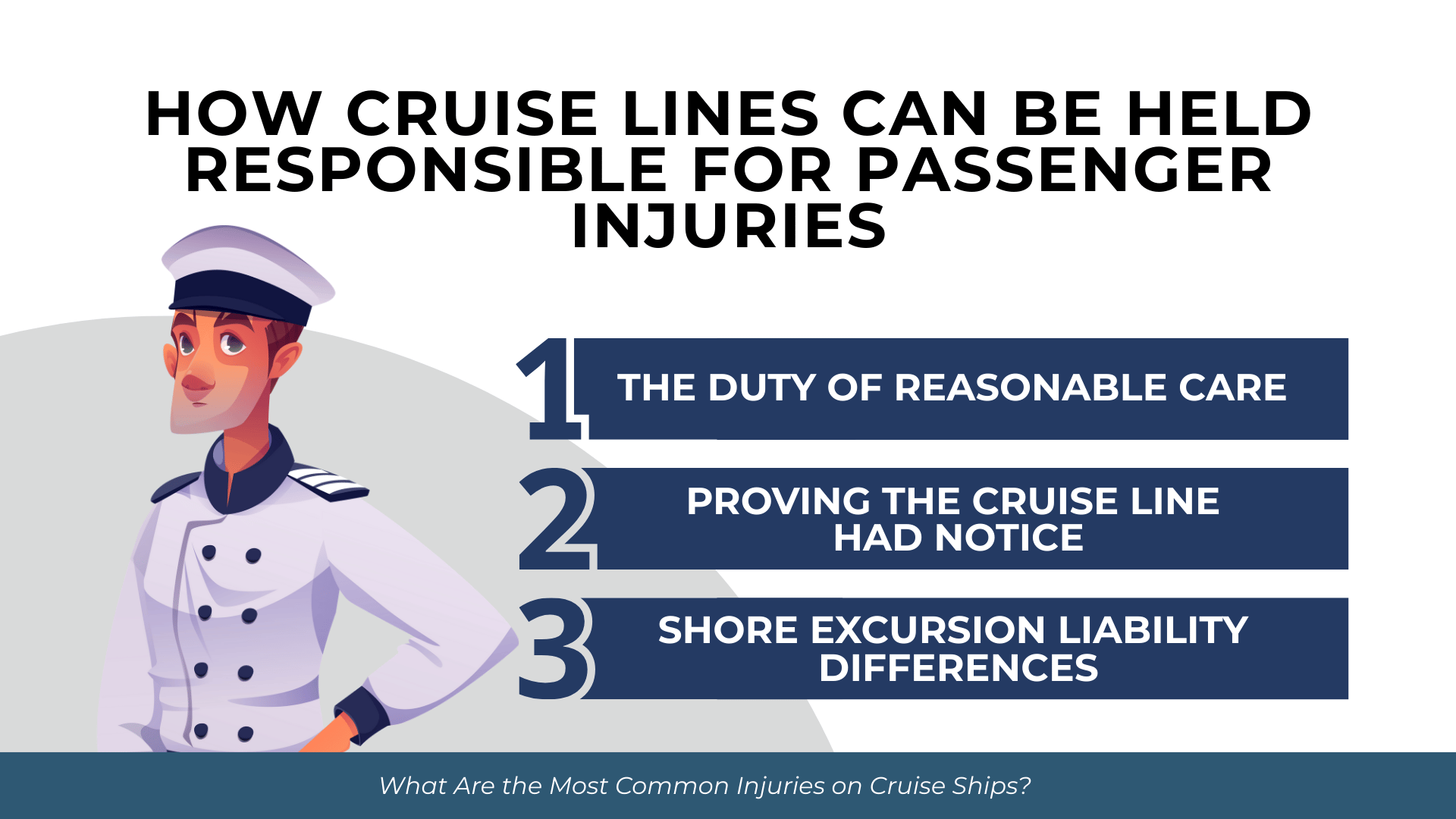
The duty of reasonable care
Cruise lines owe passengers a duty of reasonable care under the circumstances. This standard, established in Kermarec v. Compagnie Générale Transatlantique, 358 U.S. 625 (1959), means the cruise line must take reasonable steps to keep passengers safe.
Reasonable care is not strict liability. A cruise line isn’t automatically responsible every time a passenger gets hurt. Instead, the passenger must show the cruise line failed to meet the standard of care a reasonable cruise operator would provide. Elements of a negligence claim include establishing that a duty existed, the cruise line breached that duty, the breach caused the injury, and damages resulted.
Proving the cruise line had notice
A crucial element in most cruise ship injury cases is notice. Under Keefe v. Bahama Cruise Line, 867 F.2d 1318 (11th Cir. 1989), a cruise line is generally liable only if it had actual or constructive notice of the dangerous condition that caused the injury.
Actual notice means the cruise line created the hazard or knew about it directly. Constructive notice means the hazard existed long enough that the cruise line should have discovered it through reasonable inspection, or that prior similar incidents put them on notice of the danger. This notice requirement makes CCTV footage, inspection logs, and prior incident reports critical evidence in cruise injury cases.
Shore excursion liability differences
Injuries on third-party shore excursions involve different legal analysis. Under Smolnikar v. Royal Caribbean, 787 F. Supp. 2d 1308 (S.D. Fla. 2011),` cruise line ticket contracts typically prevent passengers from holding the cruise line vicariously liable for an independent operator’s negligence. However, cruise lines can still be held liable for their own direct negligence.
This means a passenger injured during an excursion may have a claim if the cruise line negligently selected an operator with a poor safety record, failed to warn passengers about known dangers, or presented the operator as an agent of the cruise line. The third-party operator remains the primary defendant for direct negligence causing the injury.
Critical Deadlines and Evidence After a Cruise Ship Injury
Cruise ship injury claims operate under strict time limits that differ from typical personal injury cases. Missing these deadlines can eliminate your ability to recover compensation entirely.
Time limits for filing a claim
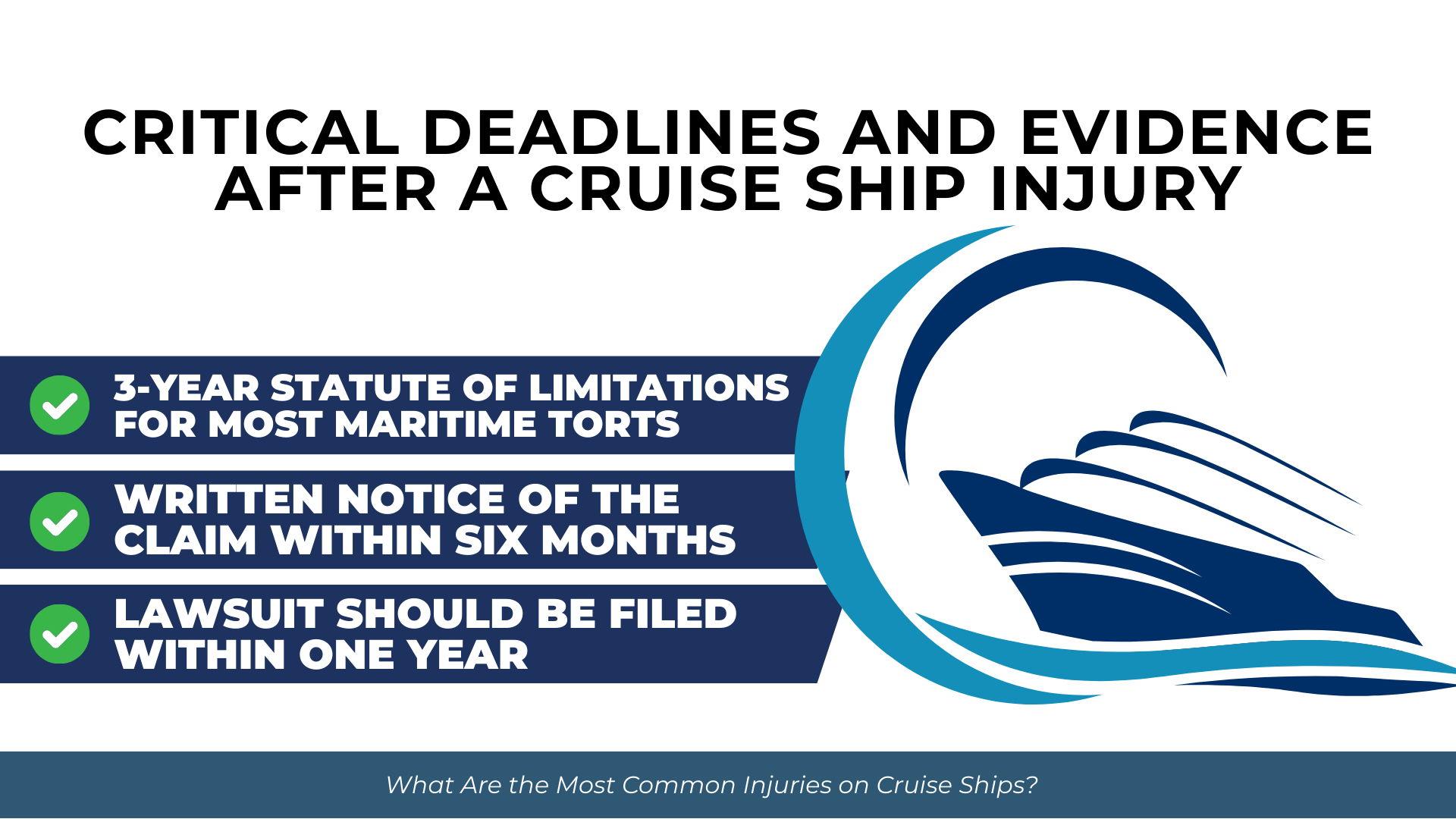
Federal maritime law provides a three-year statute of limitations for most maritime torts. However, cruise line ticket contracts routinely shorten this window dramatically.
Most major cruise lines require passengers to provide written notice of their claim within six months of the injury. They also require any lawsuit to be filed within one year. These contractual limitations are generally enforceable under federal law. A passenger who misses the six-month notice deadline may find their claim barred before they even consult an attorney. In other words, filing your claim correctly requires understanding the unique cruise ship injury claims process.
Ticket contracts also typically require lawsuits to be filed in a specific court—usually the U.S. District Court for the Southern District of Florida in Miami. This forum selection clause applies regardless of where the passenger lives or where the ship departed.
Why evidence preservation matters
Cruise lines have an affirmative duty to preserve evidence when litigation is reasonably foreseeable. However, passengers and their attorneys must act quickly to ensure critical evidence isn’t lost.
Key evidence to preserve or request immediately after a cruise ship injury includes:
- CCTV footage. Most public areas on cruise ships have camera coverage, but footage is often automatically overwritten within 7 to 30 days. A formal preservation request must be sent immediately.
- Incident reports. Crew members document accidents when they occur. These internal reports contain witness accounts, descriptions of the scene, and notations about conditions.
- Witness contact information. Other passengers who saw the accident may disembark and become unreachable within days.
- Medical records. All treatment provided by ship medical staff is documented. Request copies before leaving the ship.
- Photographs. Pictures of the hazard, your injuries, and the surrounding area should be taken as soon as possible after the incident.
Failure by the cruise line to preserve evidence like CCTV footage can result in adverse inference instructions at trial, allowing a jury to presume the missing evidence would have been unfavorable to the cruise line’s defense.
Frequently Asked Questions About Cruise Ship Injuries
What is the most common type of cruise ship injury?
Slips, trips, and falls account for approximately 45% of cruise ship injuries. These incidents occur on wet pool decks, in cabin bathrooms, on stairs, and in congested public areas. The injuries produced range from minor bruises to serious fractures and head trauma, depending on how and where the passenger falls.
What body parts are most frequently injured on cruise ships?
Wrists, ankles, and hips sustain the most fractures because passengers instinctively brace themselves during falls. Knees and shoulders are vulnerable to soft tissue injuries like sprains and ligament tears, particularly during recreation activities. Head injuries, while less common, occur in stairway falls and cabin bathroom accidents and can have serious long-term consequences.
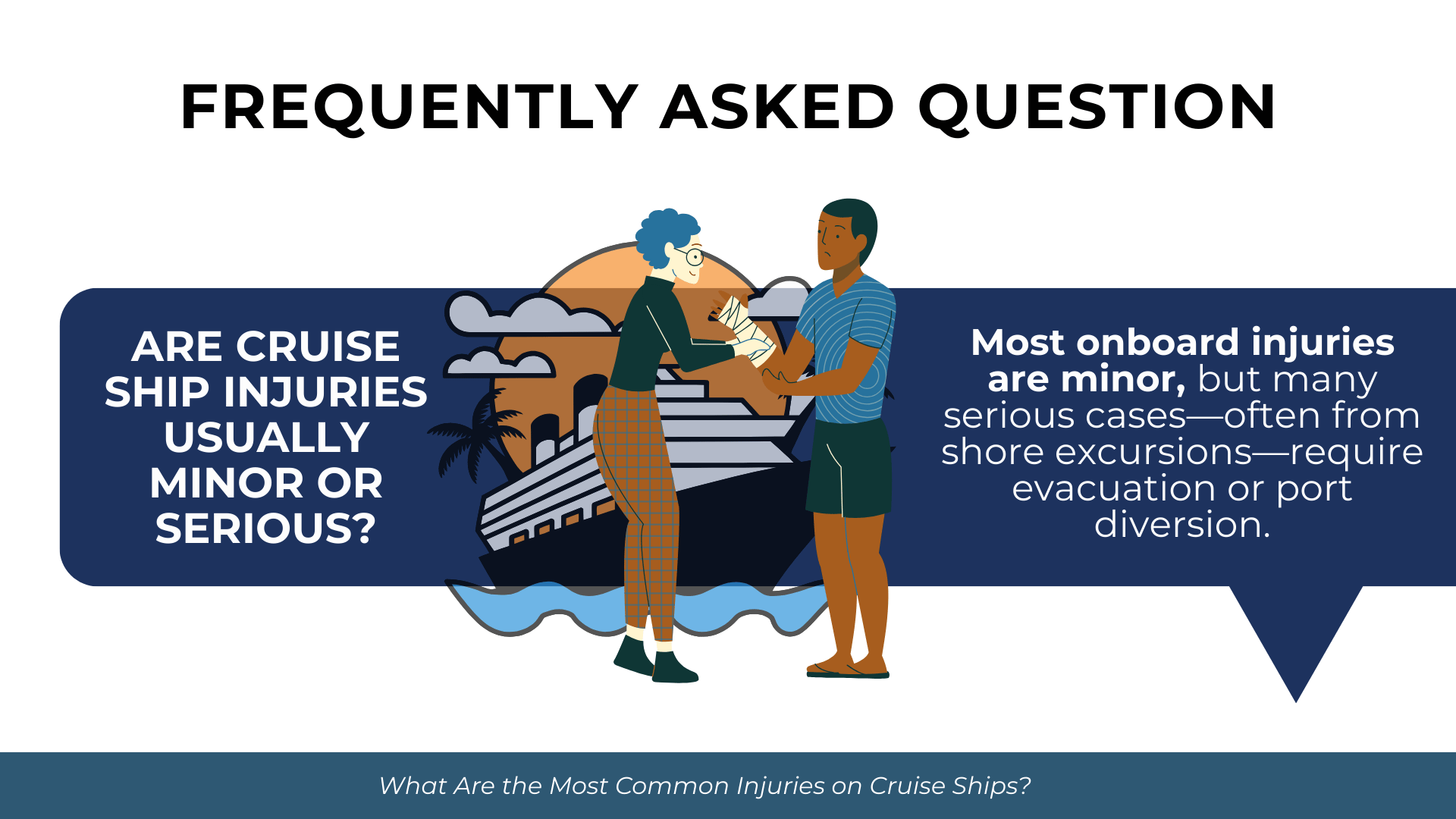
Are cruise ship injuries usually minor or serious?
Most cruise ship injuries treated at onboard medical centers are relatively minor—sprains, lacerations, and dehydration. However, a significant portion involve fractures, head trauma, or other conditions serious enough to require evacuation or port diversion. Shore excursions account for a disproportionate share of the most severe injuries due to transportation accidents, water activity incidents, and adventure activity mishaps.
Can I receive medical treatment for injuries on a cruise ship?
Cruise ships operate medical centers staffed by licensed physicians and nurses. These facilities handle emergencies including fractures, lacerations, and trauma stabilization, with care available around the clock. However, for serious conditions like major head injuries or cardiac events, the ship may coordinate a medical evacuation or divert to a port with hospital facilities because shipboard diagnostic equipment is limited.
How long do I have to file a claim after a cruise ship injury?
Most cruise line contracts require written notice of your claim within six months and filing of any lawsuit within one year. These deadlines are significantly shorter than typical personal injury statutes of limitations. Missing the notice deadline can bar your claim entirely, so consulting a Miami cruise ship injury attorney promptly after an injury is critical.
What evidence should I collect after being injured on a cruise?
Photograph the hazard and your injuries immediately. Get contact information from any witnesses. Report the incident to ship personnel and request a copy of the incident report. Seek treatment at the ship’s medical center and keep records of all care. Most importantly, have an attorney send a formal evidence preservation letter to the cruise line immediately, as CCTV footage may be overwritten within days.
Protecting Your Rights After a Cruise Ship Injury
Cruise ship injuries range from temporary inconveniences to life-altering events. Understanding the types of injuries that commonly occur—and the legal framework that applies to them—puts you in a stronger position to protect your health and your rights.
Time is critical after a cruise ship injury. Strict deadlines for providing notice and filing claims mean delays can be costly. Evidence like CCTV footage disappears quickly. The sooner you take action, the better your chances of preserving the proof needed to support your claim.
If you’ve suffered an injury on a cruise ship, contact Prosper Injury Attorneys to discuss your cruise ship injury case. Our Miami office handles maritime passenger claims and understands the unique challenges these cases present.