Operator inattention is the leading cause of boat accidents in Miami. When boat operators fail to maintain a proper lookout—whether due to distraction, inexperience, or simply not watching where they’re going—collisions, groundings, and serious injuries follow. Miami’s congested waterways, heavy tourist traffic, and year-round boating season make this problem especially dangerous. Understanding how operator inattention causes accidents can help victims recognize when negligence played a role in their injuries and what legal options they may have.
What Is the Leading Cause of Boat Accidents in Miami?
The answer is consistent across accident data and investigation reports: operator inattention, also called failure to maintain a proper lookout. This single factor contributes to more boating accidents in Miami than any other cause.
What “operator inattention” means
Operator inattention occurs when the person controlling a vessel fails to observe surrounding conditions, other vessels, obstacles, and changing water conditions. It includes looking away from the direction of travel, focusing on passengers or electronic devices, or simply failing to scan for hazards. On busy waterways, even a few seconds of inattention can lead to a collision.
The lookout requirement under navigation rules
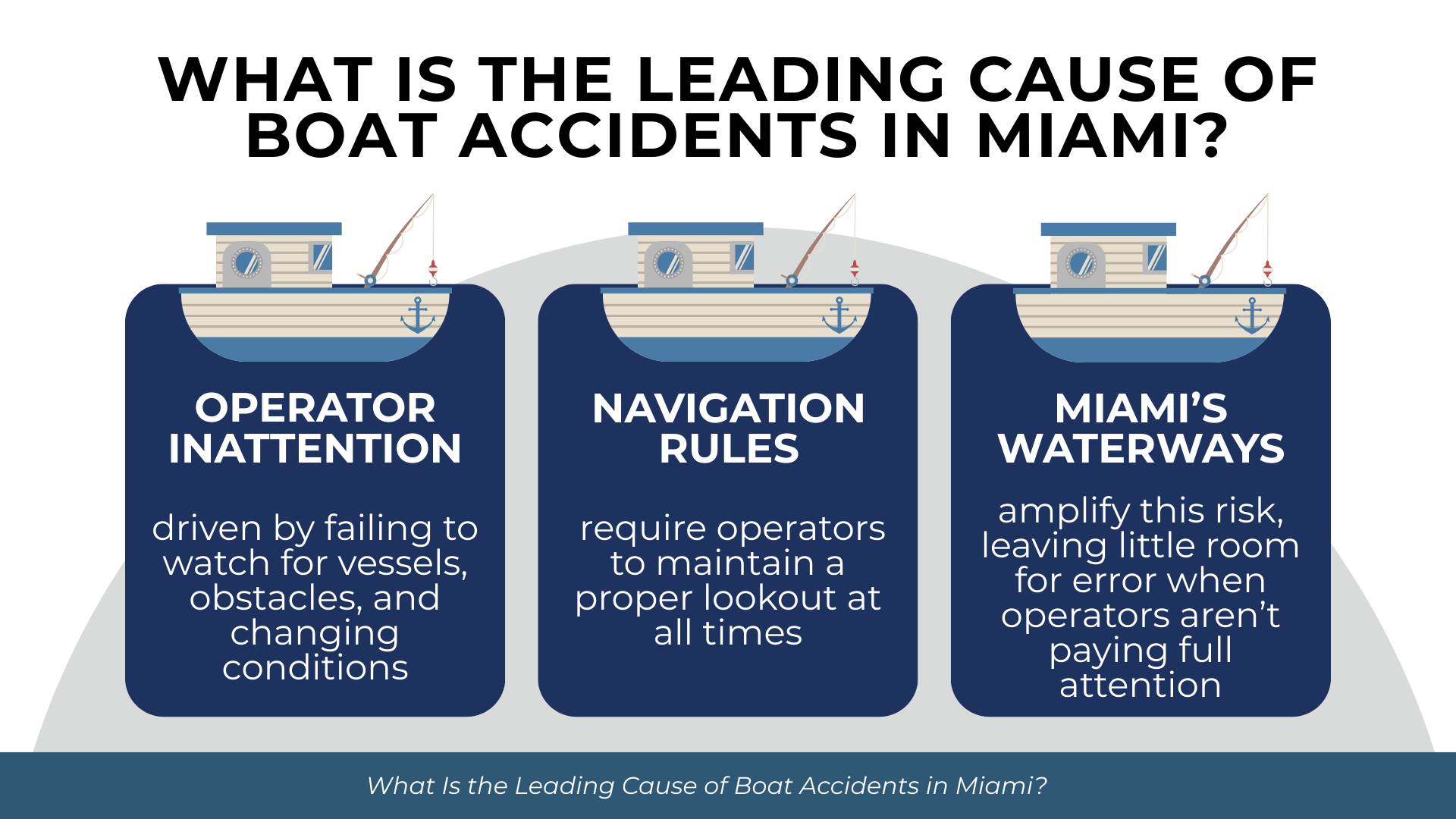
Federal navigation rules require every vessel operator to maintain a proper lookout at all times. This means using sight, hearing, and all available means to assess collision risk. The duty applies in good weather and bad, during daylight and at night. Operators cannot delegate this responsibility to passengers or assume other vessels will yield.
Why Miami’s waters amplify this problem
Miami’s waterways see heavy recreational traffic year-round. Biscayne Bay, the Intracoastal Waterway, and coastal areas host thousands of vessels on any given weekend. Traffic density means operators have less margin for error. When an inattentive operator enters a crowded channel or crosses a busy intersection, the consequences arrive quickly.
Why Do So Many Boat Operators Fail to Pay Attention?
Call us today at (305) 694-2676 or
contact us online for a free case evaluation.
Hablamos español.

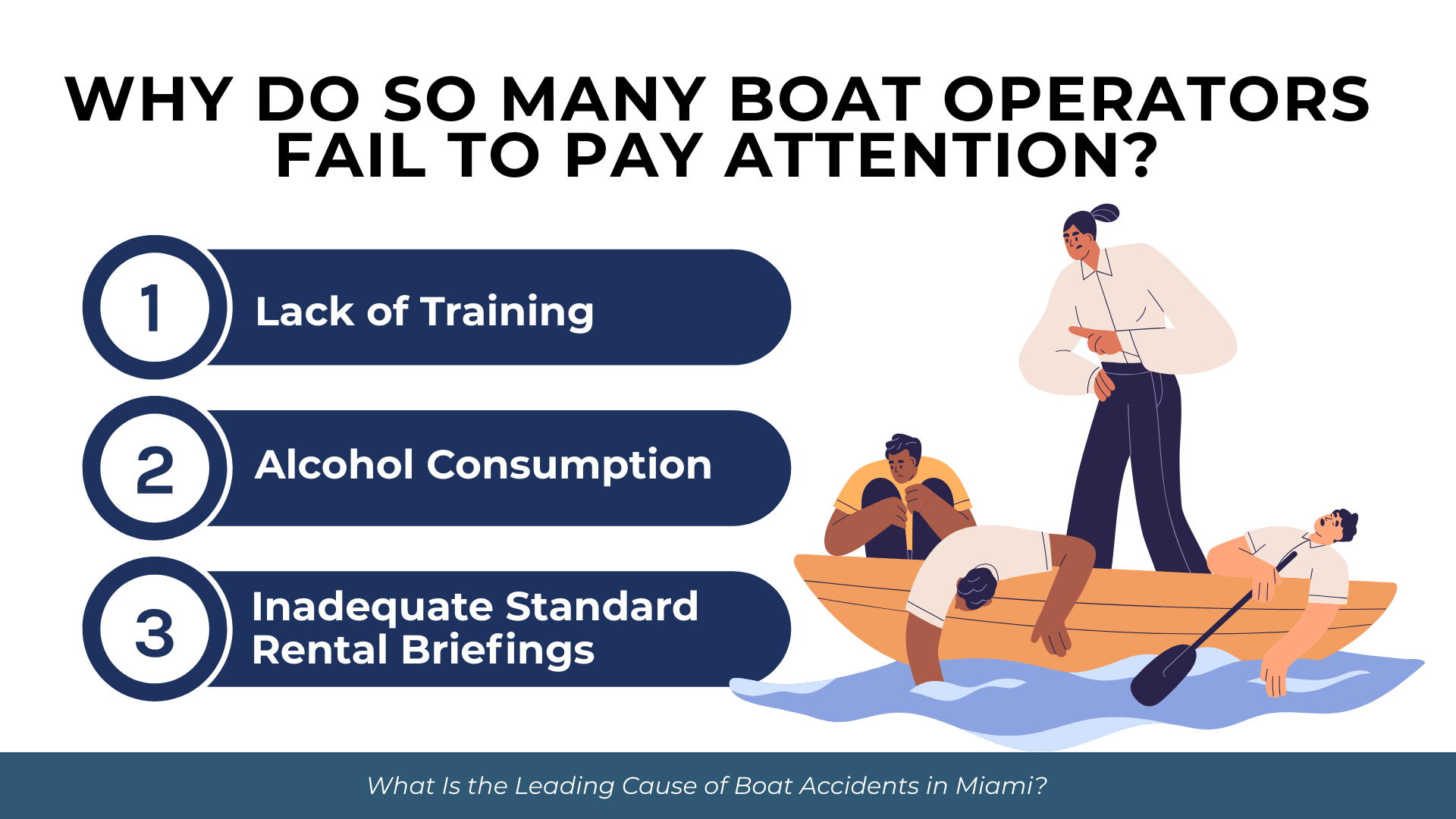
Several factors explain why operator inattention remains so prevalent on Miami’s waters. The combination of untrained operators, environmental distractions, and rental industry practices creates conditions where inattention becomes common.
The training gap
The most significant factor is lack of training. Nationally, 74% of fatal boating accidents occur on vessels where the operator had no formal boating safety instruction. Many operators—especially tourists renting boats for a day—have never learned basic navigation rules or hazard recognition.
Untrained operators often miss critical safety fundamentals:
- Navigation markers. They don’t recognize channel markers, shoal warnings, or no-wake zone indicators that experienced boaters read instinctively.
- Right-of-way rules. They don’t know which vessel should yield in crossing or overtaking situations, leading to confusion and hesitation.
- Local hazards. They’re unfamiliar with shallow areas, submerged obstacles, and high-traffic zones specific to Miami’s waterways.
- Speed management. They operate too fast for conditions, leaving no time to react when hazards appear.
- Lookout discipline. They don’t understand the continuous scanning required to operate safely in congested waters.
Alcohol and environmental factors
Alcohol use is a leading contributing factor in fatal boating accidents. The effects of alcohol are amplified on the water—sun exposure, heat, dehydration, and boat motion all compound impairment. Even moderate alcohol consumption degrades judgment, reaction time, and the vigilance needed to maintain proper lookout. Fatigue from a long day on the water produces similar effects.
The rental industry’s role
Rental operations contribute to the problem through inadequate preparation of inexperienced operators. Standard rental briefings typically last 10-20 minutes and cover only basic controls. The quality of instruction varies wildly between operations. Some rental staff rush through briefings to turn over vessels faster, leaving renters without meaningful preparation for Miami’s challenging conditions.
Florida addressed this gap with the Boating Safety Act of 2022, which now requires rental liveries to obtain permits and provide documented safety briefings. However, even required briefings cannot substitute for genuine experience on the water.
What Types of Accidents Result from Operator Inattention?
When operators fail to watch where they’re going, predictable accident patterns emerge. Understanding these patterns helps victims recognize when inattention caused their injuries.
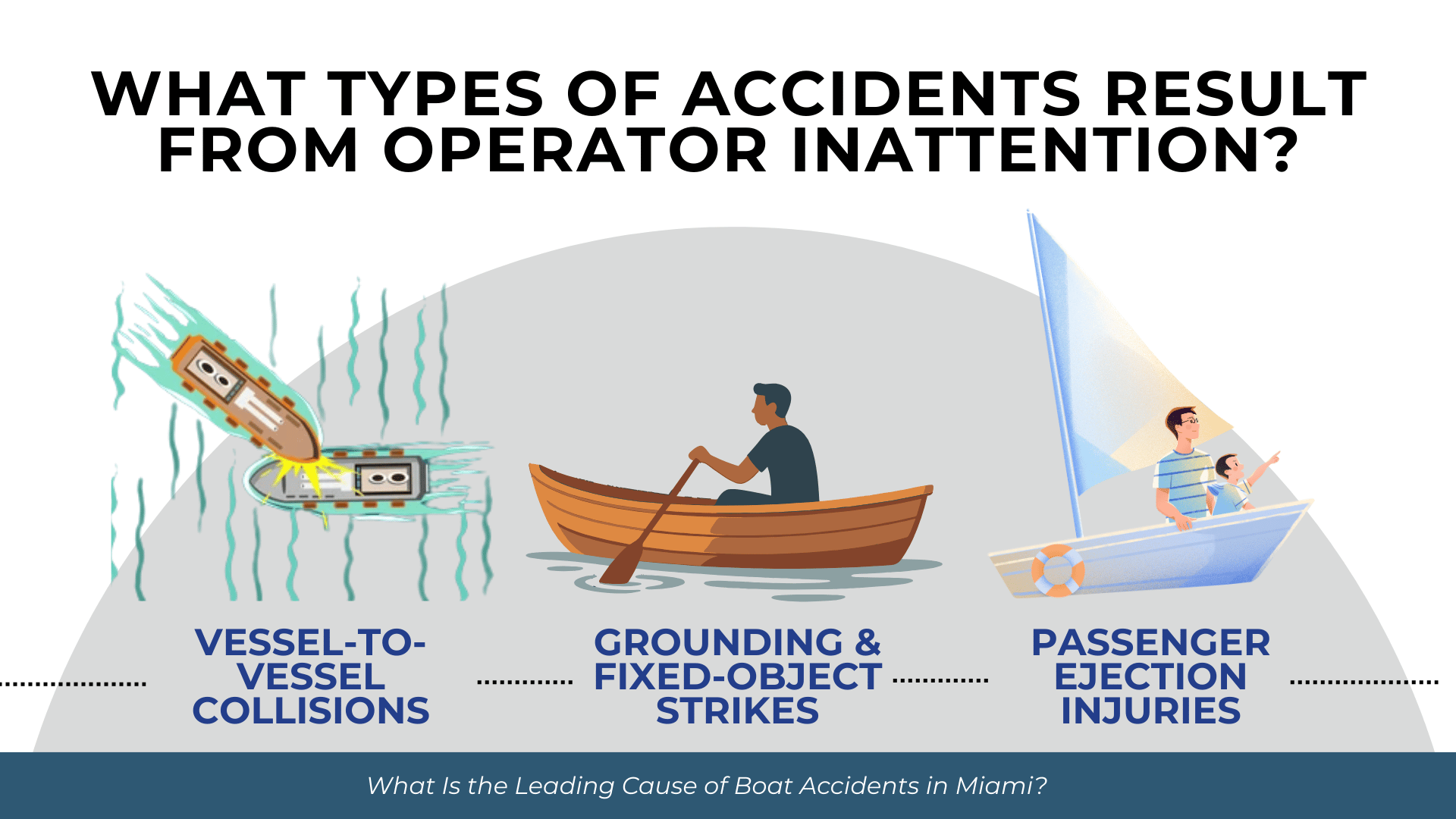
Vessel-to-vessel collisions
Collisions between boats are the most common result of operator inattention. When neither operator is watching properly, neither takes evasive action until it’s too late.
Common collision scenarios stemming from inattention include:
- Overtaking collisions. A faster vessel approaches from behind without the forward operator noticing, or the overtaking operator misjudges closing speed.
- Crossing-path collisions. Two vessels approach an intersection, and one or both operators fail to identify the collision course in time to yield.
- Channel congestion collisions. Multiple vessels in a narrow waterway, with operators distracted by passengers or scenery rather than watching traffic.
- Rental group collisions. Friends or family members renting multiple vessels and traveling together, with following boats striking lead vessels that stop suddenly.
- Dock-area collisions. Operators focused on maneuvering rather than watching for swimmers, kayakers, or other small craft near marina areas.
Grounding and fixed-object strikes
Operators who aren’t watching ahead run aground on shoals or strike docks, pilings, and other fixed objects. Miami’s waters include many shallow areas that require constant attention to navigation markers. When operators don’t recognize channel boundaries or depth warnings, groundings follow. Sudden stops from grounding cause passenger ejections and impact injuries.
Passenger ejection injuries
Inattention leads to sudden maneuvers when operators finally notice hazards. Sharp turns, emergency stops, or collision impacts throw standing passengers overboard or against hard surfaces. These ejection injuries include fractures, head trauma, and drowning when passengers enter the water unexpectedly.
Where in Miami Do These Accidents Happen Most Often?
Boat accidents concentrate in predictable locations where traffic density, mixed vessel types, and challenging navigation conditions converge.
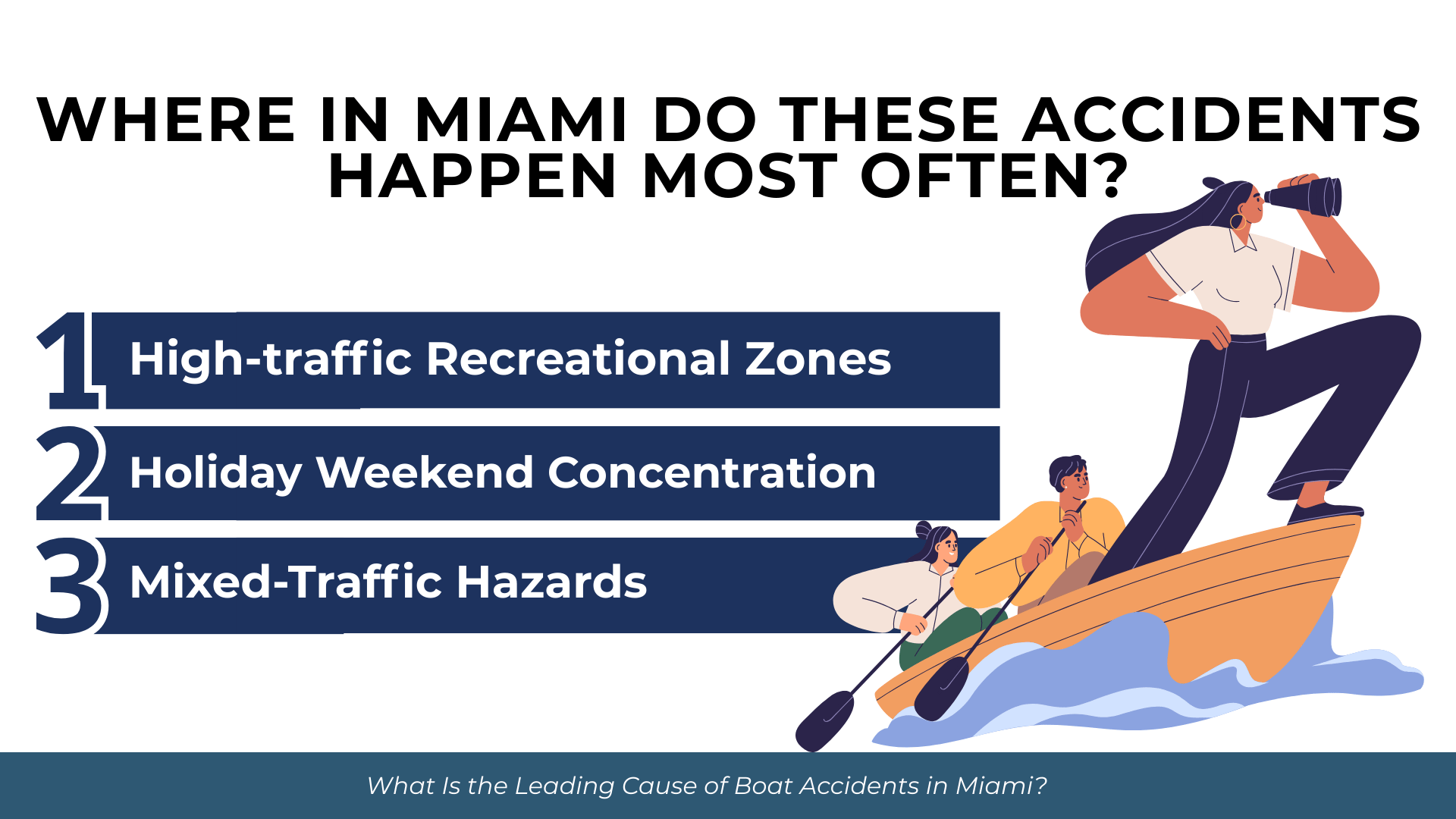
High-traffic recreational zones
Popular recreational areas see the highest accident concentrations. Biscayne Bay, the waters around Key Biscayne, and the Intracoastal Waterway through Miami-Dade County all experience heavy traffic. These areas attract tourists, rental vessels, and experienced boaters simultaneously. The mix of skill levels creates unpredictable conditions where inattentive operators pose the greatest risk.
Holiday weekend concentration
Accident rates spike dramatically on holiday weekends. Memorial Day, July 4th, and Labor Day bring the highest concentrations of vessels onto Miami’s waterways. More boats mean more potential collisions. Holiday weekends also correlate with increased alcohol use and larger groups of inexperienced operators.
Mixed-traffic hazards
Miami’s waterways host diverse vessel types: large yachts, center-console fishing boats, pontoons, jet skis, kayaks, and paddleboards. Each vessel type has different speed and maneuverability characteristics. Inattentive operators in larger, faster boats pose particular risks to smaller craft that may be invisible until the last moment.
How Does Florida Law Address Operator Responsibility?
Get started with your complimentary case evaluation today;
call us at (305) 694-2676 or reach us online using our
secure contact form.
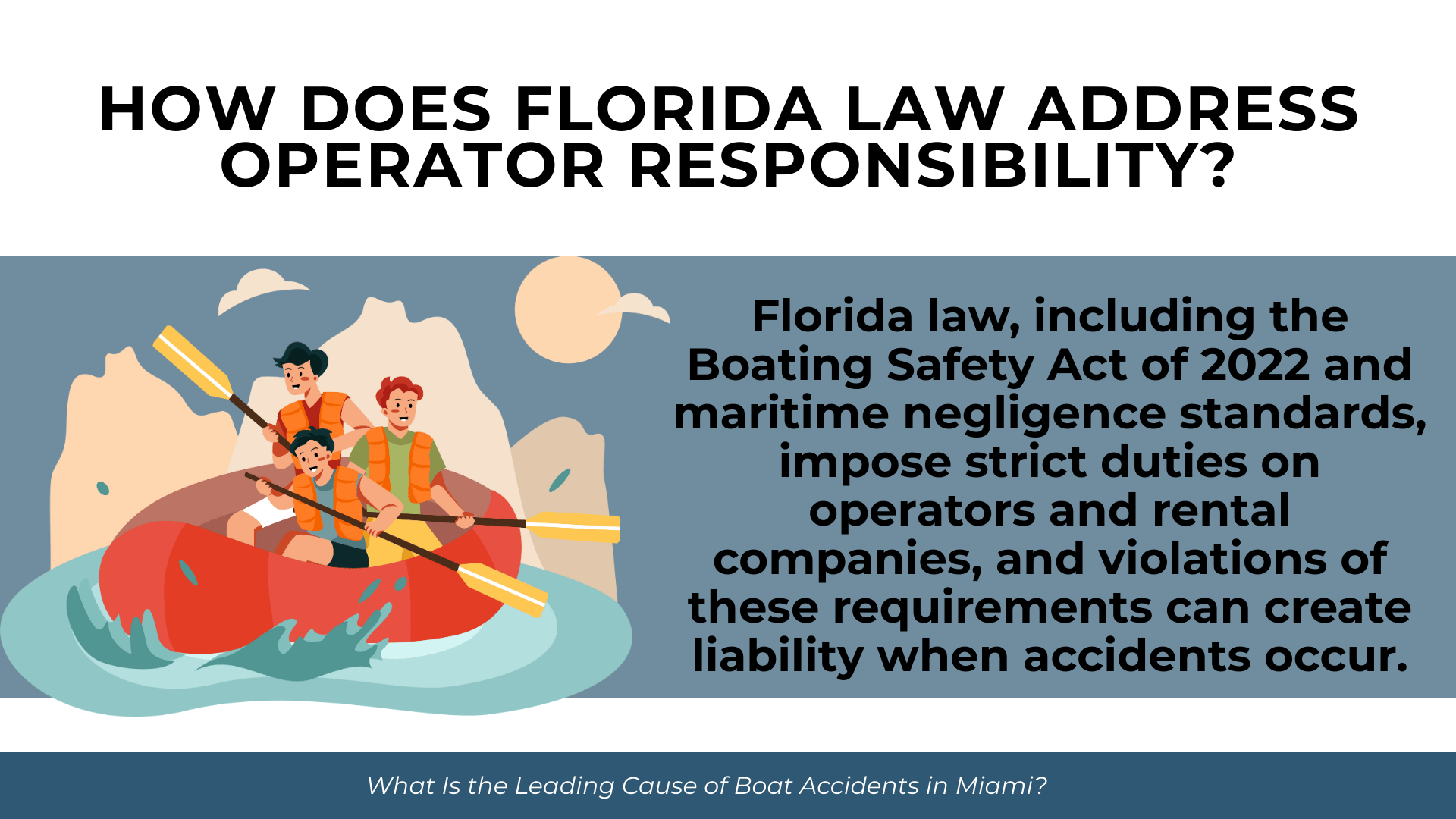
Florida law establishes clear obligations for boat operators and rental companies. These requirements create the framework for determining liability when accidents occur.
The Florida Boating Safety Act of 2022
Florida Statutes § 327.02 and subsequent provisions govern boating operations throughout the state. The Boating Safety Act of 2022 strengthened requirements for rental operations specifically. The Act requires rental liveries to obtain permits, provide specific pre-rental safety instructions, and document that briefings occurred. These requirements reflect legislative recognition that inadequate training contributes to accidents.
Rental company obligations
Beyond the 2022 Act requirements, rental companies operating on navigable waters have duties under general maritime negligence principles. These include maintaining equipment in safe condition, providing adequate instruction on vessel operation, warning of known hazards in the rental area, and verifying that renters meet minimum requirements. When rental companies cut corners on these obligations, they share responsibility for resulting accidents.
What these rules mean for accident victims
Violations of Florida boating regulations and failures to meet maritime negligence standards create the basis for liability claims. When an operator’s inattention causes your injuries, you may have claims against the operator personally, the vessel owner, and potentially the rental company that put an unprepared operator on the water.
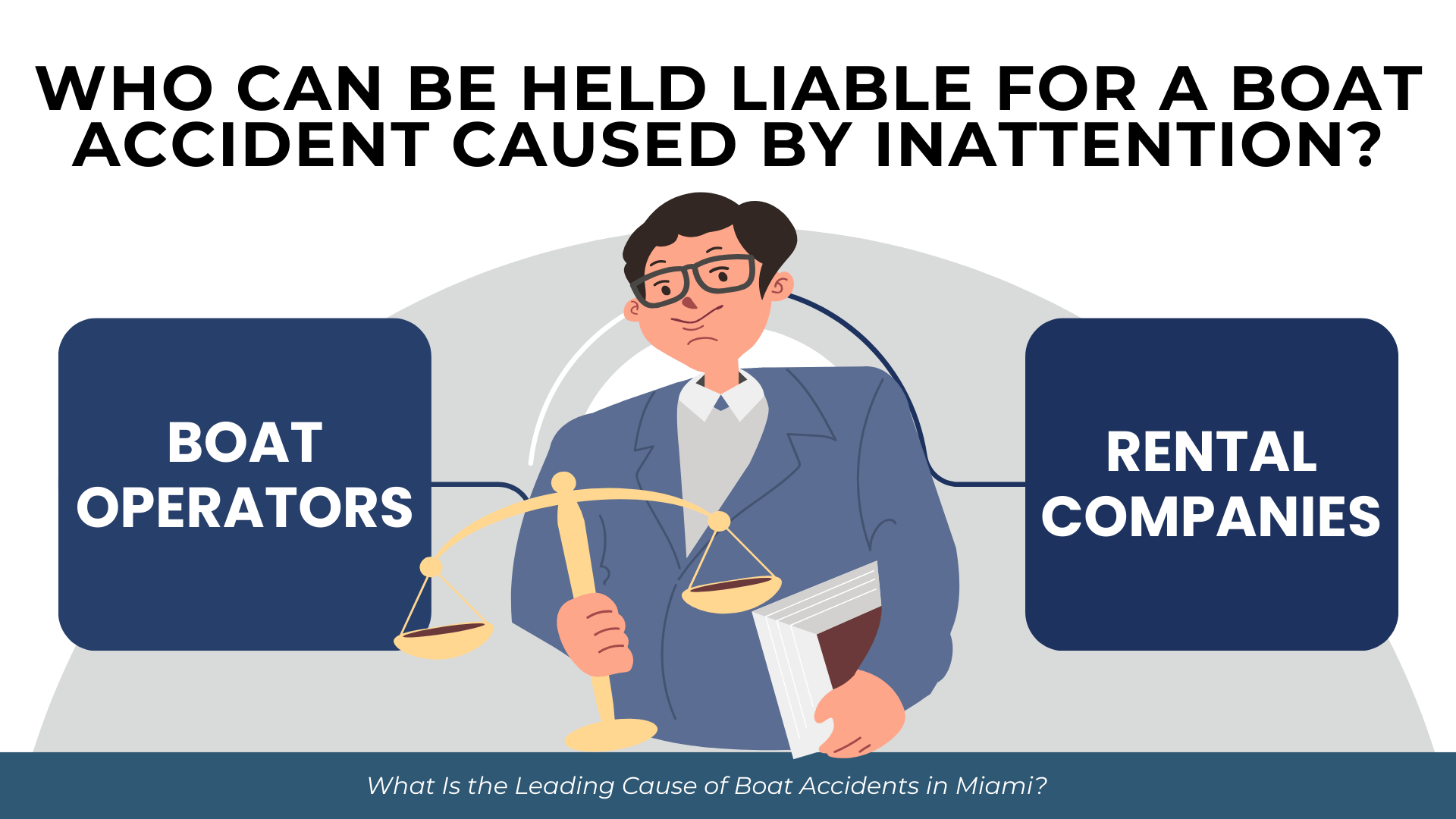
Who Can Be Held Liable for a Boat Accident Caused by Inattention?
Understanding potential defendants helps accident victims identify all sources of recovery. Multiple parties may share liability depending on the circumstances.
The boat operator’s personal liability
The operator who failed to maintain proper lookout bears primary responsibility under maritime negligence law. Operators owe a duty of reasonable care to everyone on the water. Failure to watch where you’re going breaches that duty. When the breach causes injuries, the operator is personally liable for damages.
When the rental company shares responsibility
Rental companies that put inexperienced operators on the water without adequate preparation may share liability. Under the doctrine of negligent entrustment, a company that rents a vessel to someone obviously unqualified to operate it safely can be held responsible for resulting injuries.
Rental company duties that may support liability include:
- Instruction duty. Providing adequate training on vessel controls, navigation basics, and local hazards before allowing renters to depart.
- Warning duty. Alerting renters to specific risks in the rental area, including traffic patterns, shallow zones, and weather conditions.
- Equipment duty. Maintaining vessels in safe operating condition, including functional steering, throttle, and safety equipment.
- Verification duty. Confirming that renters meet age requirements and appear capable of safe operation.
- Supervision duty. Not rushing renters through briefings to maximize daily revenue.
When companies fail these duties, they become co-defendants alongside the negligent operator.
Proving negligence in inattention cases
Proving an operator wasn’t paying attention often relies on circumstantial evidence: the accident happened in clear conditions with good visibility, the operator took no evasive action, witnesses observed the operator looking elsewhere, or the operator admits they didn’t see the other vessel until impact. Accident reconstruction, witness testimony, and the physical evidence of the collision all help establish what the operator should have seen if they’d been watching.
What Should You Do After a Boat Accident in Miami?
Taking the right steps after a boat accident protects your health and preserves your legal options.
Immediate documentation steps
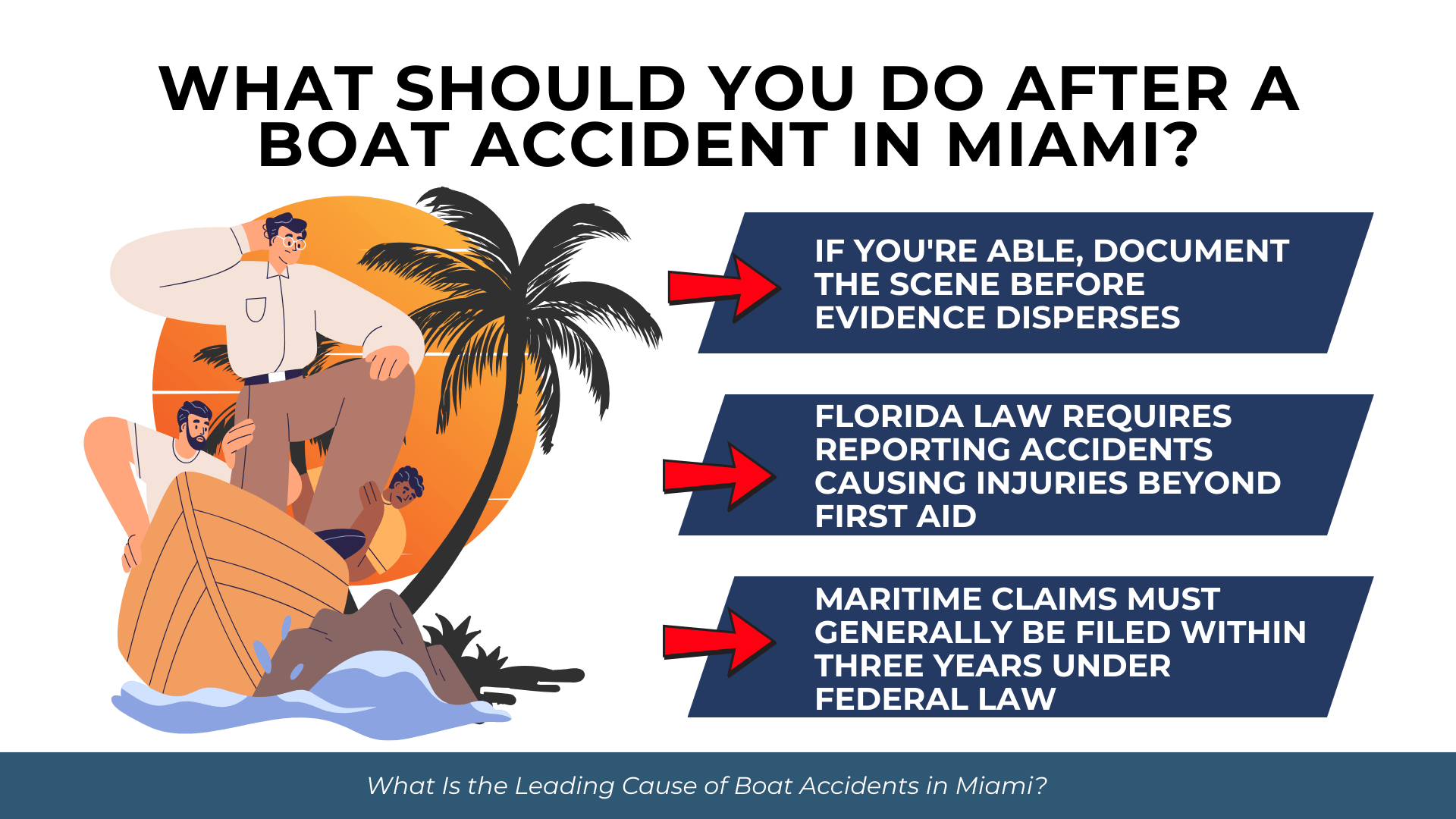
If you’re able, document the scene before evidence disperses. Take photographs of vessel damage, the accident location, and any visible injuries. Get contact information from the other operator and any witnesses. Note weather conditions, visibility, and traffic patterns at the time of the accident. This information becomes critical if the other operator later disputes what happened.
Reporting requirements
Florida law requires accident reporting when injuries require medical treatment beyond first aid, when there is a death or disappearance suggesting death or injury, when vessel damage exceeds a threshold amount, or when a vessel is lost. Reports go to the Florida Fish and Wildlife Conservation Commission. Filing a report creates an official record that may support your claim.
Why timing matters
Maritime claims must generally be filed within three years under federal law. However, evidence degrades quickly. Witness memories fade. Vessels get repaired or sold. If the accident occurred on navigable waters—as most Miami boat accidents do—maritime law applies, and prompt action protects your interests. Consulting an attorney soon after an accident helps preserve evidence and identify all potentially responsible parties before deadlines pass.
Frequently Asked Questions
Is operator inattention the same as reckless boating?
Not necessarily. Operator inattention means failing to maintain a proper lookout, which can result from distraction, inexperience, or simple carelessness. Reckless boating involves conscious disregard for safety. Both can lead to liability, but reckless conduct may support additional damages.
Can I sue if the boat operator who hit me wasn’t paying attention?
Yes. An operator who fails to maintain a proper lookout breaches the duty of reasonable care owed to others on the water. If that breach caused your injuries, you may have a valid negligence claim against the operator and potentially the vessel owner or rental company.
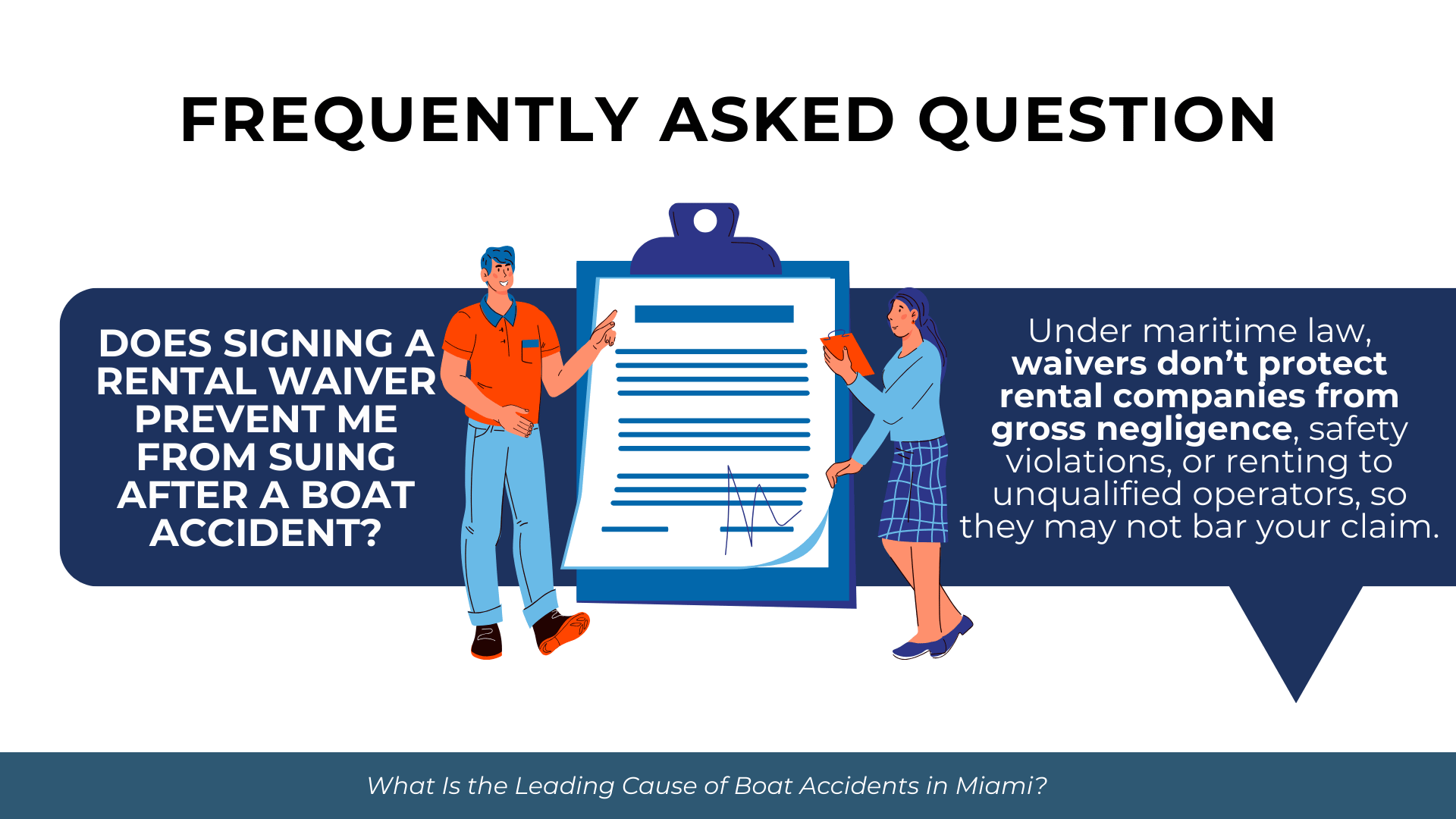
Does signing a rental waiver prevent me from suing after a boat accident?
Waivers have limits under maritime law. A waiver cannot protect a rental company from liability for gross negligence, recklessness, or violations of safety regulations. If the company failed to provide adequate instruction or rented to an obviously unqualified operator, the waiver may not bar your claim.
How long do I have to file a boat accident claim in Florida?
Maritime tort claims generally must be filed within three years under federal law. However, some claims may be subject to shorter deadlines depending on the circumstances. Consulting an attorney promptly protects your rights and preserves critical evidence.
What if the boat accident happened on a rented vessel?
Rental companies have duties to provide adequate instruction, warn of known hazards, and maintain equipment in safe condition. If a rental company failed to meet these obligations and that failure contributed to your accident, the company may share liability alongside the operator.
Protecting Your Rights After a Miami Boat Accident
Operator inattention causes more boat accidents in Miami than any other factor. When operators fail to maintain a proper lookout—whether from inexperience, distraction, or inadequate training—the results can be catastrophic. Victims of these preventable accidents deserve to understand their legal options.
If you were injured in a boat accident caused by operator inattention, multiple parties may share responsibility. The operator, vessel owner, and rental company may all face liability depending on the circumstances. Acting promptly preserves evidence and protects your claim.
Contact Prosper Injury Attorneys to discuss your Miami boat accident case.