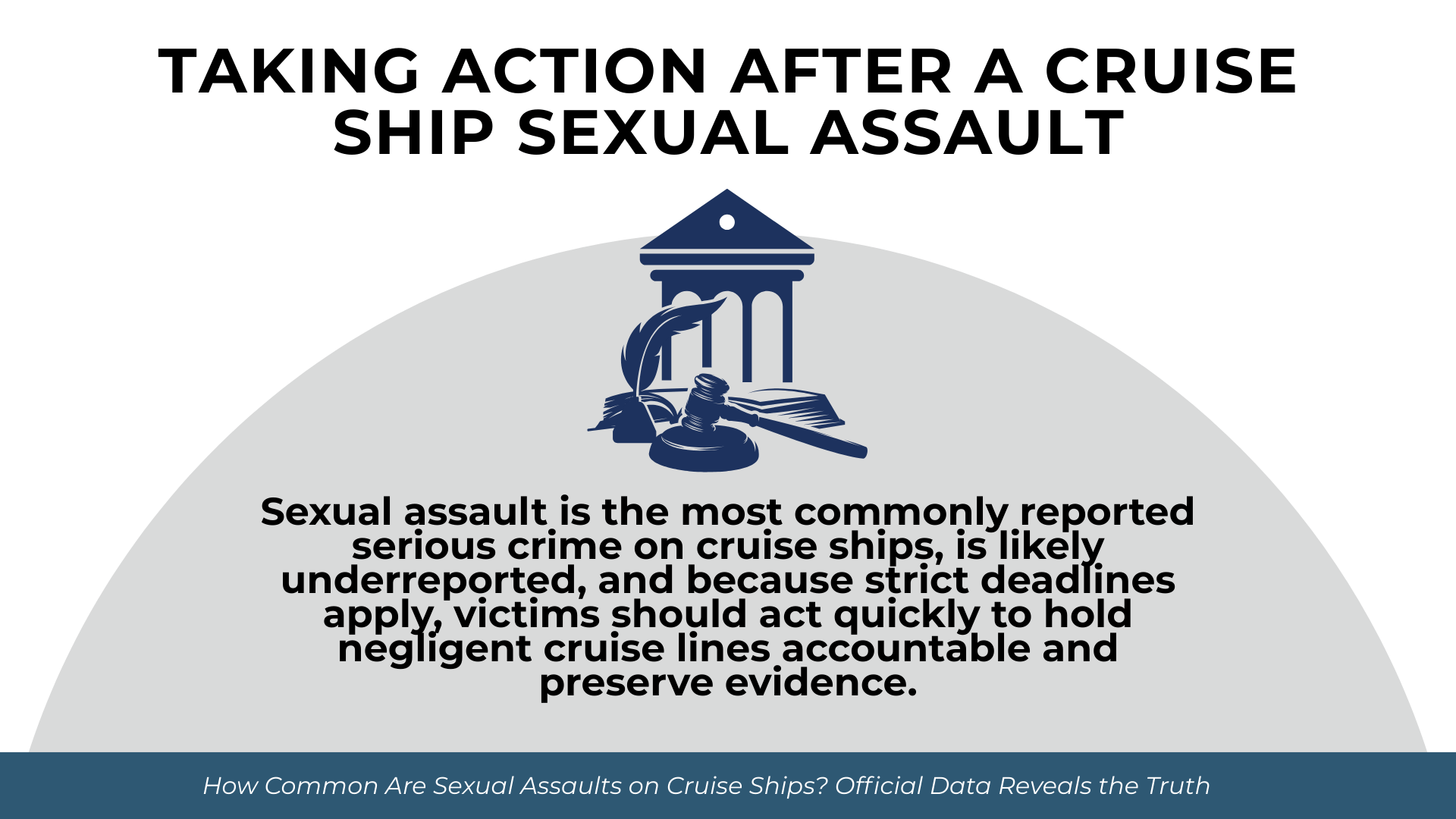
Sexual assault is the most commonly reported serious crime on cruise ships. That single fact, documented in federal data collected under the Cruise Vessel Security and Safety Act (CVSSA), answers the question many prospective passengers and recent victims ask: just how common are these crimes at sea? The answer is more troubling than cruise industry marketing suggests—and virtually every expert agrees the official numbers represent only a fraction of actual incidents.
This article examines what federal statistics reveal about sexual assault frequency on cruise ships, why true prevalence is almost certainly far higher, which cruise lines report the most incidents, who commits these crimes, and what legal rights victims have when pursuing accountability.
What Do Official Statistics Say About Sexual Assault on Cruise Ships?
Federal law requires cruise lines to report certain serious crimes to the FBI and Department of Transportation. These publicly available quarterly reports provide the most authoritative data on sexual assault at sea—though they capture only those incidents that reach formal federal reporting channels.
Federal reporting under the CVSSA
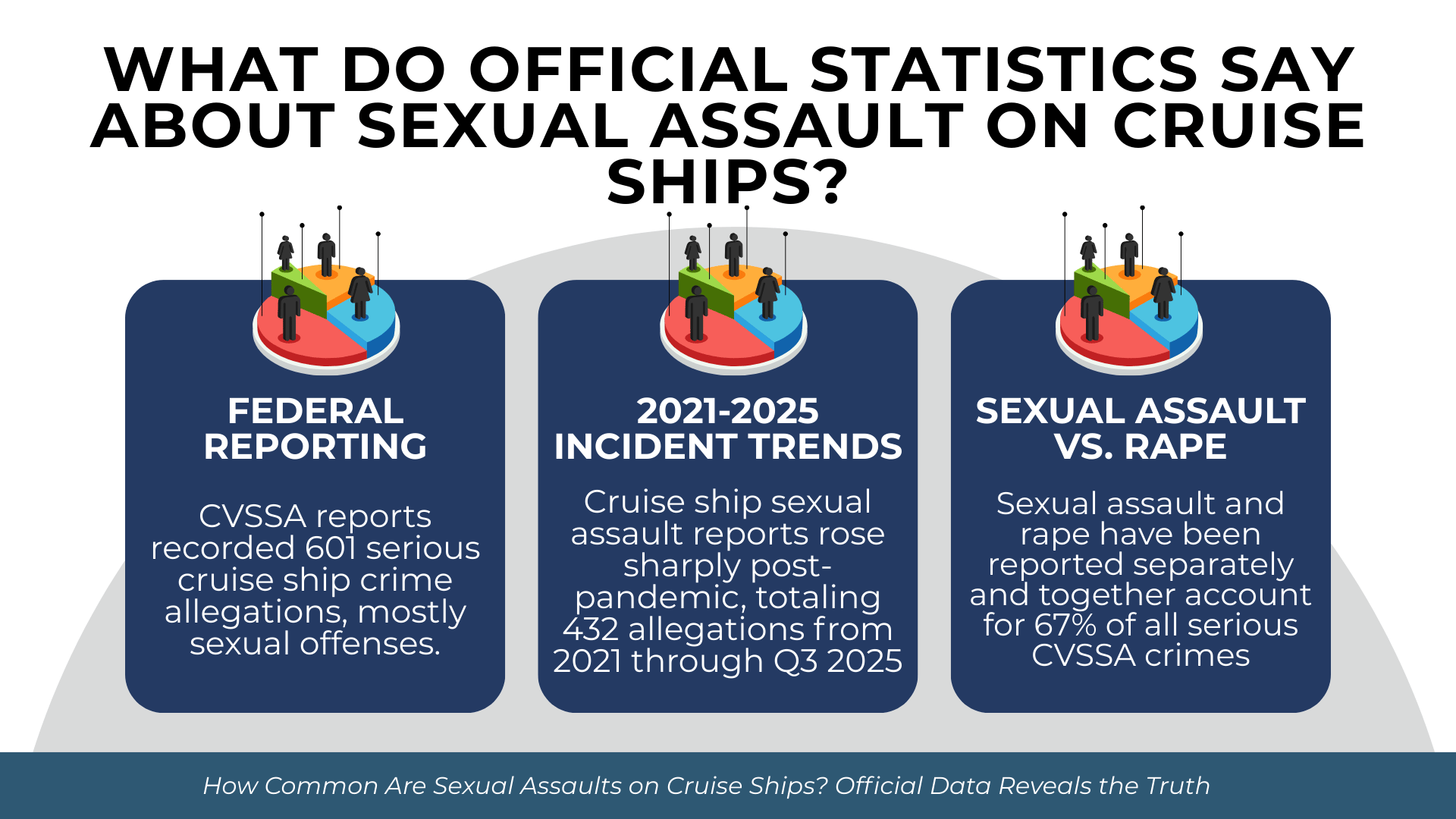
Under the Cruise Vessel Security and Safety Act, ships embarking or disembarking passengers at U.S. ports must report specified crimes—including sexual assault and rape—to federal authorities. The FBI and DOT publish this data quarterly, creating the only systematic public record of cruise ship crime. From the first quarter of 2021 through the third quarter of 2025, these reports documented 601 total serious crime allegations across all categories, with sexual offenses comprising the overwhelming majority.
Year-by-year incident trends (2021-2025)
CVSSA data reveals a sharp increase in reported sexual assaults as the cruise industry recovered from pandemic shutdowns. In 2021, when operations remained limited, federal reports captured just 10 sexual assault allegations. That number jumped to 87 in 2022 as passenger volumes returned. By 2023, sexual assault reports reached 131—a figure that included 52 classified as “sexual assault” and 79 classified as “rape” following a reporting methodology change that quarter.
The trend has remained elevated. In 2024, federal data captured 102 sexual assault allegations. Through the first three quarters of 2025 alone, another 102 incidents had been reported, putting the year on pace to match or exceed prior totals. Across the entire reporting period from 2021 through Q3 2025, CVSSA data documents 432 sexual assault allegations on cruise ships departing from or arriving at U.S. ports.
Sexual assault versus rape classifications
Beginning in the first quarter of 2023, federal reporting began distinguishing between “sexual assault” and “sexual assault-rape” as separate categories. This change provides greater specificity but complicates year-over-year comparisons. Of the 450 sexual offense allegations documented since this split began (Q1 2023 through Q3 2025), 236 were classified as sexual assault and 214 as rape. Sexual offenses collectively represent 67 percent of all serious crimes reported under CVSSA during this period—making sexual assault by far the dominant category of serious cruise ship crime.
Why Do Experts Believe True Numbers Are Much Higher?
Call us today at (305) 694-2676 or
contact us online for a free case evaluation.
Hablamos español.


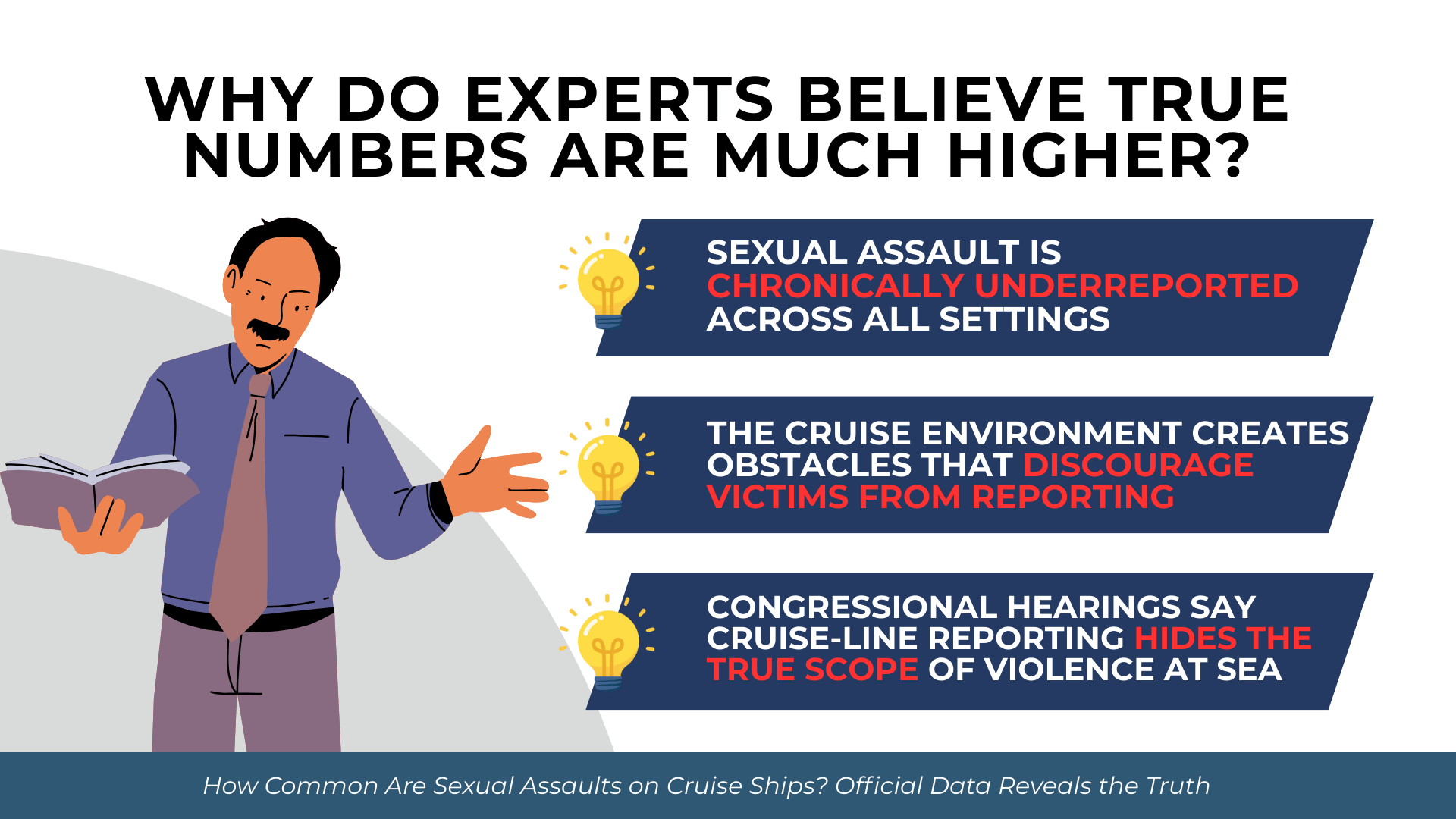
Official CVSSA statistics almost certainly understate actual sexual assault incidence on cruise ships. Every analysis of this data—from victim advocacy organizations to congressional testimony—acknowledges substantial underreporting that obscures the true scope of the problem.
General underreporting in sexual assault cases
Sexual assault is chronically underreported across all contexts. RAINN and criminal justice researchers estimate that roughly one-third of sexual assaults are reported to police in the general population. If similar ratios apply at sea, actual cruise ship incidents may be roughly three times higher than official counts suggest—meaning the 432 allegations documented since 2021 could represent well over a thousand actual assaults during that period.
Cruise-specific barriers to reporting
The cruise environment creates additional obstacles that suppress reporting beyond general societal factors. Several conditions unique to cruising make victims less likely to come forward:
- Cruise line control over internal processes. Ships classify and document incidents internally before any federal report is filed, creating opportunities for minimization or alternative categorization.
- Absence of independent law enforcement. No neutral police force operates onboard. Security personnel work for the cruise line, creating inherent conflicts of interest when investigating crimes that could expose their employer to liability.
- Reputational and commercial incentives. Cruise lines have powerful financial motivations to keep incident counts low, potentially influencing how aggressively they encourage or document reports.
- Victim confusion and vacation disruption. Many victims feel uncertain about reporting procedures, fear ruining their vacation or family trip, or simply want the experience to end without prolonged investigation.
- Jurisdictional complexity. Crimes at sea involve layered jurisdictions—flag state, port state, and federal authorities—that create confusion about who has authority and how investigations proceed.
Congressional concerns and data gaps
Congressional hearings on the proposed Cruise Passenger Protection Act have repeatedly highlighted these concerns. Legislators have noted that definitional choices, reporting discretion, and data gaps obscure the true scope of sexual violence at sea. The numbers that reach official FBI/DOT tallies represent only what survives multiple potential points of attrition between an assault occurring and an allegation appearing in federal statistics.
Which Cruise Lines Report the Most Sexual Assault Incidents?
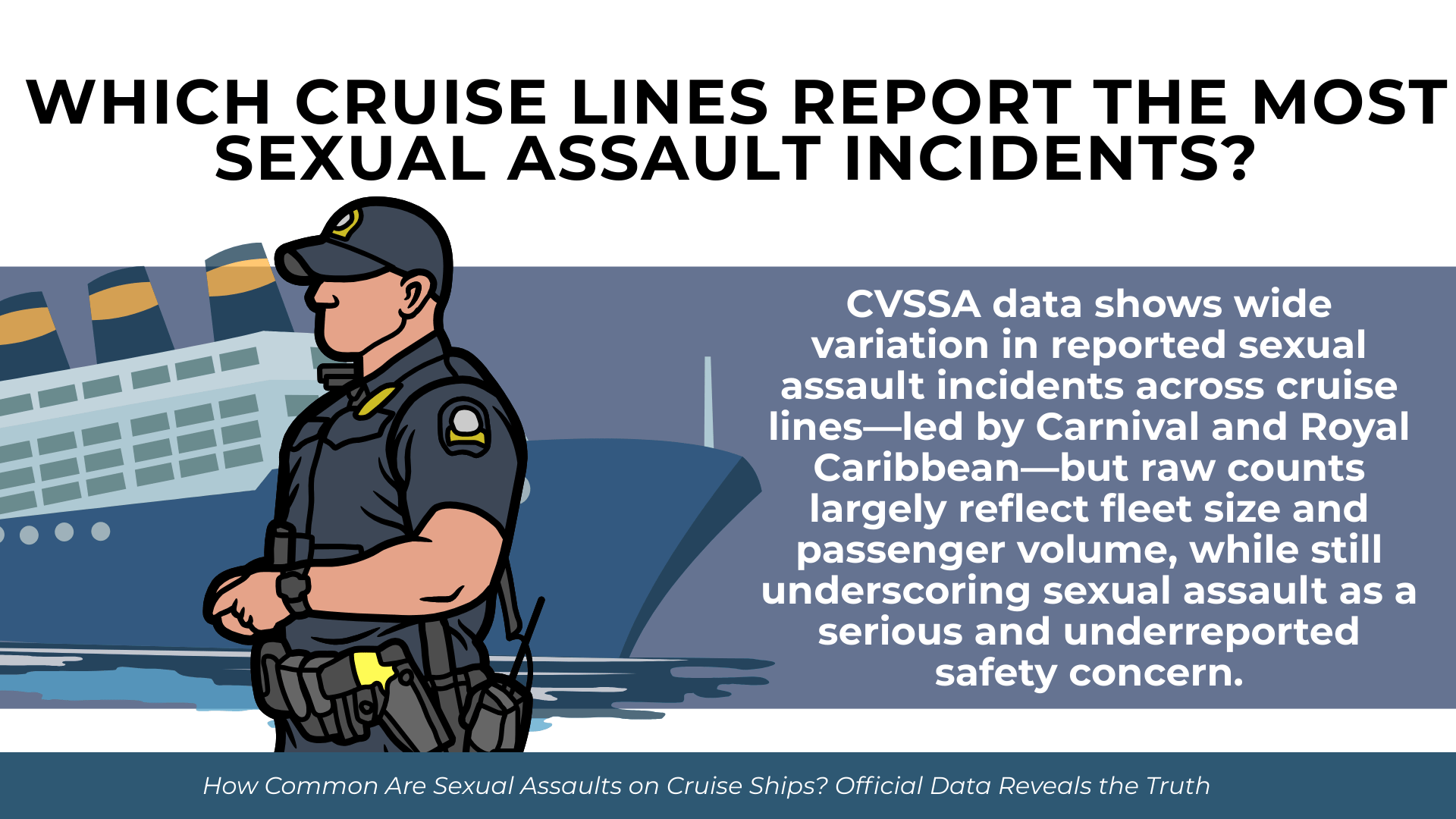
CVSSA data breaks down reported incidents by cruise line, revealing significant variation across major operators. These numbers must be interpreted carefully—higher counts may reflect larger fleet sizes and passenger volumes rather than systematically worse safety environments.
Major cruise lines by incident count
Carnival Cruise Line leads all operators in reported sexual assault allegations, with 129 total incidents (60 sexual assaults, 69 rapes) documented in CVSSA data through Q3 2025. Royal Caribbean follows with 77 total sexual offense allegations (35 sexual assaults, 42 rapes). Norwegian Cruise Line reported 44 incidents, Disney Cruise Line 32, Princess Cruises 28, and MSC Cruises 25. Celebrity Cruises, Virgin Voyages, Holland America, and smaller operators account for the remainder.
Understanding fleet size and passenger volume context
These raw numbers require context. Carnival and Royal Caribbean operate the largest fleets and carry the most passengers annually. When tens of millions of passengers cruise each year across major lines, even low per-capita incident rates produce substantial absolute numbers. Industry groups like CLIA emphasize that per-passenger crime rates test lower than comparable land-based environments. However, the dominance of sexual assault within serious cruise crime—and the acknowledged underreporting—means these incidents represent a meaningful safety concern regardless of denominator calculations.
Who Commits Sexual Assaults on Cruise Ships—Passengers or Crew?
Understanding perpetrator patterns helps clarify how these crimes occur and what prevention measures might address them. CVSSA data and practitioner analyses reveal that both passengers and crew members commit sexual assaults, with passengers representing the majority.
Perpetrator breakdown by category
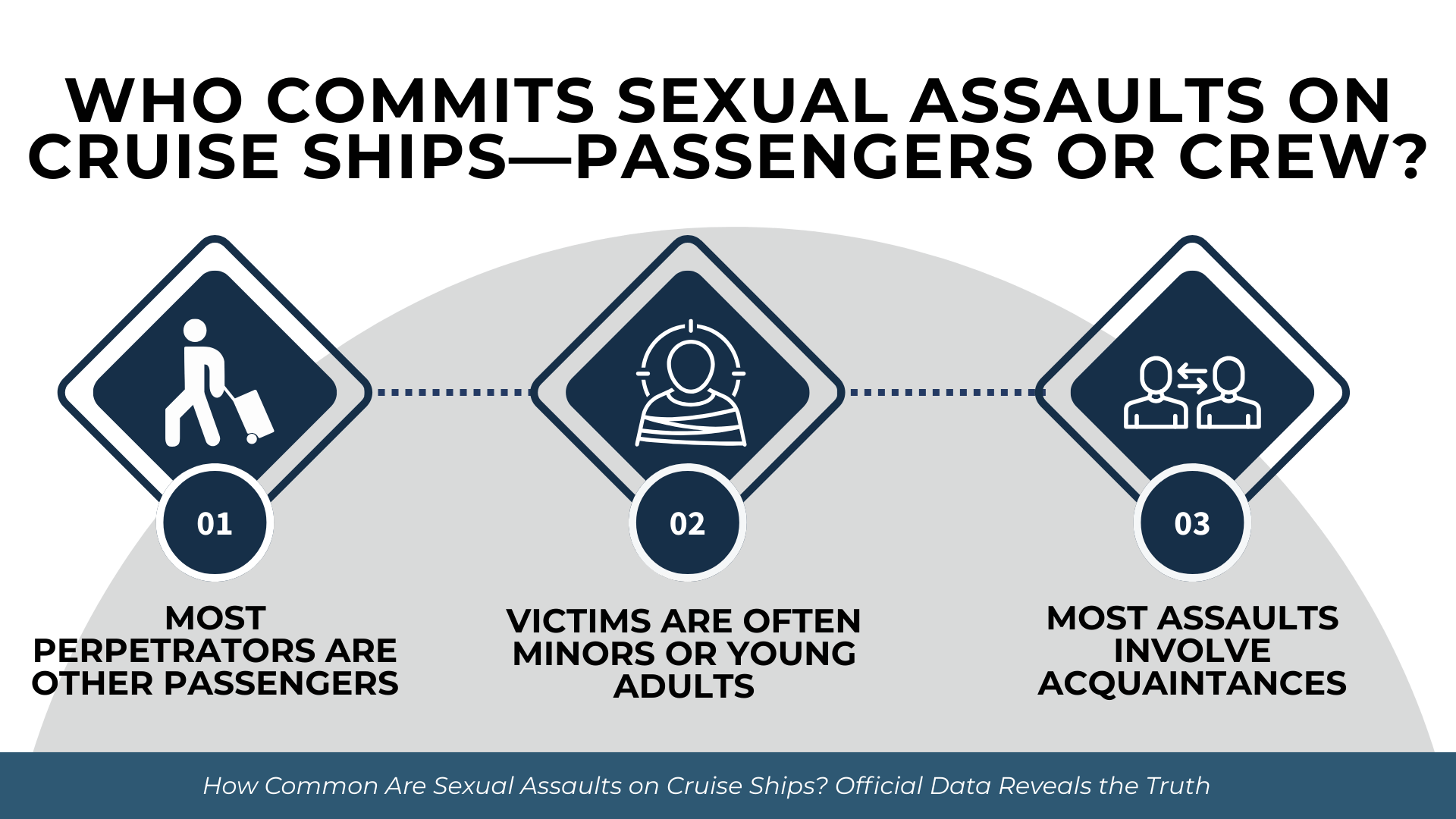
Analysis of CVSSA incident data indicates that approximately 58 percent of alleged perpetrators are fellow passengers, while 32 percent are crew members. The remaining 10 percent fall into “other” or “unknown” categories where perpetrator status could not be determined. This distribution means passengers face meaningful risk from both other guests and the personnel serving them.
Victim demographics and patterns
Victims skew heavily toward minors and young adults. Maritime law practitioners reviewing federal crime reports estimate that roughly one-third of reported victims are under 18 years old. When combined with young adults, minors and young people form the clear majority of complainants. This pattern mirrors broader sexual assault statistics where younger individuals face elevated victimization risk.
Relationship dynamics in reported cases
Most cruise ship sexual assaults involve perpetrators known to the victim, consistent with general sexual assault patterns. Acquaintance assaults—involving fellow passengers met socially onboard—appear frequently in federal summaries. Crew-on-passenger assaults may involve employees who had access to the victim’s cabin or interacted during entertainment, dining, or recreational activities.
Where and How Do These Assaults Typically Occur?
Get started with your complimentary case evaluation today;
call us at (305) 694-2676 or reach us online using our
secure contact form.
Narratives from federal crime summaries, media reporting, and civil litigation reveal consistent patterns in how cruise ship sexual assaults unfold. Understanding these circumstances helps explain why the isolated maritime environment creates unique risks.
The role of alcohol
Alcohol involvement appears in a significant share of reported cruise ship sexual assaults. The cruise environment encourages heavy drinking through all-inclusive beverage packages, constant bar availability, and vacation-mode consumption patterns. Federal reports describe victims who were walked or carried back to cabins while impaired, assaults following extended drinking at ship bars and nightclubs, and perpetrators who targeted intoxicated passengers. Overservice and visible intoxication create both opportunity and vulnerability.
Location and access patterns
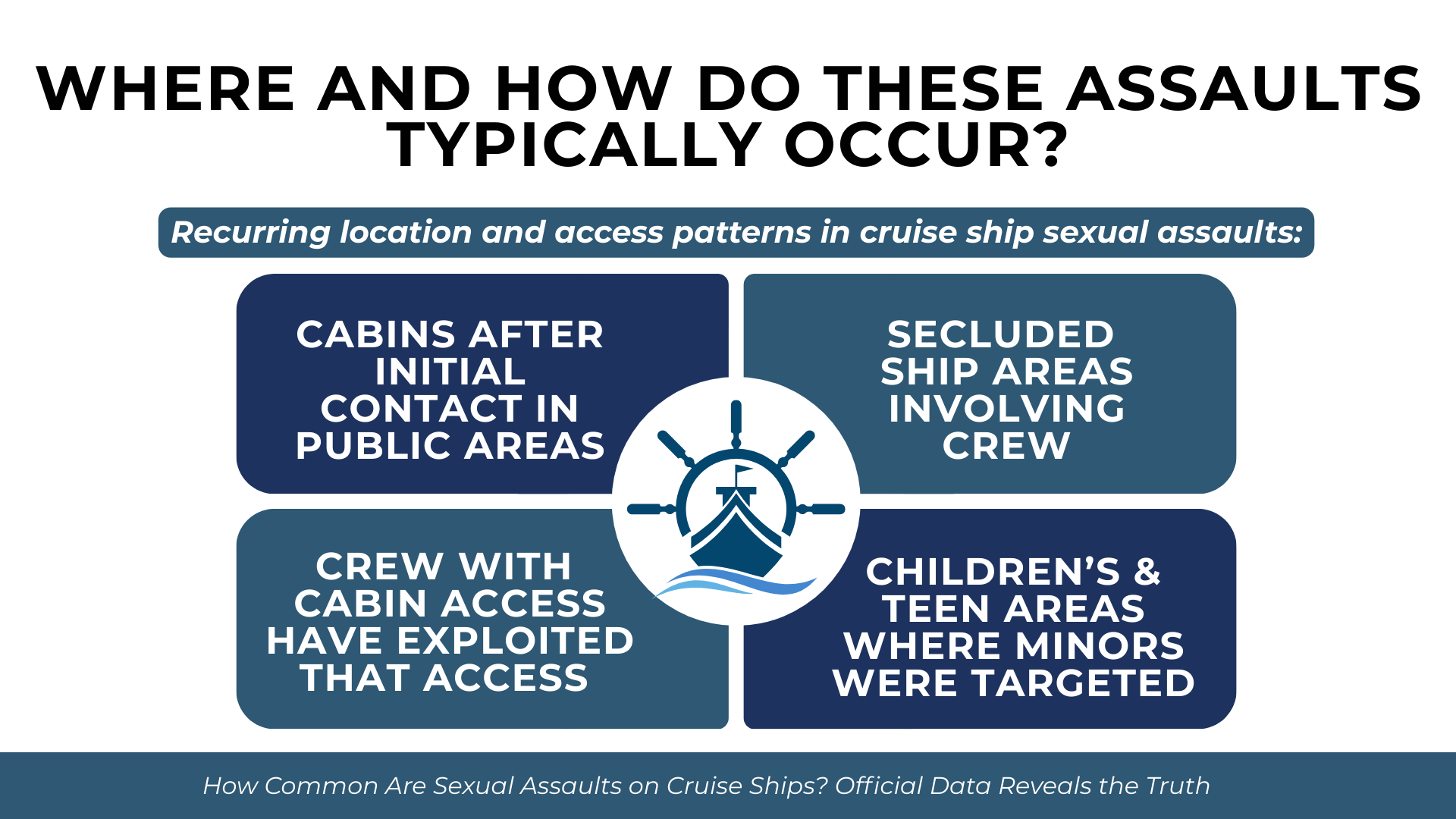
Federal reports and litigation files reveal recurring location and access patterns in cruise ship sexual assaults:
- Passenger cabins are the most common assault location, with many incidents occurring after initial contact in public venues. Perpetrators may follow or accompany victims to their staterooms.
- Crew members with cabin access—housekeeping staff, room service attendants, security personnel, entertainment employees—have exploited their access to assault passengers in their private spaces.
- Secluded ship areas including quiet decks, storage spaces, and crew-only zones appear in some assault reports, particularly those involving crew perpetrators.
- Children’s and teen areas have been locations where minors were targeted, including kids’ clubs, dedicated teen spaces, and adjacent corridors.
Structural factors that enable assault
The cruise ship environment creates conditions that can facilitate sexual assault and complicate response. Ships operate in an isolated maritime setting without external law enforcement. Victims may be thousands of miles from home, unfamiliar with reporting procedures, and uncertain about their legal rights. Language barriers between international crew and passengers add complexity. Power imbalances between crew and guests—particularly regarding passengers who perceive crew as service providers unlikely to refuse requests—create exploitable dynamics. Delayed evidence collection, jurisdictional uncertainty, and the pressure to avoid disrupting a vacation all work against prompt, complete reporting.
What Legal Rights Do Sexual Assault Victims Have Against Cruise Lines?
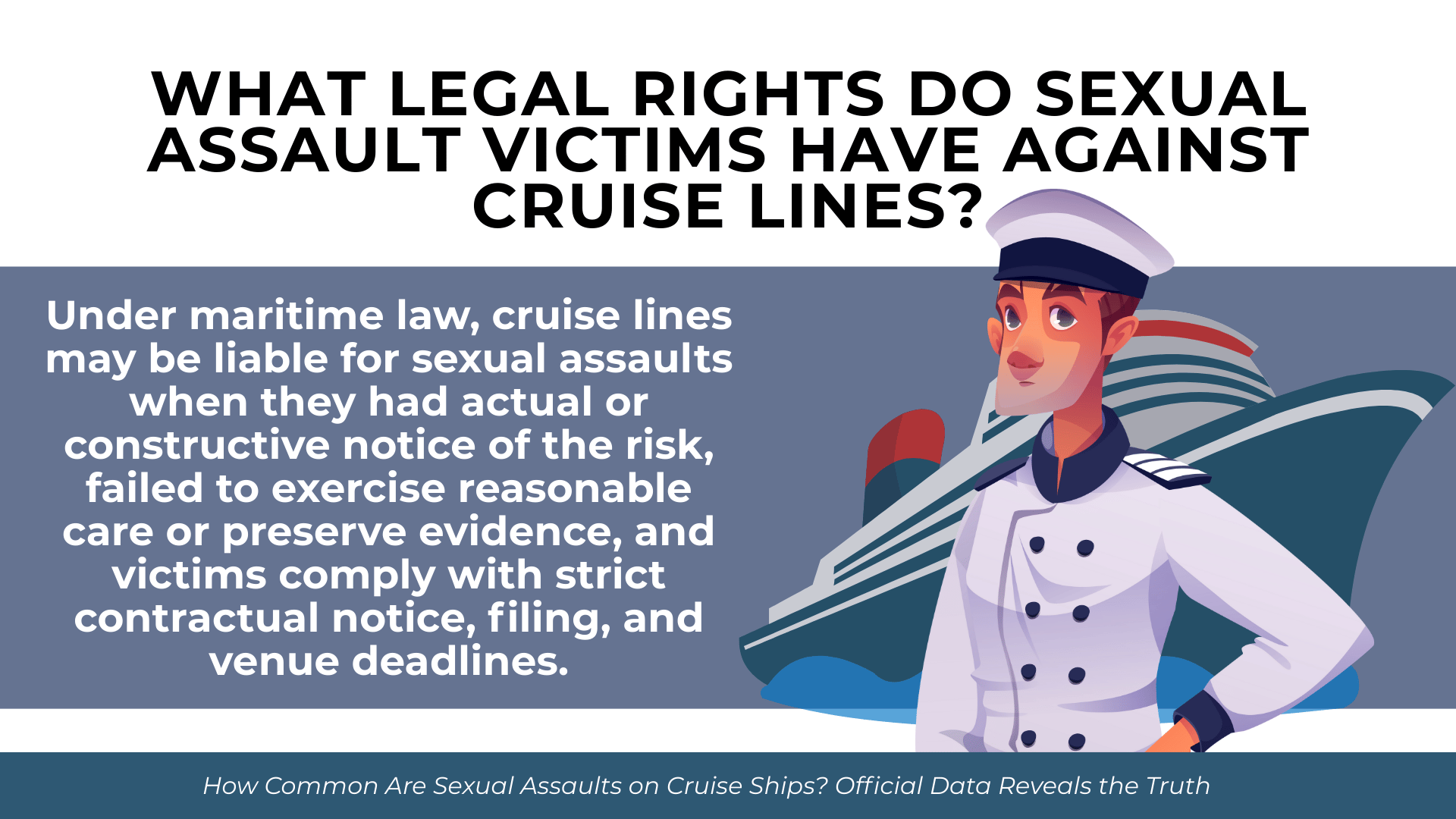
Victims of cruise ship sexual assault may have legal claims against the cruise line itself—not just the individual perpetrator. Maritime law provides a framework for holding cruise operators accountable when their negligence contributed to the conditions that enabled an assault.
The duty of reasonable care
Under federal maritime law, cruise lines owe passengers a duty of reasonable care under the circumstances. This standard, established in Kermarec v. Compagnie Générale Transatlantique, 358 U.S. 625 (1959), requires cruise operators to take reasonable steps to protect passengers from foreseeable harm. When a cruise line knows or should know that sexual assaults occur onboard—as CVSSA data makes abundantly clear—it must implement reasonable security measures, screening protocols, supervision practices, and response procedures. Failure to do so may constitute negligence.
Notice and evidence preservation
A cruise line is liable only if it had actual or constructive notice of dangerous conditions, as established in Keefe v. Bahama Cruise Line, 867 F.2d 1318 (11th Cir. 1989). Given the documented pattern of sexual assault across the industry, cruise lines cannot plausibly claim ignorance of this risk. Prior incidents, CVSSA data, and internal security reports may establish the constructive notice necessary to impose liability.
Cruise lines have an affirmative duty to preserve evidence when litigation is reasonably foreseeable. CCTV footage, incident reports, security logs, and crew records may be critical to proving what happened and what the cruise line knew. Victims or their attorneys should immediately request evidence preservation, as surveillance footage is often auto-overwritten within 7-30 days.
Critical deadlines and venue requirements
Cruise ticket contracts impose strict procedural requirements that victims must understand:
- Notice deadlines typically require written notice of claims within six months of the incident. Missing this deadline may bar recovery entirely.
- Lawsuit filing deadlines shorten the standard three-year maritime statute of limitations (46 U.S.C. § 30106) to just one year from the incident date.
- Forum selection clauses typically require all lawsuits to be filed in the U.S. District Court for the Southern District of Florida (Miami Division), as upheld in Carnival Cruise Lines, Inc. v. Shute, 499 U.S. 585 (1991).
- Evidence preservation requests must be sent immediately to prevent spoliation of surveillance footage and incident records.
These contractual provisions are enforceable, and missing deadlines can be fatal to otherwise valid claims.
Frequently Asked Questions
Is sexual assault really the most common serious crime on cruise ships?
Yes. CVSSA data confirms that sexual offenses—including both sexual assault and rape—represent approximately 67 percent of all serious crimes reported to federal authorities under mandatory cruise ship reporting requirements. No other crime category comes close. While the absolute numbers may seem modest relative to millions of annual cruise passengers, sexual assault’s dominance among serious cruise crimes is unambiguous in federal statistics.
How many sexual assaults go unreported on cruise ships?
Precise figures are unknowable, but experts agree underreporting is substantial. RAINN estimates that roughly two-thirds of sexual assaults go unreported in the general population. Cruise-specific factors—including the absence of independent law enforcement, cruise line control over internal processes, and victim reluctance to disrupt vacations—may suppress reporting even further. Many analysts believe actual cruise ship sexual assault incidence is several times higher than official CVSSA counts.
Can I sue a cruise line if I was sexually assaulted onboard?
Potentially, yes. Cruise lines owe passengers a duty of reasonable care and may be liable if their negligence contributed to conditions enabling an assault. Relevant factors include security staffing, crew screening, supervision practices, alcohol service policies, and response protocols. Claims against cruise lines are separate from criminal prosecution of the individual perpetrator. Maritime attorneys can evaluate whether a particular cruise line’s conduct supports a negligence claim.
How long do I have to file a lawsuit after a cruise ship sexual assault?
Most cruise ticket contracts require written notice within six months and lawsuit filing within one year of the incident—significantly shorter than the standard three-year maritime statute of limitations. These contractual deadlines are strictly enforced. Victims should consult maritime counsel immediately to ensure compliance with all procedural requirements.
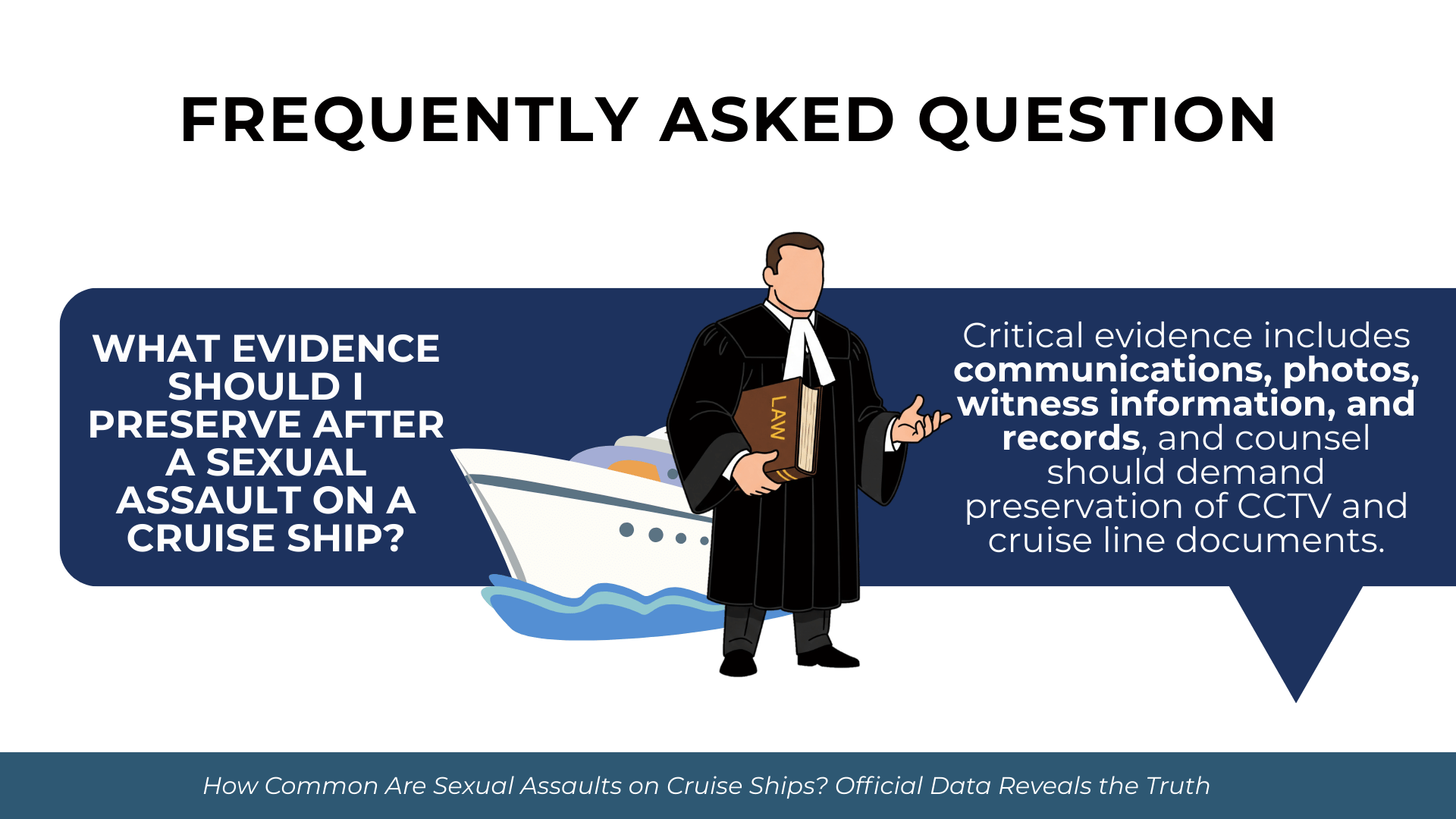
What evidence should I preserve after a sexual assault on a cruise ship?
Critical evidence includes: any communications with the perpetrator before or after the assault; photographs of injuries, locations, or relevant conditions; names and contact information for witnesses; copies of all documents provided to ship security; medical records from any examination (onboard or ashore); and written correspondence with cruise line personnel. Counsel should immediately send the cruise line a formal preservation demand for CCTV footage, incident reports, crew records, and all internal documentation.
Taking Action After a Cruise Ship Sexual Assault
The data is clear: sexual assault occurs on cruise ships at rates that make it the industry’s most commonly reported serious crime, with actual incidence almost certainly far higher than official statistics capture. Victims face unique challenges in the maritime environment, but federal law provides a framework for holding cruise lines accountable when their negligence enables these crimes.
Strict contractual deadlines make prompt action essential. If you or a loved one experienced a sexual assault on a cruise ship, contact Prosper Injury Attorneys to discuss your legal options and ensure critical evidence is preserved before time limits expire.