If you were injured aboard a Royal Caribbean cruise ship, you may be wondering whether you have the right to sue. The short answer is yes—passengers can pursue legal claims against Royal Caribbean under federal maritime law. However, these cases involve strict procedural requirements, tight deadlines, and a mandatory Miami venue that passengers must navigate carefully.
Royal Caribbean operates some of the largest cruise ships in the world, with vessels approaching 7,000 passengers at full capacity. The company’s fleet features high-energy amenities like surf simulators, water parks, rock-climbing walls, and zip lines—attractions that contribute to the line’s “theme park at sea” experience. When accidents happen on these massive ships, passengers have legal options, but the path to recovery requires understanding both how injuries occur and how maritime law applies.
This guide explains what Royal Caribbean passengers need to prove, what deadlines apply, and how to protect their legal rights after an injury.
Can You Sue Royal Caribbean for a Cruise Ship Injury?
Federal maritime law allows passengers to sue cruise lines for injuries caused by negligence. This right applies to Royal Caribbean just as it does to any other cruise operator.
What the law requires
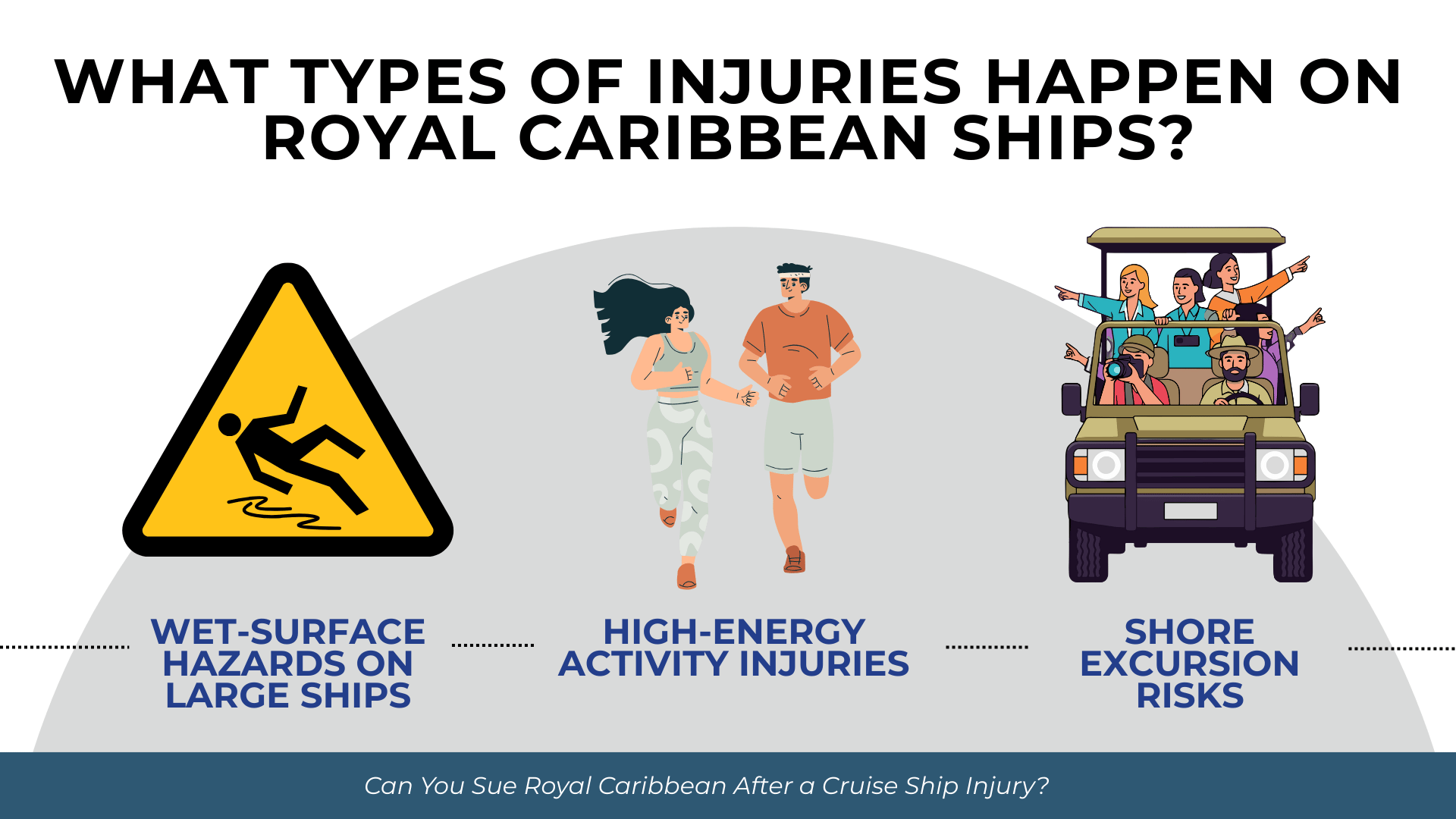
To succeed in a negligence claim against Royal Caribbean, you must establish four elements: that Royal Caribbean owed you a duty of care, that the company breached that duty, that the breach caused your injury, and that you suffered damages as a result. The foundational case establishing this standard is Kermarec v. Compagnie Générale Transatlantique, 358 U.S. 625 (1959), which held that vessel owners owe a duty of reasonable care to anyone legitimately aboard.
This is not a heightened “common carrier” duty, nor is it strict liability. You must prove that Royal Caribbean failed to act with reasonable care under the circumstances.
Why Royal Caribbean cases fall under maritime law
Cruise ship injuries virtually always satisfy the legal tests for federal maritime jurisdiction. The incident must occur on navigable waters (or involve a vessel’s operations), and it must have a connection to traditional maritime activity. A slip on a pool deck, a fall on a gangway, or an injury on the FlowRider simulator all qualify.
What “reasonable care” means for the world’s largest cruise ships
Royal Caribbean operates Oasis- and Icon-class ships that are among the largest vessels afloat. With thousands of passengers concentrated in common spaces—buffets, pool decks, recreational areas, and stairwells—the company must anticipate the hazards that arise in high-traffic, activity-intensive environments. Reasonable care includes maintaining non-slip surfaces, promptly addressing spills, providing adequate warnings, and ensuring recreational equipment is safe for passenger use.
What Types of Injuries Happen on Royal Caribbean Ships?

The sheer size of Royal Caribbean’s fleet and its emphasis on active amenities create distinct injury patterns. Understanding where and how accidents occur helps clarify what negligence claims may be available.
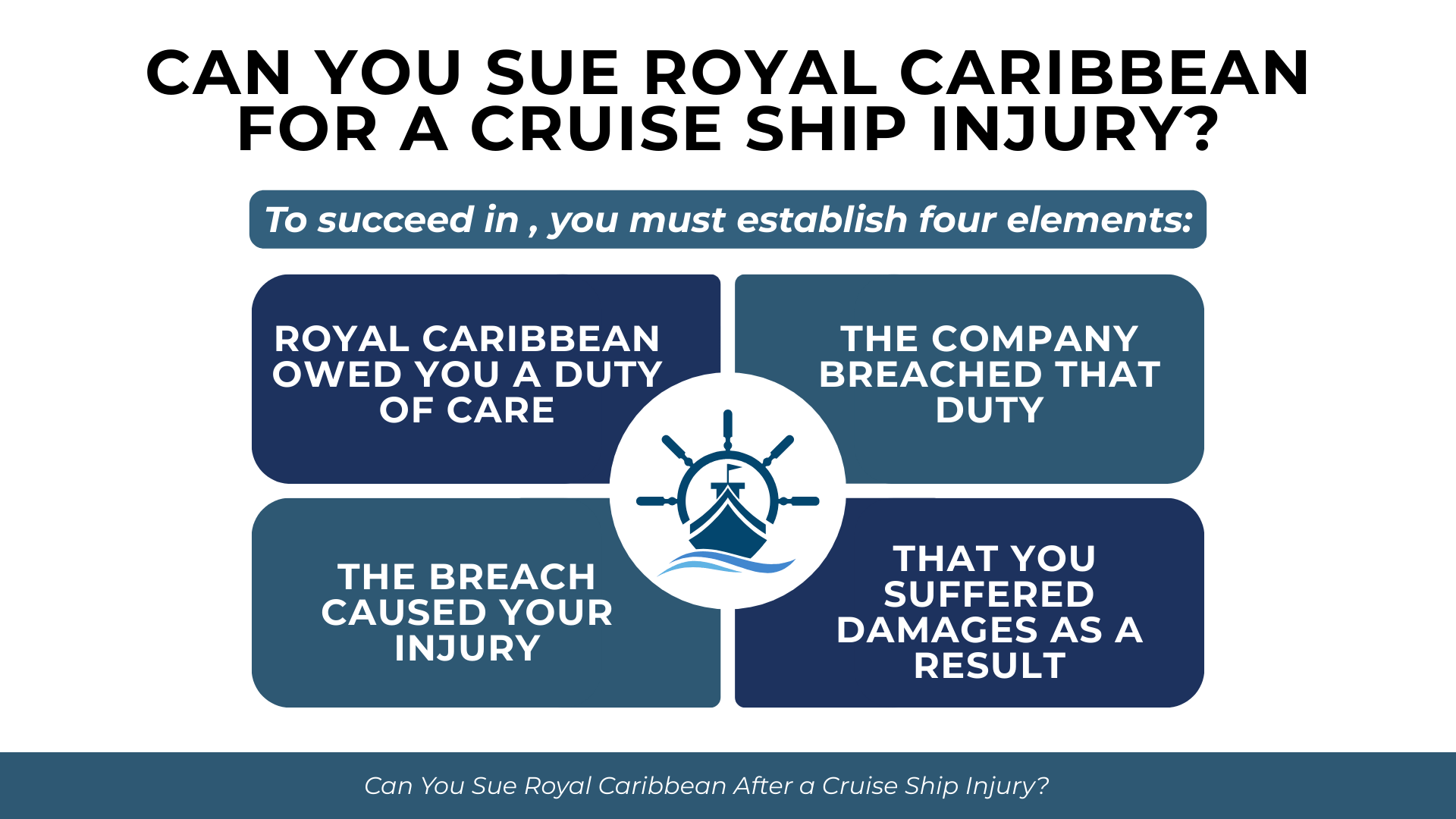
Wet-surface hazards on large ships
Pool decks, spa areas, splash zones, and lido decks accumulate water constantly on any cruise ship. On Royal Caribbean’s largest vessels, these areas accommodate thousands of passengers daily. Spilled drinks, melted ice cream, dripping swimsuits, and sea spray create slick patches across outdoor decks. About 45% of cruise injuries involve slips, trips, or falls, and wet surfaces are the leading contributor.
Dining areas also present hazards. Buffet tiles become slick from dropped food or beverages, and servers carrying trays add collision potential—especially when the ship moves unexpectedly.
High-energy activity injuries
Royal Caribbean’s brand positioning emphasizes adrenaline-focused amenities that other cruise lines lack or offer at smaller scales. These activities come with inherent physical risks:
- FlowRider surf simulators produce falls that can lead to fractures, joint injuries, and spinal trauma. Claims often involve allegations of inadequate instruction or negligent supervision.
- Rock-climbing walls and rope courses result in scrapes, sprains, and awkward landings when equipment malfunctions or safety protocols fail.
- Basketball and soccer courts lead to rolled ankles, collisions, and impact injuries in confined spaces.
- Water slides cause abrasions and collisions when spacing rules are ignored or slide surfaces become too slick.
- Zip lines carry fall risks and can cause injuries if harnesses or equipment are improperly maintained.
These activity-related injuries often appear in Royal Caribbean litigation, with plaintiffs alleging negligent maintenance, failure to warn, or inadequate supervision.
Shore excursion risks
A substantial share of cruise-related injuries occur off the ship during excursions. Royal Caribbean sells excursions across hundreds of ports, and conditions vary widely. Bus crashes and van collisions occur in destinations with different road safety standards. Snorkeling, jet ski, and parasailing trips carry risks from currents, equipment failures, and rider inexperience. ATV rollovers, zip line collisions, and falls on hiking excursions happen across ports with varied safety oversight.
While Royal Caribbean’s ticket contract disclaims vicarious liability for third-party operators, the cruise line can still face claims for its own direct negligence—such as failing to warn passengers of known dangers associated with a particular vendor.
What Must You Prove to Win a Case Against Royal Caribbean?
Successfully suing Royal Caribbean requires more than showing you were injured aboard the ship. Maritime law imposes specific burdens that plaintiffs must meet.
The notice requirement explained
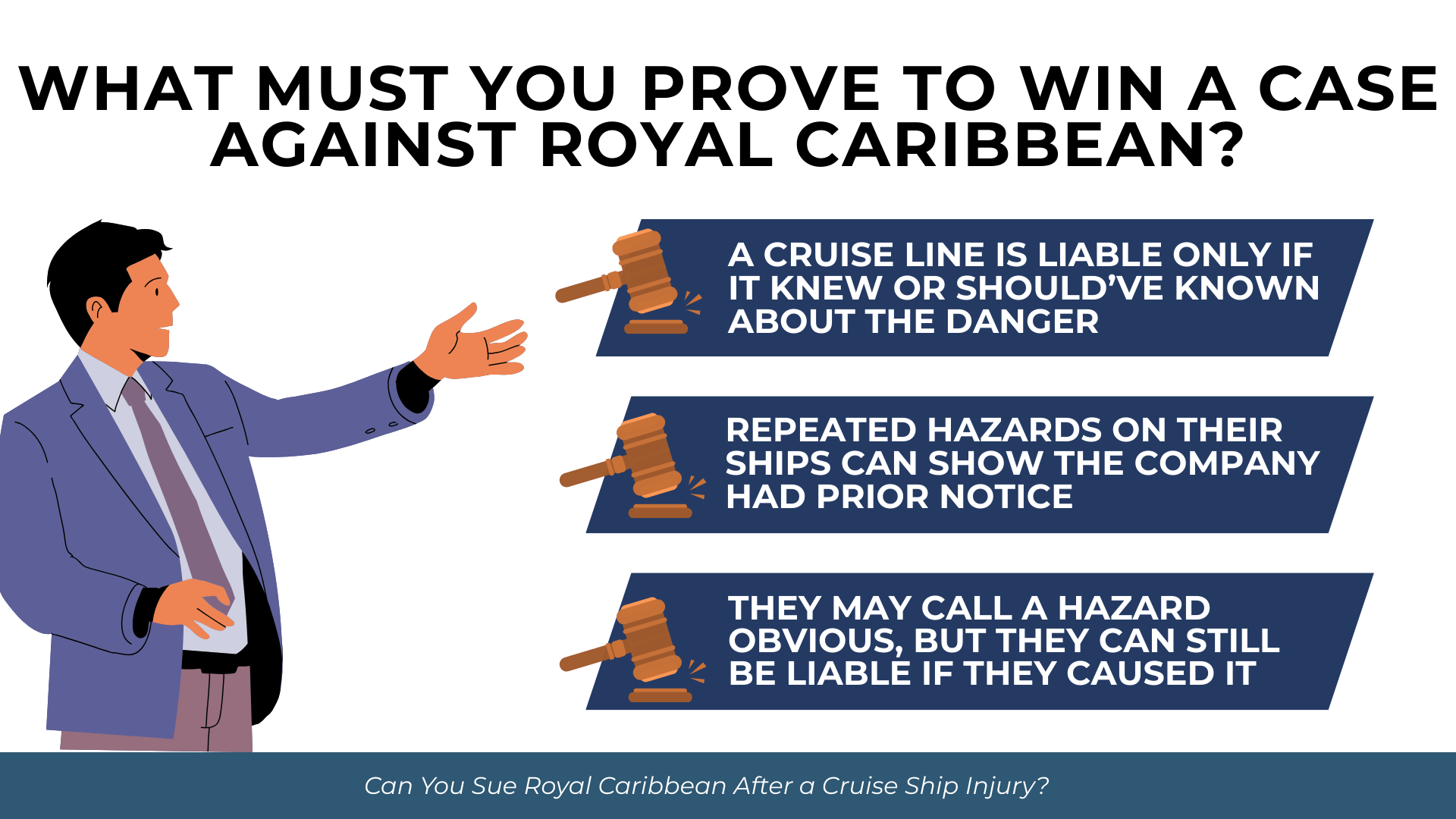
A cruise line is liable only if it had actual or constructive notice of the dangerous condition that caused your injury. This requirement comes from Keefe v. Bahama Cruise Line, 867 F.2d 1318 (11th Cir. 1989), which established that cruise lines must either know about a hazard or have reason to know based on circumstances.
Actual notice exists when the cruise line created the condition or had direct knowledge of it. Constructive notice exists when a hazard was present long enough that the crew should have discovered it, or when prior similar incidents put the company on notice of a recurring problem.
How prior similar incidents strengthen your case
This is where Royal Caribbean’s size works in a plaintiff’s favor. Very large vessels concentrate thousands of passengers in common spaces, meaning that systemic hazards—like a slippery deck surface or a frequently malfunctioning piece of recreational equipment—can generate multiple similar incidents. Evidence of prior complaints, injury reports, or maintenance issues involving the same condition can establish that Royal Caribbean had constructive notice and failed to act.
Plaintiffs in Royal Caribbean cases frequently rely on discovery to uncover prior incident patterns across the same ship or class of vessels.
The open-and-obvious defense and its limits
Royal Caribbean may argue that a hazard was “open and obvious” and therefore no warning was required. Under this doctrine, cruise lines have no duty to warn of dangers that a reasonable passenger would recognize—like a visible wet spot on a pool deck in daylight.
However, this defense has limits. It applies primarily to failure-to-warn theories. If Royal Caribbean created the hazardous condition, failed to maintain safe premises, or knew the condition posed an unreasonable risk despite its visibility, liability may still attach. Courts apply comparative fault principles rather than eliminating claims entirely based on obvious hazards.
What Are the Deadlines for Suing Royal Caribbean?
Maritime injury claims operate under tight deadlines. Royal Caribbean’s United States ticket contract shortens the standard limitations period and adds notice requirements that passengers must follow precisely.
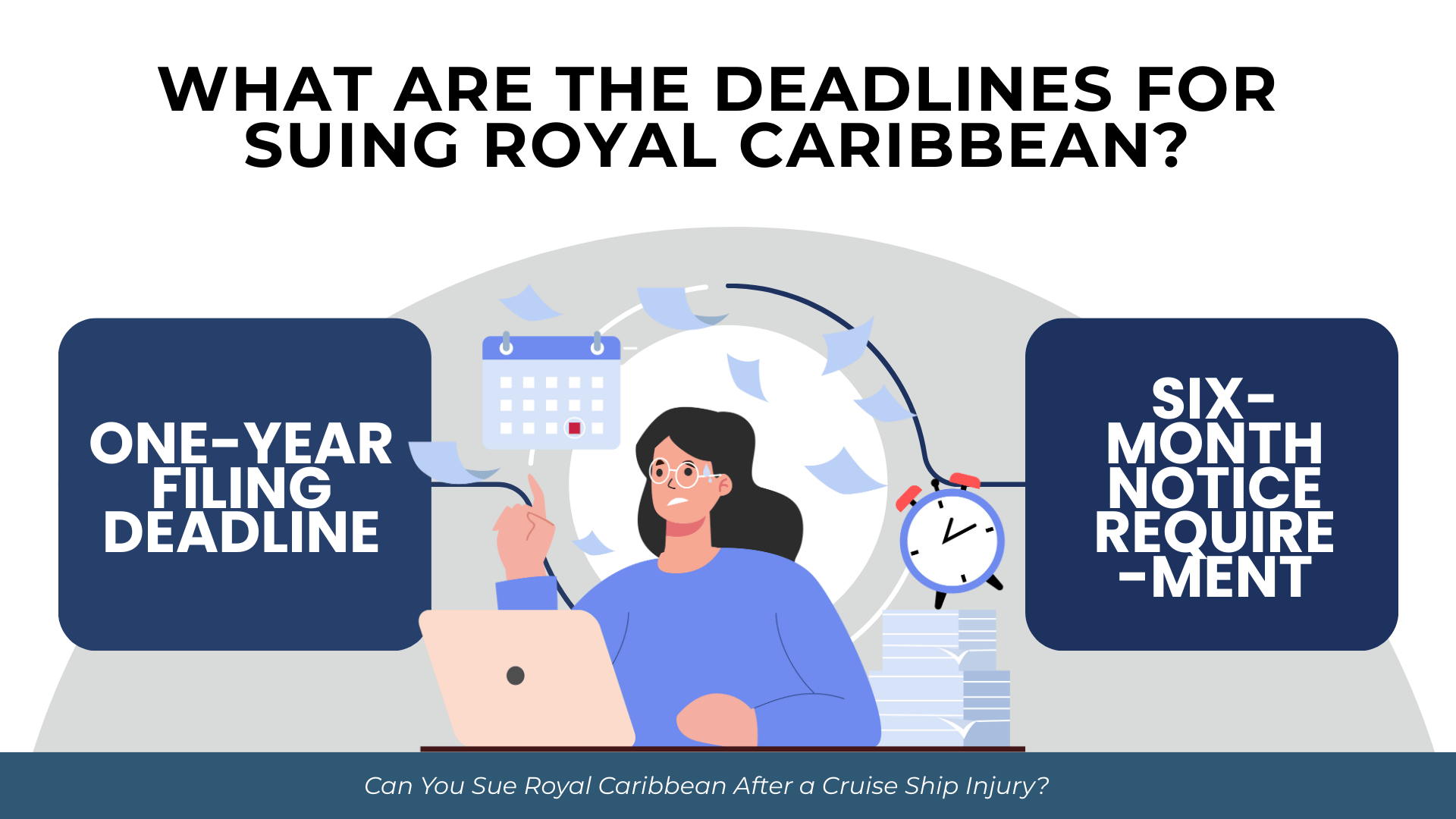
The one-year filing deadline
While federal maritime law provides a three-year statute of limitations under 46 U.S.C. § 30106, cruise lines are permitted to shorten this period through their ticket contracts. Royal Caribbean’s contract requires passengers to file any lawsuit within one year of the incident.
Courts consistently enforce these shortened deadlines. Filing even one day late can result in dismissal.
The six-month notice requirement
Before filing suit, Royal Caribbean’s contract also requires passengers to provide written notice of their claim within six months of the injury. This notice must typically include details about the incident, the nature of the injuries, and the passenger’s intent to pursue a claim.
Failure to comply with the notice requirement can bar a claim entirely, regardless of its underlying merits.
Why strict enforcement matters
These deadlines are among the most litigated issues in cruise injury cases. Royal Caribbean and other cruise lines routinely move to dismiss claims that fail to meet contractual time limits. Passengers who delay consulting an attorney—or who assume they have three years under the general maritime statute—risk losing their right to sue.
The strict deadline makes early legal consultation essential for anyone injured on a Royal Caribbean ship.
Where Do You Have to File a Lawsuit Against Royal Caribbean?
Royal Caribbean’s ticket contract controls more than just deadlines. It also dictates where any lawsuit must be filed.
Why Miami is the required venue
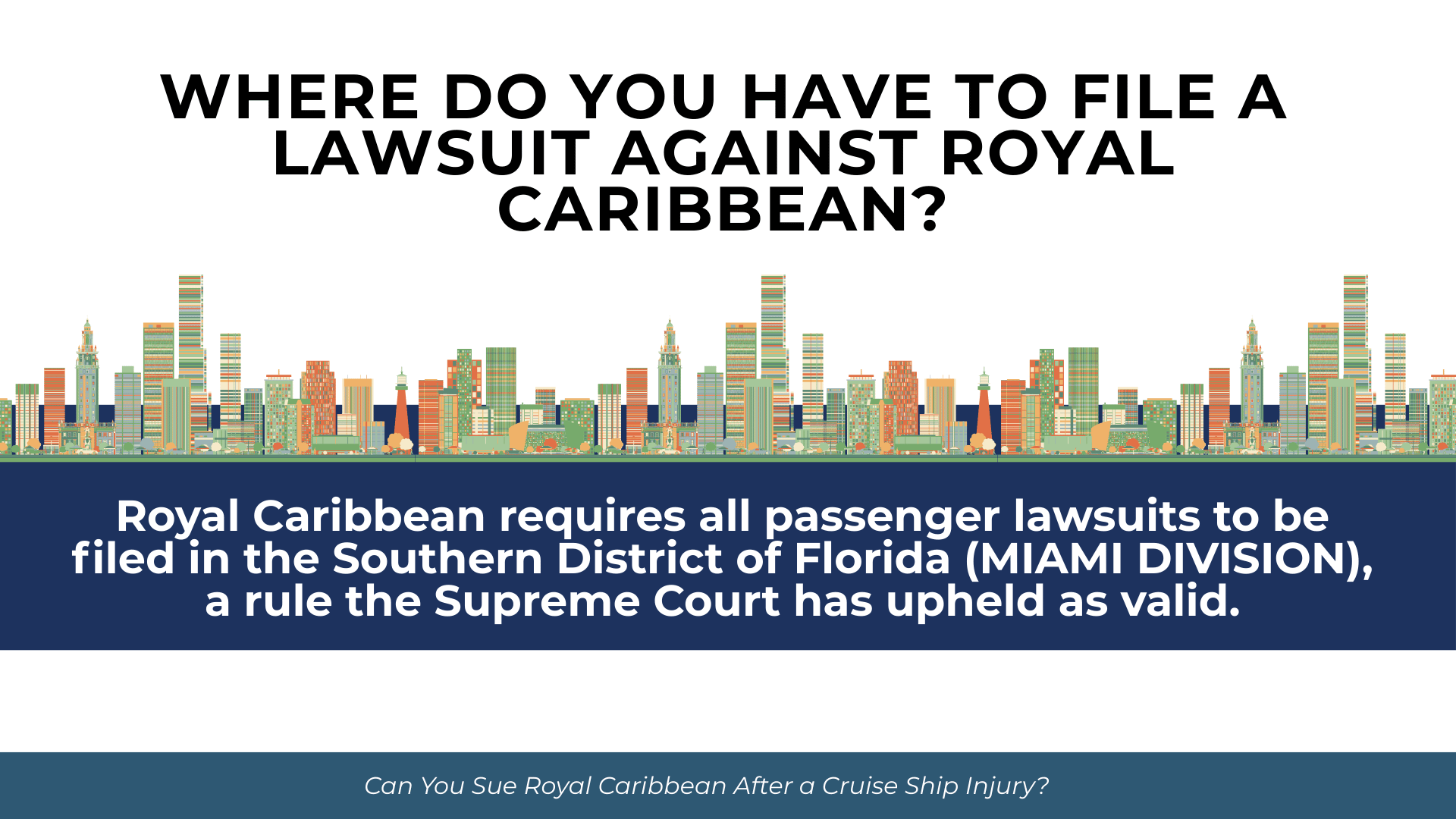
Royal Caribbean is a Miami-based company, and its ticket contract includes a forum-selection clause requiring all lawsuits to be filed in the U.S. District Court for the Southern District of Florida (Miami Division). This applies regardless of where the passenger lives or where the injury occurred.
The enforceability of forum-selection clauses was affirmed by the Supreme Court in Carnival Cruise Lines, Inc. v. Shute, 499 U.S. 585 (1991), which held that such clauses are valid even in form contracts as long as they are fundamentally fair.
Can you fight the forum clause?
Rarely. Courts will invalidate a forum-selection clause only if the passenger can prove it was obtained through fraud, is fundamentally unjust, or effectively prevents them from pursuing their rights. In practice, challenges almost never succeed.
This means that even a passenger from Seattle or New York must litigate in Miami. Working with an attorney familiar with the Southern District of Florida and federal maritime practice is important for navigating this requirement.
What Happens If You Were Partially at Fault?
Passengers sometimes worry that their own actions—running on a wet deck, ignoring a warning sign, or consuming alcohol before an accident—will eliminate their ability to recover damages. Maritime law takes a different approach than many state systems.
How comparative fault works in maritime cases
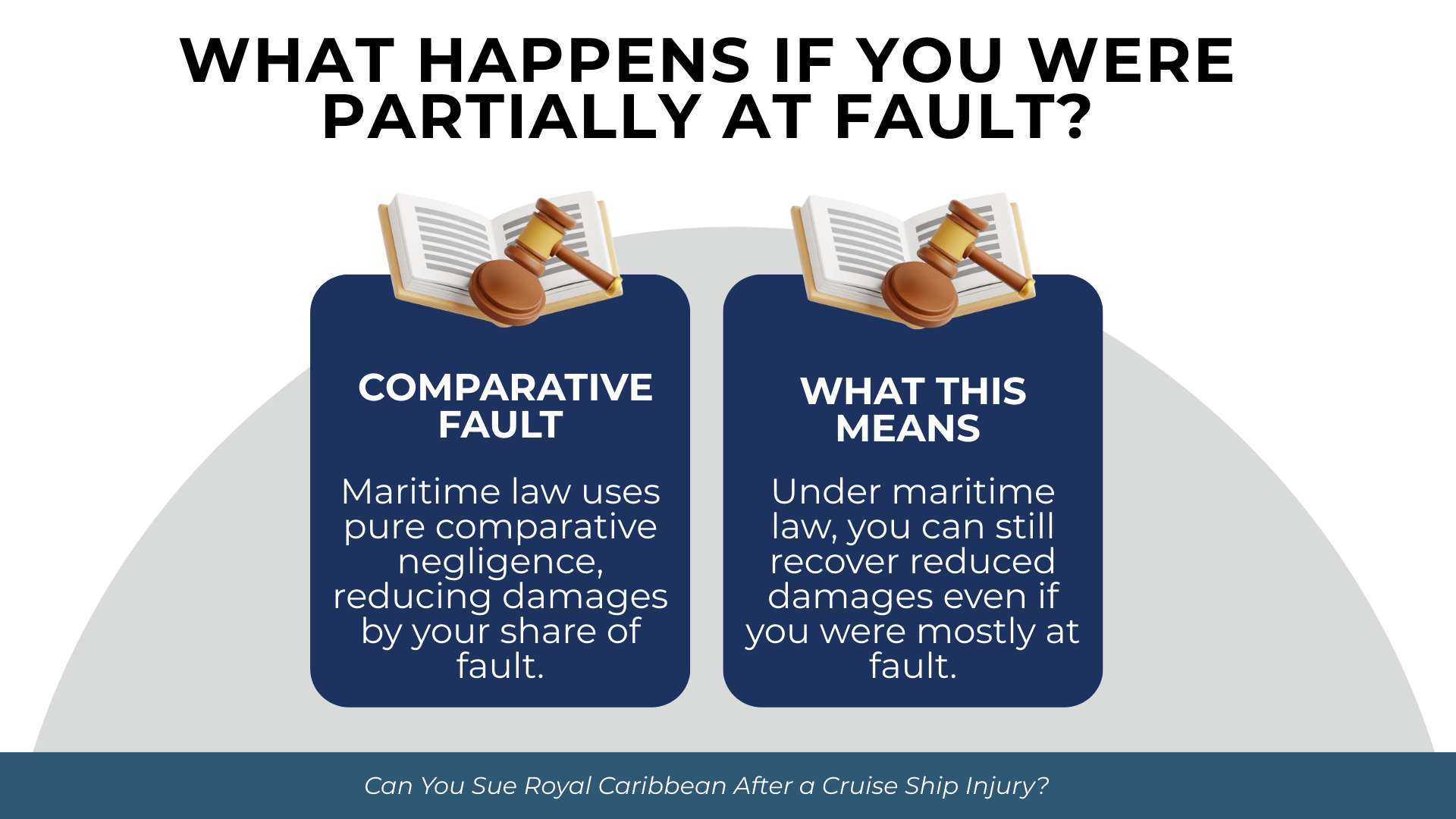
Federal maritime law applies pure comparative negligence, as established in United States v. Reliable Transfer Co., 421 U.S. 397 (1975). Under this standard, your damages are reduced by your percentage of fault, but they are never eliminated entirely.
What this means for your recovery
If a jury determines that you were 30% at fault for your injury and Royal Caribbean was 70% at fault, your total damages would be reduced by 30%. Even if you were found 80% at fault, you could still recover 20% of your damages.
This standard differs from many state systems that bar recovery entirely if the plaintiff is more than 50% at fault. In maritime cases, even substantial passenger negligence does not bar recovery—it only reduces the amount of damages recoverable, which directly affects the potential settlement value.
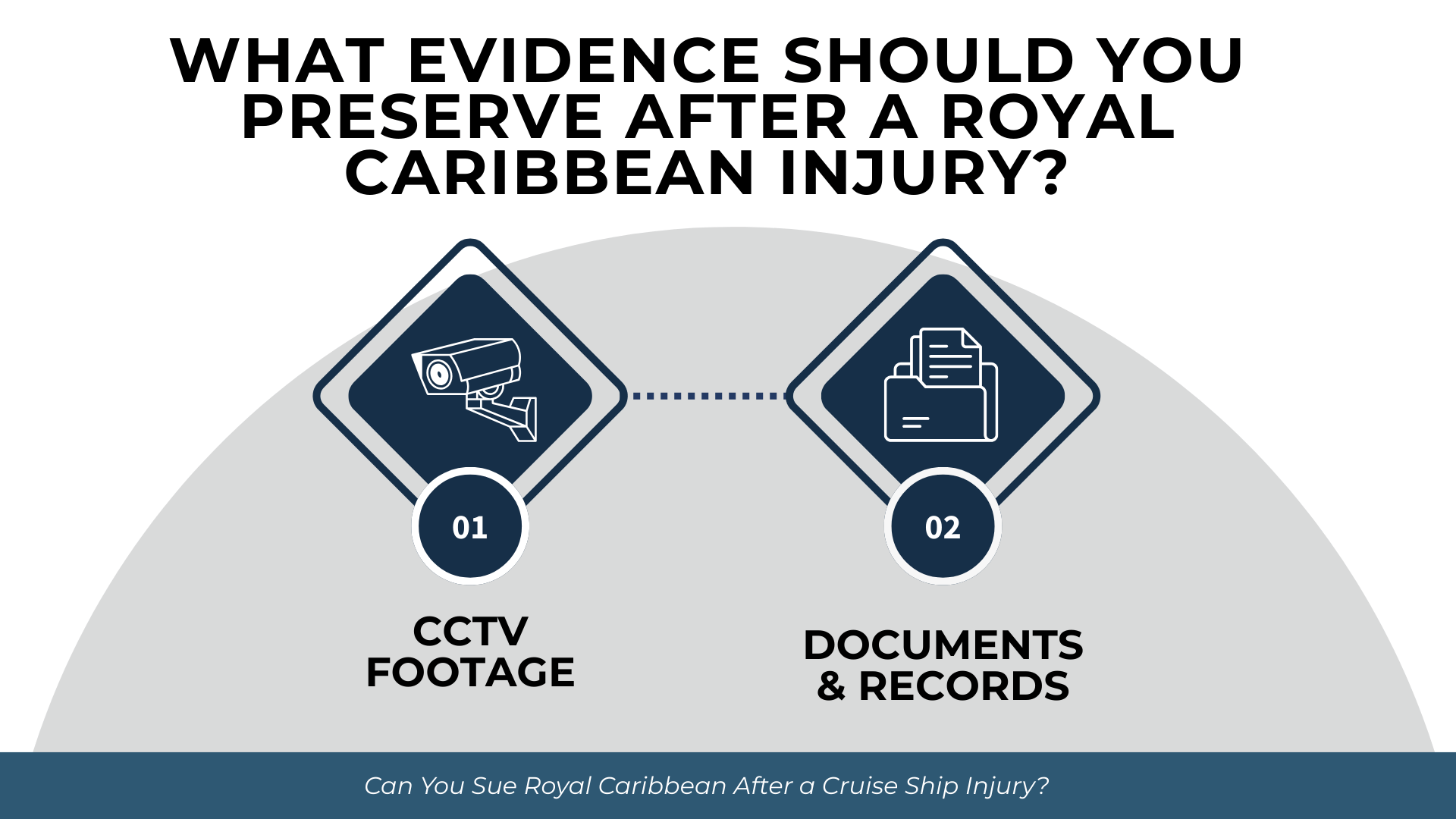
What Evidence Should You Preserve After a Royal Caribbean Injury?
Evidence is critical in cruise ship injury cases, and passengers must act quickly to preserve it. Royal Caribbean’s large ships are equipped with surveillance systems, but footage can disappear if not requested promptly.
Why timing matters for CCTV footage
Cruise ships routinely record video in public areas, but this footage is typically auto-overwritten within 7 to 30 days. Once litigation is reasonably foreseeable—which occurs as soon as an injury happens—the cruise line has a duty to preserve relevant evidence.
Passengers or their attorneys should send a formal “litigation hold” letter to Royal Caribbean immediately after an injury, demanding preservation of all video footage, incident reports, and maintenance records. Failure to preserve evidence can lead to an adverse inference instruction, allowing a jury to presume the missing evidence was unfavorable to the cruise line. For a complete checklist, see what to do immediately after a cruise ship injury.
Documents and records to secure
Beyond video, several categories of evidence support Royal Caribbean injury claims:
- Photographs of the hazard, the location, and your injuries taken as soon as possible after the accident.
- Witness contact information including names, cabin numbers, and phone numbers or emails of anyone who saw the incident.
- Medical records from the ship’s medical center and any subsequent treatment onshore.
- The ship’s incident report—request a copy before disembarking if possible.
- Your cruise ticket and contract showing the terms and conditions of your passage.
- Receipts and documentation for medical expenses, missed work, and other costs.
- Written notes describing the accident while details are fresh.
What to do before leaving the ship
If you are injured aboard a Royal Caribbean ship, report the incident to guest services or the ship’s safety officer before disembarking. Request a copy of any incident report generated. Photograph the scene if you are able. Note the date, time, and deck or location of the accident. If crew members responded, record their names.
These steps protect your ability to pursue a claim and provide your attorney with essential starting material.
Frequently Asked Questions
How long do I have to sue Royal Caribbean after an injury?
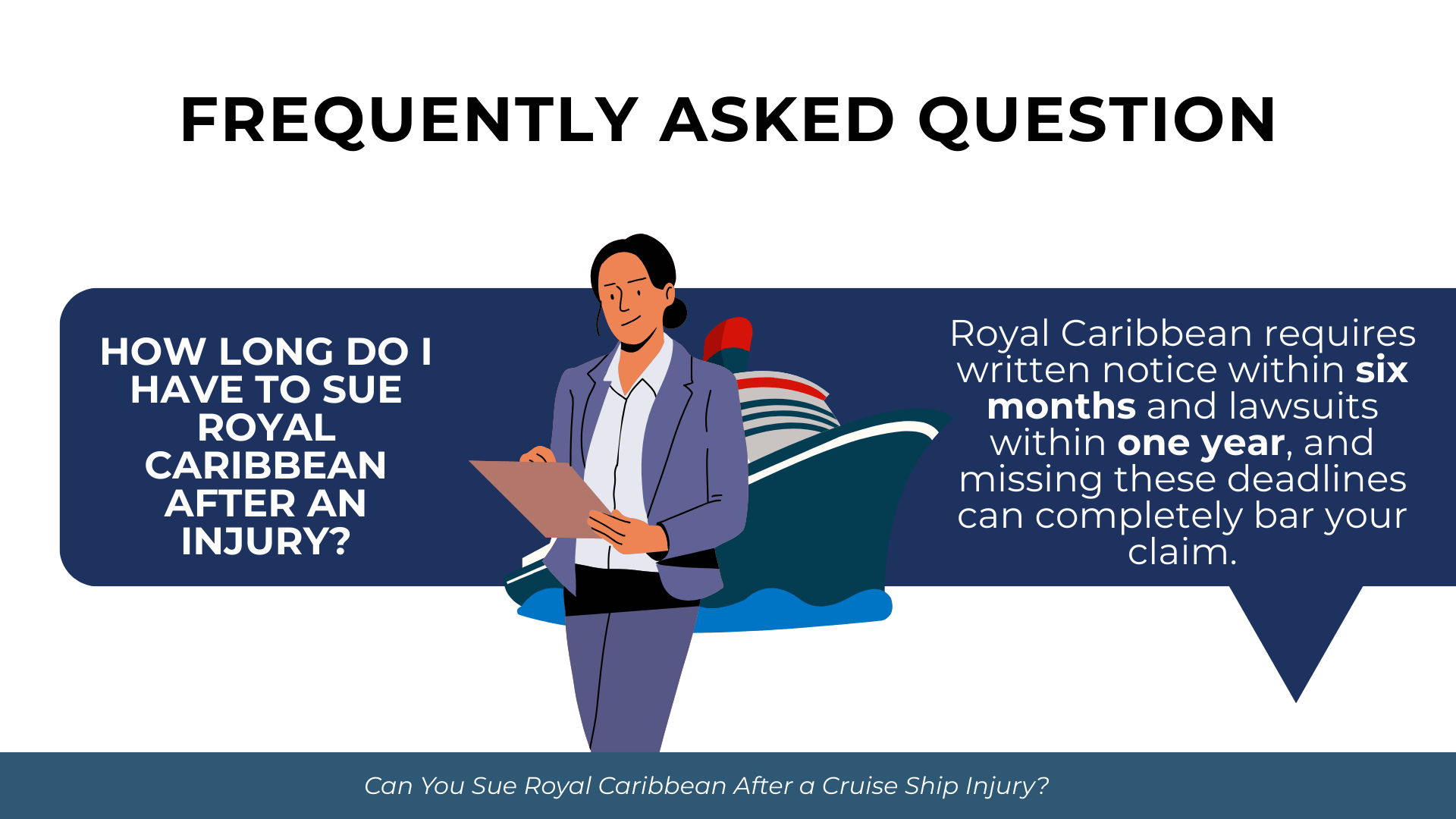
Royal Caribbean’s ticket contract requires you to file suit within one year of your injury and provide written notice within six months. These deadlines are strictly enforced, and missing them can bar your claim entirely regardless of how strong your case might otherwise be.
Do I have to sue Royal Caribbean in Miami?
Yes. The ticket contract includes a forum-selection clause requiring lawsuits to be filed in the U.S. District Court for the Southern District of Florida. Courts consistently enforce this requirement, even for passengers who live on the opposite coast.
Can I still sue Royal Caribbean if the accident was partly my fault?
Yes. Federal maritime law uses pure comparative negligence, meaning your damages are reduced by your percentage of fault but never eliminated. Even if you bear significant responsibility for the accident, you may still recover a proportionate share of damages.
What if Royal Caribbean says the hazard was obvious?
The open-and-obvious doctrine may limit liability for failure to warn, but it does not automatically defeat your claim. If Royal Caribbean created the dangerous condition or failed to maintain safe premises, you may still recover under other negligence theories. Courts will also apply comparative fault rather than barring claims entirely.
Can I sue Royal Caribbean for an injury during a shore excursion?
Potentially. While the ticket contract disclaims vicarious liability for independent excursion operators, Royal Caribbean can be liable for its own direct negligence. This includes negligently selecting an unsafe vendor or failing to warn passengers of dangers the cruise line knew or should have known about.
What evidence do I need to sue Royal Caribbean?
Key evidence includes photographs of the hazardous condition, witness contact information, medical records from the ship and onshore treatment, the ship’s incident report, your cruise ticket and contract, and any CCTV footage. Because footage is often overwritten quickly, requesting preservation immediately is critical.
Protect Your Rights After a Royal Caribbean Injury
Injuries aboard Royal Caribbean ships happen in predictable ways—wet decks, recreational activities, stairwells, and shore excursions. When negligence causes these accidents, passengers have the right to pursue compensation under federal maritime law.
But Royal Caribbean injury claims require immediate action. The one-year deadline to file suit and six-month notice requirement leave little room for delay. Evidence like CCTV footage can vanish within weeks. And all claims must proceed through Miami federal court, requiring familiarity with maritime practice in the Southern District of Florida.
If you were injured on a Royal Caribbean cruise, you need to understand your legal options before deadlines pass. Contact Prosper Injury Attorneys to discuss your Royal Caribbean injury case with our Miami cruise ship injury attorney.