
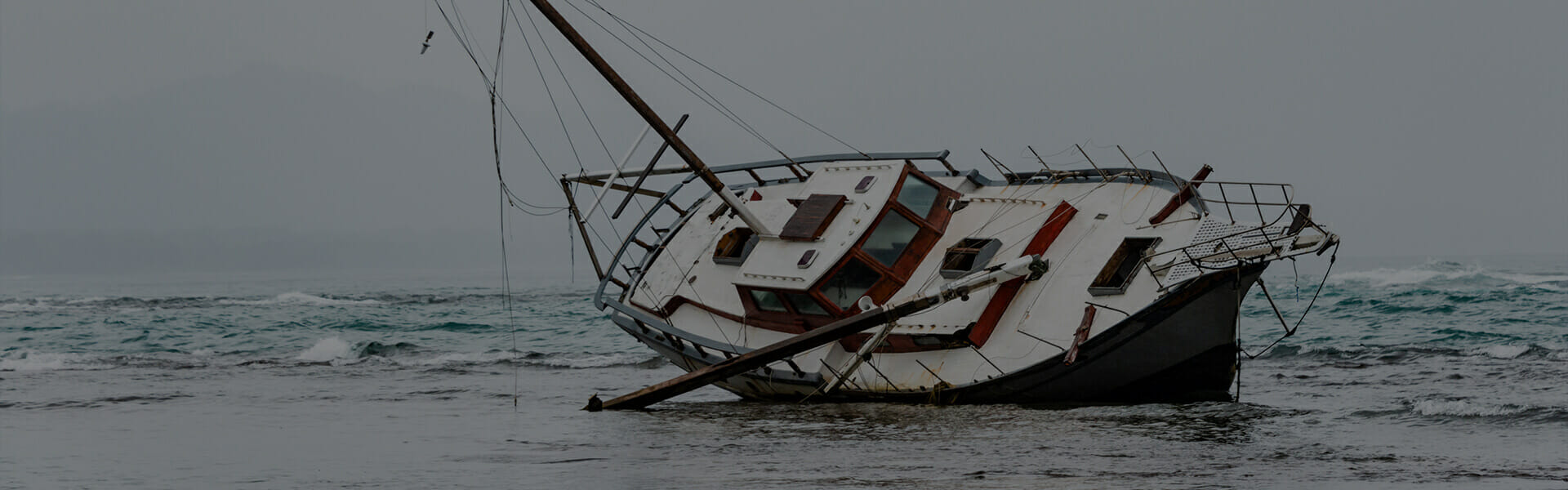
South Florida leads the nation in boating accidents. If you or someone you love has been injured in a boating crash, it is imperative that you contact a personal injury attorney with experience handling boat and maritime accident claims. We provide high-quality legal representation to victims of boating and marine accidents throughout Florida.
Types of Boat and Maritime Accidents
Prosper Injury Attorneys represents clients throughout the State of Florida in a wide variety of maritime accidents, including:
Private Recreational Boats and Commercial Vessels – Boat accidents typically involve collisions with other boats and stationary objects like navigational markers.
Personal Watercrafts – Personal watercrafts are smaller pump-jet propelled vessels that require the rider to either sit or stand. These include Waverunners and jet skis. We see a growing number of Waverunner accidents each year as boat rental companies throughout South Florida continue renting these smaller vessels to inexperienced customers.
Kayaks – Kayaks are unable to maneuver as quickly as motorboats and personal watercrafts. People operating kayaks in high traffic areas like the intercoastal waterways experience a much greater risk of injury because they cannot move out of harm’s way quickly enough.
Cruise Ship Injuries – PortMiami and Port Everglades are the cruise capitals of the world. Generally speaking, passengers who sustain injuries while aboard cruise ships departing from these South Florida ports must file their personal injury lawsuits against negligent cruise lines in the United States District Court for the Southern District of Florida.
Marina Accidents – Many types of accidents that occur within marinas or on docks throughout Miami and Florida are subject to maritime laws. These types of cases often involve poorly maintained and unsafe docks.
Florida Boat Accident Statistics
Call us today at (305) 694-2676 or
contact us online for a free case evaluation.
Hablamos español.

Florida leads the United States in boating accidents, with at least twice as many accidents the as next state. The Florida Fish and Wildlife Conservation Commission’s division of law enforcement regulates Florida’s boaters and waterways in the same way that local police departments regulate motor vehicles and roadways. The Florida Fish and Wildlife Conservative Commission (FWC) division of law enforcement creates an annual boating accident statistical report each year that compiles the total number of reportable boat accidents in the State of Florida.
In 2023, the last year with full reporting, there were a total of 659 reportable boat accidents in the State of Florida. This is a considerable decrease from the 735 reportable accidents in 2022 and the 752 reportable accidents in 2021. Of the 659 accidents, a total of 180 were caused by collisions with other vessels and 182 were caused by collisions with fixed objects.
56 of the accidents in Florida resulted in fatalities, with a total of 59 individuals dying as a result of a boating accident in 2023. The most common causes of boat crash fatalities are passengers who fall overboard and boat collisions with fixed objects such as navigational markers and docks.
Miami Boat Accident Statistics
There were 61 boat accidents in Miami-Dade County in 2023. Of these 61 accidents, 28 accidents involved injuries, and 7 resulted in death. Miami-Dade had the second-highest number of accidents in Florida after Monroe County, which had a total of 87 boating accidents.
Steps to Follow After a Boat Accident
Boat accidents present uniquely dangerous situations because they occur on waterways that are not easily accessible to first responders. Common injuries including traumatic brain injuries caused by drowning or blunt force trauma are extremely time-sensitive, a few minutes can be the difference between life or death. The priority should always be to seek medical attention as soon as possible. Some steps you should keep in mind are:
Step 1: Call 911 to report the accident and request immediate medical attention if any passenger sustained injuries. If there is no cellular telephone service in the area you must use the vessel’s VHF marine radio to summon emergency assistance on channel 16. The coast guard and FWC monitor channel 16 for emergencies.
Step 2: Attempt to navigate the boat to a self resting place away from other boat traffic.
Step 3: Ensure that all passengers are wearing their personal flotation devices (PFD) as any damage to the vessel’s hull increases the changes of the boat capsizing.
Step 4: Gather evidence while waiting for law enforcement to arrive on scene. This includes the names, addresses and telephone number of all operators and passengers involved, photos of the boats and/or objects involved, photos of the the registrations for all vessels involved, and the insurance information for the vessels.
Common Causes of Boat Accidents
Unlike with motor vehicles drivers, recreational boat operators are not required to maintain any type of license or permit to operate a motorboat in Florida. In fact, only individuals born on or after January 1, 1988 are required to pass a boater safety course and carry a boater education card. Unfortunately, this means that there are many boat operators who have little to no idea what they are doing out on the open water.
The most common types of watercraft involved in boating accidents are open boats, commercial vessels, personal watercrafts (wave runners and jet skis), cabin motorboats, kayaks, pontoon boats, and other types of recreational boats. Boating accidents can be caused by a number of internal and external factors. Common causes of boating collisions are listed below:
- Distracted operation of boat
- Excessive speed
- Reckless operation of boat
- Lack of training or experience in operating boat
- Colliding with submerged objects
- Alcohol use
- Illegal substances
- Prescriptions drugs
- Improper maneuvering
- Collision with swimmers
Boat accidents are not limited to situations when the captain negligently operated the vessel. Often times, injuries can occur due to a lack of preparation by the captain and crew. Some of these causes often include:
- Fires or explosions
- Boat exhausts
- Lack of proper safety equipment
- Lack of boat maintenance
- Mechanical failure
- Inclement weather – Proving liability in a boat accident that was caused by inclement weather will depend on whether the operator properly assessed the marine warnings, wind conditions, wave conditions, and tide times prior to the trip.
Types of Boating Accident Injuries
Get started with your complimentary case evaluation today;
call us at (305) 694-2676 or reach us online using our
secure contact form.
When collisions involving boats and other watercrafts or fixed objects occur, injuries that are sustained by boat operators and passengers tend to be severe and are often result in catastrophic injuries. It is especially dangerous when boats travel at high speeds because passengers do not have the same safeguards that cars have such as airbags and seat belts. Some of the most common injuries sustained during crashes involving boats and other watercraft include:
- Drowning
- Carbon monoxide poisoning
- Cuts and lacerations
- Amputations
- Broken bones and fractures
- Spinal cord injury
- Brain injury
- Paralysis
- Death
Filing a Lawsuit for Injuries or Wrongful Death Caused by a Boat Accident in Miami, FL
Florida is home to the highest number of boating accident and maritime lawsuits in the country. This is primarily due to the high number of boating accidents and the high volume of cruise ships that operate out of the various ports. In order for the operator of a boat to be held liable for injuries sustained by passengers in a collision, injured persons must prove that the operator was negligent. Thus, a plaintiff must show that the operator deviated from the reasonable standard of care that was owed to passengers of the watercraft as well as surrounding watercraft and swimmers. There are three essential elements that must be proven in order to succeed on a theory of negligence. These elements are:
- The operator owed a legal duty of care to passengers within the vicinity;
- The operator breached the legal duty of care that was owed; and
- As a result of the breach, the plaintiff suffered damages
Which fault rule applies to a boating injury depends on which law governs the claim. Negligence claims under Florida law filed after March 24, 2023 follow the state’s modified comparative negligence rule: your recovery is reduced by your share of fault, and you recover nothing if you were more than 50 percent at fault. Claims governed by general maritime law, which can reach injuries on navigable waters, follow pure comparative fault: your recovery is reduced by your share of fault but is not barred. Which body of law applies is one of the first questions we sort out. The amount of damages that a plaintiff recovers will be reduced by the portion of fault apportioned to him or her. For example, a court finds that a plaintiff can recover $100,000 in damages for injuries suffered in a boating accident. The court also finds that the plaintiff was 20% at fault for the accident. Thus, the damages will be reduced by $20,000 and the plaintiff can collect $80,000 in damages.
Who is Liable for Injuries Sustained in a Boat Accident?
The party primarily responsible for causing a boating accident will always be the negligent boat operator. However, the liable parties may also include any other person or entity that had an ownership interest or control over the boat at the time of the crash. These liable parties often include boat rental companies and yacht charters. Boat insurance is not legally required in Florida and there are antiquated federal laws that shield boat owners from liability in certain situations. A proper investigation must be conducted in order to expose all parties who may be responsible causing the personal injuries or wrongful death.
Compensation for Injuries After a Boating Accident
As with other types of personal injury cases in Florida, a boat accident victim can financially recovery from the at-fault parties. The total recovery depends on various factors including the seriousness of the injuries, the amount of insurance available, how the accident occurred, the severity of the property damage to the vessels involved, the medical expenses incurred, lost wages, and lost earning capacity.
Additionally, boat accident victims are entitled to recover for any non-economic damages sustained. Non-economic damages include pain and suffering, lost of enjoyment, emotional distress, and mental anguish. Depending on the severity of the injuries, the spouse or children may make a claim for loss of consortium.
Punitive Damages in Boating Accidents
Punitive damages are awarded in cases where a defendant’s behavior is found to be particularly egregious and outrageous. In Florida, this most commonly occurs in situations where the boat operator was operating the vessel while under the influence of alcohol or drugs at the time of the accident. The purpose behind punitive damages is to “throw the book” at a defendant in an effort to deter others from committing similar acts in the future.
Florida has a cap on the amount of punitive damages that may be awarded in a personal injury cause of action. A plaintiff may collect three times the amount of compensatory damages awarded or $500,000, whichever is greater.
Miami Boating Accident Lawyer
If you or someone you love have been injured in accident involving a boat or any other type of watercraft, contact a personal injury lawyer immediately. It is difficult for a lay person to understand the nuances and intricacies of federal and maritime law. Retaining a skilled and experienced boating accident attorney can save you time and money, while also putting you in the best possible position to recover damages. Call Prosper Shaked at (305) 694-2676 today to schedule a free consultation with a personal injury attorney who will fight tirelessly for your legal rights and seek the settlement or verdict you are entitled to.